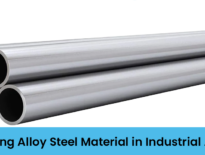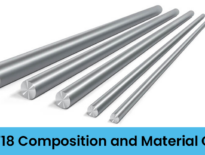
In the high-performance metallurgy industry, it is part of a timeless issue to select a metal that would provide long-term technical performance and also be economical. Incoloy material is often chosen in industrial projects that involve high temperatures and corrosion which is aggressive. The nickel-based alloys are a reliable alternative to high-nickel superalloy, offering engineers a reliable nickel based alloy at a very low cost.
The following is the technical analysis on the chemistry, performance characteristics and industrial applications of this multi-purpose Incoloy alloy.
What is Incoloy Material?
Incoloy is a name that is used to refer to a family of superalloys manufactured by the Special Metals Corporation. It is a nickel-iron-chromium alloy that is intended to have high strength in temperature and resist oxidation. Although it is of the same general type as Inconel, it is the main difference factor of iron content. With a greater content of iron, the manufacturers produce a material that is still strong in rough environments and at the same time cheaper as compared to pure nickel versions.
Incoloy Composition: A Detailed Elemental Breakdown
The accuracy of Incoloy alloy determines its performance. In contrast to normal stainless steels, the Incoloy recipe is concentrated on stabilizing austenitic structure at a condition of severe stress associated with temperature.
The Backbone: Nickel, Chromium and Iron
- Nickel (30% -46%): Nickel, being the key constituent in such nickel-based alloy, makes the material resistant to chloride ion stress corrosion cracking. It gives the strength necessary to ensure that the metal does not become brittle whenever a volatile environment confronts it over a period of years.
- Chromium (19% – 23.5%): This element makes the alloy have a shield. Reacts with oxygen to produce a passive film of oxygen on the surface which is microscopic and protective. This coating inhibits formation of oxides and scales particularly in industrial furnaces that operate in high-temperature conditions.
- Iron (Balance/Min 22%): Incoloy material has iron as one of the key matrix elements in contrast to Inconel that confines it to trace amounts. This promotes structural integrity of the alloy and also greatly lowers cost of production in general.
Strengthening Additives in the 800 Series
Incoloy alloys such as 800, 800H and 800HT are purified by means of micro-alloying with Titanium and Aluminum.
- Aluminum and Titanium (0.3% – 1.2% combined): Aluminum and Titanium are included to enhance high temperatures. These values are maintained in the higher part of the range in the 800HT grade to enable the formation of strengthening precipitates to be produced during heat treatment which enhances creep and rupture strength significantly.
- Carbon (0.05% – 0.10%): In the 800H and the 800HT variants, the amount of carbon is tightly regulated. Increased carbon content is deliberate, as it is used together with the heat treatment to obtain bigger grain sizes, which are required in the long-term stability at temperatures above 1100degF (600degC).
Specialized Additions for Incoloy 825
Grade 825 is an alloy of Grade 825 that has been adjusted to aqueous (liquid) corrosion resistance.
- Molybdenum (2.5 -3.5): Molybdenum is used to protect against pitting – small holes that may develop in metal that is exposed to non-flowing seawater or chlorides.
- Copper (1.5% -3.0%): Copper addition was exclusive to the 825. It offers superior resistance to a diminishing acid source, which makes it a leading one in sulfuric and phosphoric acid treatment.
Technical Comparison: Incoloy vs Inconel
Among the most frequent queries about material specification, there is the question of Incoloy vs Inconel. They are both nickel-based alloys, however they have different purposes:
- Nickel Concentration: Inconel normally has more than 50% Nickel, and thus it is better in ultra-high-pressure and cryogenic-to-extreme heat. Incoloy contains a lower percentage of nickel and a higher percentage of iron.
- Corrosion: Incoloy is superior in the field of high-temperature oxidation and aqueous corrosion. Inconel is commonly used in more drastic chemical conditions and load.
- Cost: Nickel is a high-cost commodity which requires Incoloy to be more cost effective when used as large-scale process piping.
To know more about Inconel, read more on What is Inconel Composition, Properties, and Applications.
Essential Incoloy Properties
Some of the important physical characteristics that drive the industrial demand of this nickel alloy are:
- Oxidation Resistance: It creates a stable surface coating that inhibits the loss of metals when it is exposed to heat.
- Carburization Defense: Incoloy does not absorb carbon as other stainless steels do, and this property is what makes it resistant to brittle nature in furnace situations.
- Mechanical Integrity: The material has a high rupture and creep strength beyond temperatures of 1000 deg F (538 deg C ).
- Aqueous Stability: Particular grades, like 825 are to be used in aqueous conditions that can withstand sulfuric and phosphoric acids.
Popular Incoloy Grades and their Uses
The various industrial settings demand certain metallurgical profiles. The following are the most commonly used grades:
Incoloy 800 (UNS N08800)
This is the base grade of 800 series. It is very resistant to heat in the long run. It is a standard option of Incoloy 800 pipes and Incoloy 800 tubes utilized in steam generators and heat exchangers. Inconel 800 Fittingss and Inconel 800 Flanges are employed in order to offer leak proof connections in thermal plants.
Incoloy 825 (UNS N08825)
Grade 825 has molybdenum and copper added which gives it a huge resistance to weakening acids. It is mainly applied in the oil and gas industry. When sour gas is used, engineers design inconel 825 pipes and inconel 825 tubes where there is the presence of hydrogen sulfide. Inconel 825 Fittings and Inconel 825 Flanges are used as piping transitions and offer the required chemical protection at the joints of importance.
Fabrication and Welding of Incoloy Material
Incoloy has a high workability. Welding may be performed by the use of common welding methods such as Gas Tungsten Arc Welding (GTAW) or Shielded Metal Arc Welding (SMAW). Since the alloy is made to be high-temperature stable, it does not experience a similar amount of grain-boundary sensitization as is experienced by regular stainless steels when welding. This facilitates easy production into multicolored industrial composites without compromising its corrosion resistance nature.
Common Incoloy Applications
The Incoloy applications spans across several high-stakes sectors:
- Power Generation: Nuclear and coal-fired plants Superheater and reheater tubing.
- Chemical Processing: Vessels and agitators of volatile organic and inorganic acids.
- Oil and Gas: Pitting resistance is needed in downhole equipment and sub-sea piping systems.
- Domestic Appliances: Incoloy sheathing is commonly used as electrical heating elements because it is resistant to thermal cycling.
The Bottom Line- Your Trusted Incoloy Material Supplier
The choice of the right Incoloy alloy relies on the temperature, pressure and the chemical exposure of a project. Be it the acid protection of Grade 825 or thermal strength of the 800 series, these nickel-based alloys are a long-lasting reliable solution.
As a leading Incoloy material supplier, Solitaire Overseas provides a full line of high performance nickel alloys. In case your project needs accurate piping solutions then check our inventory to get the ideal material to meet your industrial needs. Contact us today to fulfill your requirements.