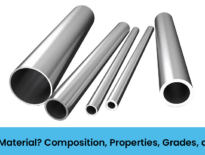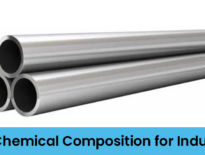
There is little superalloy that can be held as much reverence as that of Inconel 718. This nickel-based alloy, known to be outstanding in its high temperature and pressure performance is a common place in industries such as aerospace, to the chemical processing sectors. We are well aware of the fact that at Solitaire Overseas, one must first get the basic makeup of the material before choosing an appropriate one. This is an overview of the Inconel 718 composition, and an inquiry into how this particular chemistry can be applied in the real world to create a high level of performance.
Understanding the Inconel 718 Material
Inconel 718 is an alloy of nickel-chromium-based precipitation-hardened alloy which has substantial contents of iron, niobium and molybdenum, and lower contents of aluminum and titanium. It is a complicated composition to incorporate good ductility, high yield, tensile, and creep-rupture strength, at a temperature up to 1300degF (704degC).
Alloy 718 is an important superalloy with a superior welding behavior unlike many other alloys. It does not crack after welding like high-strength alloys and therefore, gives the flexibility of producing more sophisticated parts such as Inconel 718 tubes and pipes.
Inconel 718 Chemical Composition Breakdown
Inconel 718 chemical structure is carefully adjusted to obtain the mechanical characteristics. The alloy is based on certain elements according to industry requirements like AMS 5596 and AMS 5597 to carry out its task.
Below is an analysis of Alloy 718 Chemical Composition
| Element | Percentage (%) |
| Nickel (Ni) | 50.0 – 55.0 |
| Chromium (Cr) | 17.0 – 21.0 |
| Iron (Fe) | Balance |
| Niobium (Nb) | 4.75 – 5.50 |
| Molybdenum (Mo) | 2.80 – 3.30 |
| Titanium (Ti) | 0.65 – 1.15 |
| Aluminum (Al) | 0.20 – 0.80 |
| Cobalt (Co) | 1.00 max |
| Carbon (C) | 0.08 max |
| Manganese (Mn) | 0.35 max |
| Silicon (Si) | 0.35 max |
The Role of Key Elements in the Inconel 718 Composition
The secret component of alloy 718 composition lies in how these individual elements interact:
- Nickel (50-55%): As the primary base, nickel provides the foundation for corrosion resistance and high-temperature strength. It is essential for resisting stress-corrosion cracking in chloride-rich environments.
- Chromium (17-21%): Chromium is the main driver for oxidation resistance. It helps form a protective oxide layer on the surface of Inconel 718 pipes and other components, shielding the Inconel 718 material from corrosive attack in acidic or high-heat environments.
- Niobium (4.75-5.50%): This is arguably the most critical strengthening element. Niobium combines with nickel to undergo age hardening (precipitation hardening). This process forms microscopic particles within the metal’s grain structure that drastically increase yield strength.
- Molybdenum (2.8-3.3%): Molybdenum is added primarily to improve resistance to pitting and crevice corrosion. It acts as a solid-solution strengthener, adding toughness to the alloy matrix.
- Titanium & Aluminum: These elements work in tandem with Niobium to facilitate the precipitation hardening response, further boosting the alloy’s mechanical integrity under load.
Mechanical and Physical Properties of Inconel 718 Material
The Inconel 718 composition results in a material that is both dense and incredibly strong.
- Density: Approx. 8.19 g/cm³ (0.296 lb/in³)
- Melting Range: 1260°C – 1336°C (2300°F – 2437°F)
- Tensile Strength: Can exceed 180,000 psi (1,240 MPa) after precipitation heat treatment.
When any engineer is designing systems in which Inconel 718 is to be used as flanges or pressure vessels, the values provided mean that it is not going to be readily deformed, even under the tremendous loads imposed by a gas turbine engine or a down hole oil shaft.
Applications of Alloy 718
This alloy is preferred to other alloys due to its strong chemical composition of Inconel 718 that can never allow the failure of the alloy under critical application.
- Aerospace: Jet engines, rocket motors, and structural parts of spacecrafts are a common use of it because it has high strength to weight ratio even at high temperatures.
- Oil & Gas: Inconel 718 material is resistant to chloride stress-corrosion cracking making it preferable in downhole tooling, wellhead components and Inconel 718 pipes that are employed in sour gas extraction.
- Power Generation: The Alloy 718 is used in bolts, spacers, and heat exchanger tubing in nuclear reactors and in land-based gas turbines.
Your Trusted Inconel 718 Pipes & Inconel 718 Tubes Supplier
It is not only that sourcing of high-performance alloys such as Inconel 718 is a competitive business issue at Solitaire Overseas but also, the issue of trust and technical accuracy. We are a leading manufacturer and exporter and thus we commit ourselves to ensuring that the Inconel 718 material we provide strictly meets the chemical and mechanical standards that are stated above. Your project will need one smooth tube in the aerospace industry, or needs hyper strong flanges in the oil and gas industry, we are precisely sure that our inventory is tested to be reliable in the most extreme conditions. Work with us on your next project and feel the supply chain based on experience, transparency, and delivery in time.
The Bottom Line
It is possible to comprehend the reason why Inconel 718 is an industry standard, based on an understanding of its composition. It is not merely about blending metals but it is the exact combination of Nickel, Chromium and Niobium to form a substance that is resistant to the most extreme conditions on earth (and even beyond it).
If you are in need of the high-pressure Inconel 718 pipes, Inconel 718 tubes or long-lasting fittings, Solitaire Overseas provides high-grade alloys that are of high international standards.