+91-9619103479
or
vishal@solitaire-overseas.com
Titanium products represent a revolutionary class of material with a great strength-to-mass ratio, great corrosion capability and high versatility in a variety of industrial use. As a reliable titanium manufacturer and top supplier, Solitaire Overseas has become one of the best titanium alloys suppliers in India and it has continued to provide high quality products made of titanium that have satisfied the strictest quality test criteria. Excellence in production of titanium alloys coupled with competitive price structures of titanium products makes us the best vendor to clients who want to source out industries to be served.
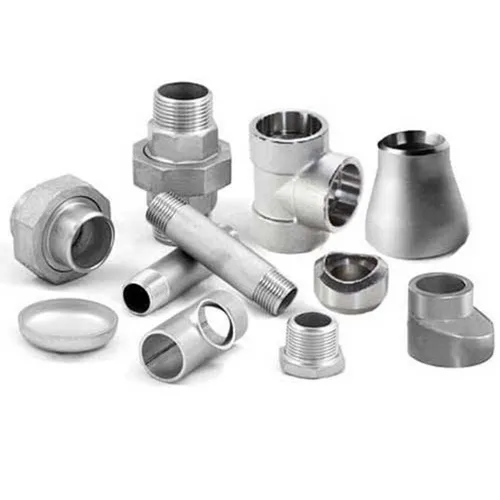
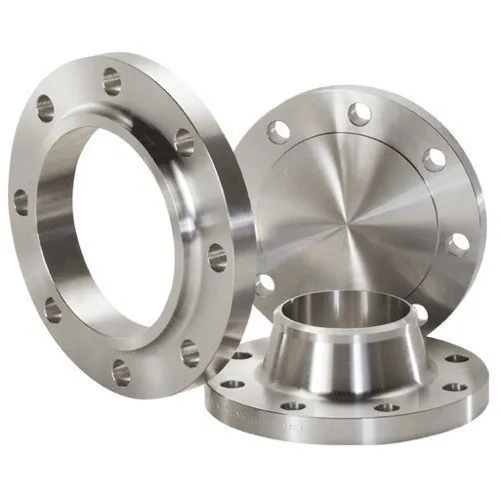
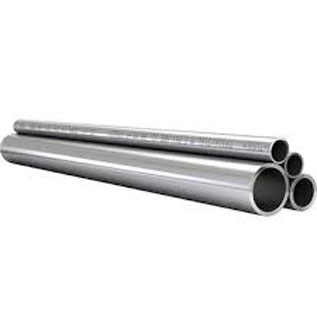
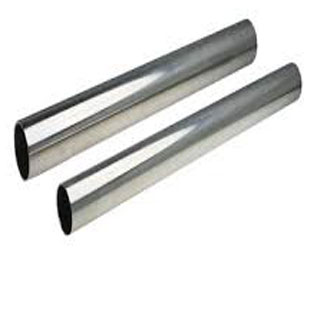
Solitaire Overseas is one of the largest titanium manufacturers, an excellent titanium supplier in India delivering high-performance titanium products in India in various industrial sectors. Our total product line consists of titanium plates, sheets, tubes, pipes, tubes, flanges, fasteners, forged fittings, and bars making us one of the leading manufacturers of titanium alloys in the country. Our vision is to deliver quality materials at competitive prices of titanium products to ensure that we offer our esteemed customers all over the world with cost effective solutions without interfering with the metallurgical quality.
We make our products using high grade titanium sponge and ensure that our products are tested to have met international standards that include ASTM B338, B348 and ASME SB338. We have a long stock of all sorts of sizes and specifications as trusted exporters to meet the critical applications. You may need some aerospace, oil and gas or marine engineering products in a variety of grades, such as commercially pure titanium, or high-strength titanium alloys such as Ti-6Al-4V (Grade 5). Through supply chain optimization, we have the best price stability of titanium products in the market thus making us the best choice sourcing partner of titanium products both in India and abroad.
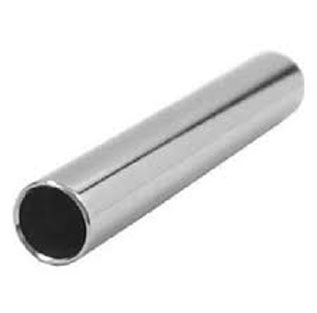
Titanium is naturally found in oxide form and is commercially produced using the Kroll Process, where titanium ore is converted into titanium sponge through controlled chemical reduction. This sponge is then alloyed and melted to produce high-performance titanium alloys.
Titanium alloys combine low density, high tensile strength, excellent fatigue resistance, and outstanding corrosion resistance, making them suitable for demanding environments. Although titanium production is complex and cost-intensive, its long service life and superior performance make it a cost-effective solution for critical applications.
Understanding the international nomenclature for titanium is critical for global engineering compliance. Different regions utilize varying standards such as ASTM (UNS), European (Werkstoff), and Japanese (JIS). By referencing the equivalent grades below, procurement teams can ensure material compatibility and adherence to local project specifications without compromising on structural integrity.
| Grade | UNS Number | Werkstoff Nr. | AFNOR | JIS | BS |
|---|---|---|---|---|---|
| Titanium Grade 2 | R50400 | 3.7035 | T40 | Class 2 | Tai 2 |
| Titanium Grade 5 | R56400 | 3.7165 | TA6V | Class 60 | TA11 |
| Titanium Grade 7 | R52400 | 3.7235 | T40-Pd | Class 7 | — |
| Titanium Grade 12 | R53400 | 3.7105 | — | Class 12 | — |
The metallurgical performance of a titanium alloy is dictated by its precise chemical composition. While commercially pure grades focus on low interstitial elements for maximum ductility, high-performance alloys incorporate elements like Aluminum and Vanadium for strength, or Palladium and Nickel for extreme resistance to localized crevice corrosion. These balanced chemical profiles are what make titanium indispensable in aggressive chemical environments.
| Element | Grade 2 (%) | Grade 5 (%) | Grade 7 (%) | Grade 12 (%) |
|---|---|---|---|---|
| Nitrogen (N) | 0.03 max | 0.05 max | 0.03 max | 0.03 max |
| Carbon (C) | 0.08 max | 0.08 max | 0.08 max | 0.08 max |
| Hydrogen (H) | 0.015 max | 0.015 max | 0.015 max | 0.015 max |
| Iron (Fe) | 0.30 max | 0.40 max | 0.30 max | 0.30 max |
| Oxygen (O) | 0.25 max | 0.20 max | 0.25 max | 0.25 max |
| Aluminum (Al) | — | 5.5 – 6.75 | — | — |
| Vanadium (V) | — | 3.5 – 4.5 | — | — |
| Palladium (Pd) | — | — | 0.12 – 0.25 | — |
| Molybdenum (Mo) | — | — | — | 0.2 – 0.4 |
| Nickel (Ni) | — | — | — | 0.6 – 0.9 |
| Titanium (Ti) | Balance | Balance | Balance | Balance |
The mechanical properties of titanium alloys highlight their exceptional strength-to-density ratio. From the high elongation of Grade 2, which allows for complex fabrication, to the massive tensile strength of Grade 5, these metrics ensure that components can withstand high-pressure loads and mechanical fatigue. Evaluating these properties is essential for ensuring safety and longevity in aerospace and subsea applications.
| Property | Grade 2 | Grade 5 | Grade 7 | Grade 12 |
|---|---|---|---|---|
| Tensile Strength (min) | 345 MPa | 895 MPa | 345 MPa | 483 MPa |
| Yield Strength (0.2% Offset) | 275 - 450 MPa | 828 MPa | 275 - 450 MPa | 345 MPa |
| Elongation (min) | 20% | 10% | 20% | 18% |
| Reduction of Area (min) | 30% | 25% | 30% | 25% |
| Hardness (Brinell) | 160 – 200 HB | 300 – 340 HB | 160 – 200 HB | 190 – 220 HB |
Titanium exhibits a high melting point of 1668°C (3034°F), which provides it with significant thermal stability compared to lighter metals like aluminum. This high-temperature threshold ensures that titanium products maintain their structural integrity and oxidation resistance during high-velocity flight or within high-heat industrial process piping.
| Metal | Melting Point (°C) |
|---|---|
| Aluminum | 660 |
| Brass | 930–1000 |
| Copper | 1084 |
| Cobalt | 1495 |
| Titanium | 1668 |
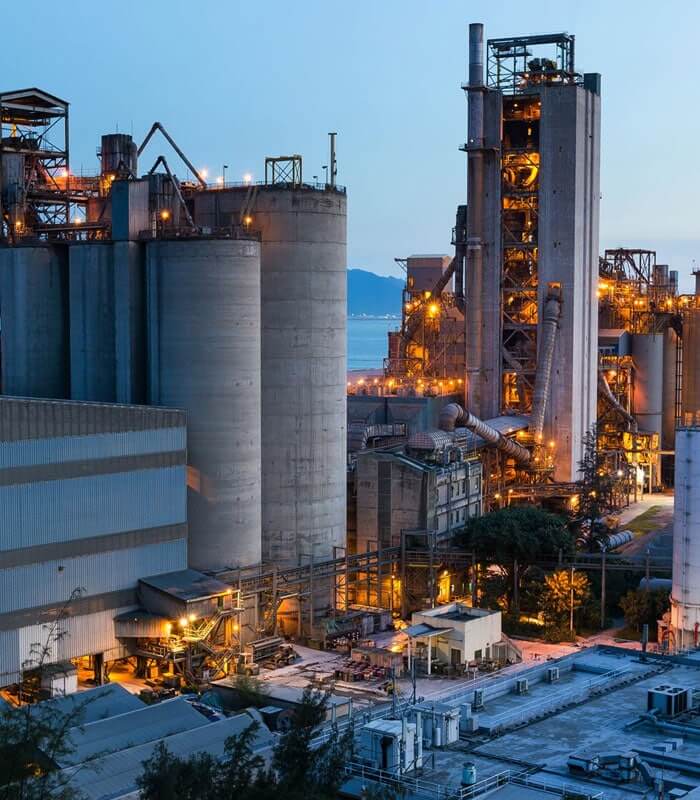
The titanium price per kg varies based on the specific grade (e.g., Grade 2 vs. Grade 5), form (pipe, sheet, bar), and market conditions for raw materials. Solitaire Overseas provides transparent and competitive titanium products price structures for bulk and custom orders
Contact UsTitanium is used to manufacture critical components like aircraft turbine blades, surgical implants, seawater desalination pipes, chemical reactors, and high-end sports equipment.
Commercially pure titanium (like Grade 2) offers maximum corrosion resistance and ductility. Titanium alloys (like Grade 5) are mixed with elements like Aluminum and Vanadium to significantly increase tensile strength and hardness.
Titanium has a higher strength-to-weight ratio than steel. While some high-strength steel alloys have higher absolute tensile strength, titanium is roughly 45% lighter, making it "stronger" for weight-sensitive applications.
 India
India Iran
Iran Thailand
 South Korea
 Turkey
 Morocco
 Costa Rica
 Kazakhstan
 Philippines
 Canada
 Japan
Japan Russia
 United States
 Saudi Arabia
 Kuwait
 Singapore
 Malaysia
 UAE
UAE Germany
 Italy
Italy China
China UK
UK Egypt
Egypt Vietnam
 Oman
Oman Australia
 Qatar
Qatar Portugal
 Nigeria
 Iraq
Iraq Ukraine
 Bangladesh
 Poland
 Romania
 Cyprus
 Angola
 Colombia
 Norway
 Chile
Chile Mexico
 South Africa
 Netherlands
 Brazil
 France
 Jordan
 Spain
Spain Hong Kong
 Indonesia
 Taiwan
 Tobago
 Greece
 Czechia
 Belgium
 Sri Lanka
 Myanmar
 Venezuela