+91-9619103479
or
vishal@solitaire-overseas.com
Nickel is a silvery-white naturally occurring metal that is highly treasured on the basis of its strength, ductility, corrosion resistance, and thermal and electrical conductivity, that is why it is essential in a diverse array of industrial uses. It is used extensively in pure form as Nickel 200 and Nickel 201, and in high performance nickel alloys, and is important in the chemical processing, aerospace, marine engineering, electronics and high-temperature production industries. At Solitaire Overseas, we specialize exclusively in the supply and export of premium-grade nickel products, with a strong focus on Nickel 200, Nickel 201, and advanced nickel alloys. With 25 years of experience and the determination to provide the best in metallurgy we have been able to provide nickel solutions that provide superior corrosion resistance, thermal stability and mechanical strength at the highest quality and reliability requirements in the world.
At Solitaire Overseas, our nickel products in India will be designed to provide a real industrial value by going beyond the specifications. From high-purity Nickel 200 and 201 to advanced nickel alloy steel solutions, each product is engineered with precision and reliability in mind. We understand how important the needs of applications that cannot afford failure are and that is where our materials will always be.
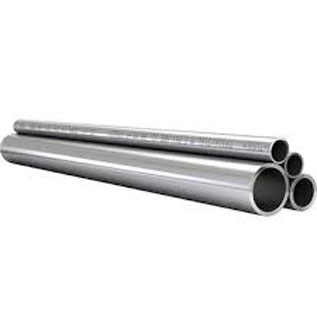
Our nickel solutions are tested to be the best in reinforcing a chemical processing facility, equipping marine grade apparatus, or high temperature resistance engineering. Our product list of various nickel products has gone to include Nickel Pipes, Nickel Tubes, Heat Exchanger Tubes, Plates, Rods, Flanges and Fittings.
Explore our range of nickel grades and compositions to find the perfect solution for your project needs. With Solitaire Overseas, you can expect excellence in both product quality and technical support
We supply an extensive range of high-purity nickel products:
The chemical composition of Nickel 200 and 201 determines their mechanical strength and thermal performance.
| Element | Nickel 200 (%) | Nickel 201 (%) |
|---|---|---|
| Nickel (Ni) | ≥ 99.0 | ≥ 99.0 |
| Carbon (C) | ≤ 0.15 | ≤ 0.02 |
| Iron (Fe) | ≤ 0.40 | ≤ 0.40 |
| Manganese (Mn) | ≤ 0.35 | ≤ 0.35 |
| Silicon (Si) | ≤ 0.35 | ≤ 0.35 |
| Sulfur (S) | ≤ 0.01 | ≤ 0.01 |
| Copper (Cu) | ≤ 0.25 | ≤ 0.25 |
Nickel Alloy 200 and Nickel Alloy 201 are valued for their excellent mechanical strength, high ductility, and consistent performance over a wide range of temperatures. These properties make them reliable materials for both ambient and elevated-temperature service. Typical mechanical properties for both grades are outlined below:
| Property | Nickel 200 | Nickel 201 |
|---|---|---|
| Tensile Strength (MPa) | 340 min | 340 min |
| Yield Strength (0.2% Offset) (MPa) | 105 min | 105 min |
| Elongation (% in 50 mm) | 45 min | 45 min |
| Hardness (Rockwell B) | 60 max | 60 max |
| Modulus of Elasticity (GPa) | ~207 | ~207 |
The main difference between the two alloys is carbon content. Nickel 201 contains significantly less carbon, which improves its resistance to graphitization, making it more suitable for high-temperature applications where long-term thermal exposure is expected.
Nickel Alloy 200 and 201 are recognized worldwide and are available under various international standards. The table below highlights their commonly accepted equivalent grades:
| Standard | Nickel 200 | Nickel 201 |
|---|---|---|
| UNS | N02200 | N02201 |
| ASTM | B160, B161, B162, B366 | B160, B161, B162, B366 |
| Werkstoff (Germany) | 2.4066 | 2.4068 |
| EN / DIN | Ni 99.2 | LC-Ni 99 |
| JIS (Japan) | NW 2200 | NW 2201 |
| BS (UK) | NA11 | NA12 |
| AFNOR (France) | N-100M | N-100L |
| ISO | Ni99.2 | Ni99.2 |
Awareness of these equivalent grades supports accurate material selection, ensures international compliance, and simplifies global procurement and engineering coordination.
Nickel 200 and Nickel 201 are both commercially pure wrought nickel alloys containing a minimum of 99.6% nickel. The primary distinction is carbon content, which directly affects their high-temperature performance. Nickel 201 is specifically formulated to minimize embrittlement during prolonged exposure to elevated temperatures.
| Property | Nickel 200 | Nickel 201 |
|---|---|---|
| Carbon Content | ≤ 0.15% | ≤ 0.02% |
| Melting Point | 1446°C (2635°F) | 1446°C (2635°F) |
| Electrical Conductivity | High | High |
| Thermal Stability | Moderate (susceptible to graphitization) | Excellent (resistant to graphitization) |
| Typical Applications | General industrial, marine, chemical | High-temperature chemical and nuclear environments |
Nickel 200, a commercially pure wrought nickel alloy, is well known for its high melting point and strong thermal stability. These characteristics allow it to perform reliably in harsh and thermally demanding industrial conditions. Key thermal and physical properties are summarized below:
| Property | Value |
|---|---|
| Melting Point (°C) | 1446°C |
| Melting Point (°F) | 2635°F |
| Thermal Conductivity | 90.7 W/m·K |
| Specific Heat Capacity | 0.444 J/g·K |
| Density | 8.89 g/cm³ |
| Modulus of Elasticity | ~207 GPa |
Nickel Alloy 200 and 201 offer relatively good machinability when compared with other high-nickel alloys. Their softness and excellent ductility allow for conventional machining processes; however, attention must be paid to cutting speeds, tool selection, and lubrication to prevent work hardening and ensure a high-quality surface finish. With proper tooling and experienced operation, machining these alloys is both practical and consistent.
| Property | Nickel 200 | Nickel 201 |
|---|---|---|
| Machinability Rating | Moderate | Slightly Better |
| Work Hardening Tendency | High | Lower |
| Preferred Cutting Tools | Carbide or HSS | Carbide |
| Lubrication Required | Yes | Yes |

Nickel is used in industrial piping, heat exchangers, and chemical reactors. It is also found in heating elements for appliances like toasters, grills, and electric blankets due to its high thermal stability.
Yes, pure nickel and many nickel alloys are ferromagnetic at room temperature. However, the magnetism can decrease depending on the alloying elements and the temperature (Curie point).
Nickel 201 is chosen for applications where temperatures exceed 315°C. Its low carbon content prevents the graphitization that can make Nickel 200 brittle at high temperatures.
 India
India Iran
Iran Thailand
 South Korea
 Turkey
 Morocco
 Costa Rica
 Kazakhstan
 Philippines
 Canada
 Japan
Japan Russia
 United States
 Saudi Arabia
 Kuwait
 Singapore
 Malaysia
 UAE
UAE Germany
 Italy
Italy China
China UK
UK Egypt
Egypt Vietnam
 Oman
Oman Australia
 Qatar
Qatar Portugal
 Nigeria
 Iraq
Iraq Ukraine
 Bangladesh
 Poland
 Romania
 Cyprus
 Angola
 Colombia
 Norway
 Chile
Chile Mexico
 South Africa
 Netherlands
 Brazil
 France
 Jordan
 Spain
Spain Hong Kong
 Indonesia
 Taiwan
 Tobago
 Greece
 Czechia
 Belgium
 Sri Lanka
 Myanmar
 Venezuela