+91-9619103479
or
vishal@solitaire-overseas.com
Stainless steel 316 fittings are corrosion-resistant pipe connectors in ASTM A403 WP316 / WP316L, alloyed with 2–3% molybdenum for superior resistance to chloride pitting and crevice corrosion. Available ½" to 48" NPS, SCH 10–XXS, they're the standard choice for marine, offshore, chemical, and food/pharma piping.

As an ISO-certified manufacturer of ASTM A403 WP316 stainless steel 316 fittings in India, we supply a complete range of buttweld fittings for welded piping networks and forged fittings for high-pressure service — elbows, tees, reducers, caps, and stub ends — to engineering, EPC and export customers across 60+ countries. Fittings are available from NPS ½" to 48" in seamless and welded construction, across all standard schedules from SCH 10 through XXS.
We manufacture in compliance with ASME B16.9 and B16.28, in both seamless and welded (ERW) forms. Our in-house ISO-certified quality control, 100% radiography testing, and support for custom sizes from NPS ½" to 24" make us a trusted source for complex engineering and export projects. Full EN 10204 3.1 and 3.2 material test certificates are available on request, along with third-party inspection by SGS, Bureau Veritas, or Lloyd's Register.
The 2 to 3 percent molybdenum content in grade 316 gives it a higher PREN than grade 304, making it the correct material selection for service environments involving chloride ions, seawater, acidic process fluids, and aggressive cleaning cycles. For applications requiring post-weld corrosion resistance without annealing, 316L (low-carbon variant, 0.03 percent C max) is the specified choice.
Standard stock items dispatched within 3–5 working days from our Mumbai warehouse. Custom sizes and certified material: 2–4 weeks. Export packaging and sea-freight documentation included.
For more information and pricing on 316 Stainless Steel Fittings, please contact us directly.
Request a QuoteWe maintain a comprehensive stock of Stainless Steel 316 fittings. Below are the key specifications for our inventory.
|
Category |
Specification Details |
|---|---|
|
Specifications |
ASTM A403 / ASME SA403 |
|
Material |
WP316 / WP316L |
|
Dimension Standards |
ASME/ANSI B16.9 | ASME B16.28 | MSS-SP-43 | BS1560 | BS4504 | BS10 |
|
Schedules Available |
SCH 10, SCH 20, SCH 30, STD, SCH 40, SCH 60, XS, SCH 80, SCH 100, SCH 120, SCH 140, SCH 160, XXS — NACE MR0175 available |
|
Types |
Seamless | Welded (ERW) | Fabricated |
|
Bending Radius |
R = 1D, 2D, 3D, 5D, 6D, 8D, 10D |
|
Size Range — Seamless |
½" NPS to 10" NPS |
|
Size Range — Welded |
½" NPS to 48" NPS (DN 15 to DN 1200) |
|
Surface Finish |
2B (mill standard) | No. 4 brushed | BA (bright annealed) | Electro-polished Ra ≤ 0.8 µm (food/pharma) | Pickled & passivated |
|
Quality Approvals |
ISO 9001:2015 | EN 10204 3.1/3.2 MTC | NACE MR0175/ISO 15156 compliance available | Third-party inspection: SGS, BV, TUV on request |
|
Testing |
100% Radiography | Hydrostatic | PMI (Positive Material Identification) | Visual & dimensional per ASME B16.9 |
The critical differentiator is molybdenum (Mo) at 2.00–3.00% — absent in grade 304. This element raises the Pitting Resistance Equivalent Number (PREN) from approximately 18 (grade 304) to approximately 25 (grade 316), providing a measurable improvement in resistance to chloride-induced pitting corrosion.
|
C |
Si |
Mn |
P |
S |
Cr |
Ni |
Mo |
Fe |
|---|---|---|---|---|---|---|---|---|
|
0.08 max |
1.0 max |
2.0 max |
0.045 max |
0.030 max |
16.00–18.00 |
11.00–14.00 |
2.00–3.00 |
67.845 min |
|
Melting Point |
Density |
Yield Strength (0.2% offset) |
Elongation |
Tensile Strength |
|---|---|---|---|---|
|
1400°C / 2552°F |
8.0 g/cm³ |
30,000 PSI / 205 MPa |
35% |
75,000 PSI / 515 MPa |
|
AISI/ASTM |
UNS |
Werkstoff Nr. |
JIS |
EN |
BS |
AFNOR |
|---|---|---|---|---|---|---|
|
316 (A276, A403, A479) |
S31600 |
1.4401 / 1.4436 |
SUS 316 |
X5CrNiMo17-12-2 / X3CrNiMo17-13-3 |
316S31 / 316S33 |
Z7CND17-11-02 |
For all welded installations, specify 316L (WP316L per ASTM A403). The low-carbon formulation (max 0.03% C vs 0.08% for standard 316) eliminates the risk of sensitisation — chromium carbide precipitation at weld heat-affected zones that can create intergranular corrosion paths in aggressive environments.
Standard 316 is acceptable for non-welded, mechanical connections. For all piping that will be field-welded or shop-welded without post-weld annealing, WP316L is the correct specification. Both grades carry the same molybdenum content and corrosion resistance — the difference is only in carbon content and therefore weld performance.
|
Property |
316 (WP316) |
316L (WP316L) |
|---|---|---|
|
Max Carbon (C) |
0.08% |
0.03% |
|
Molybdenum (Mo) |
2.00–3.00% |
2.00–3.00% |
|
Chloride resistance |
Excellent |
Excellent |
|
Weld sensitisation risk |
Moderate — anneal recommended |
Very low — no post-weld anneal required |
|
Food/pharma use |
Suitable |
Preferred (low C prevents CIP attack) |
|
ASTM fitting spec |
A403 WP316 |
A403 WP316L |
Need the low-carbon grade specifically? See our dedicated Stainless Steel 316L Fittings page for WP316L-specific stock and pricing.
Pressure ratings are determined by fitting type, connection class, and wall schedule. The following are indicative cold working pressure ratings at ambient temperature:
|
Connection Type |
Standard |
Class/Schedule |
Approx. Max Pressure |
|---|---|---|---|
|
Threaded / Socket Weld |
ASME B16.11 |
Class 3000 |
~3,000 PSI (207 bar) |
|
Threaded / Socket Weld |
ASME B16.11 |
Class 6000 |
~6,000 PSI (414 bar) |
|
Threaded / Socket Weld |
ASME B16.11 |
Class 9000 |
~9,000 PSI (621 bar) |
|
Butt Weld |
ASME B16.9 |
Schedule 40 @ 1" NPS |
~740 PSI (51 bar) |
|
Butt Weld |
ASME B16.9 |
Schedule 80 @ 1" NPS |
~1,130 PSI (78 bar) |
|
Butt Weld |
ASME B16.9 |
Schedule 160 @ 1" NPS |
~2,050 PSI (141 bar) |
|
Flanged |
ASME B16.5 |
Class 150 |
~275 PSI (19 bar) ambient |
|
Flanged |
ASME B16.5 |
Class 600 |
~1,480 PSI (102 bar) ambient |
Note: All pressure ratings decrease with increasing temperature. Derate per ASME B31.3 for your service temperature. Class ratings are for cold working pressure (CWP) / water, oil, gas (WOG) service.
Ambient-temperature ratings above only tell part of the story. Use the guide below for a quick check on how far a Class 150 or Class 300 316 SS flanged connection de-rates as service temperature rises — and always confirm against the current ASME B16.5 table for final design.
|
Temperature |
Class 150 (PSI) |
Class 300 (PSI) |
|---|---|---|
|
Ambient – 100°F (38°C) |
275 |
720 |
|
200°F (93°C) |
235 |
620 |
|
300°F (149°C) |
215 |
560 |
|
400°F (204°C) |
195 |
515 |
|
500°F (260°C) |
170 |
470 |
|
600°F (316°C) |
140 |
410 |
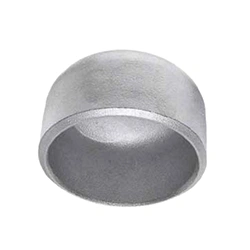
Cap dimensions per ASME B16.9 (mm). All rows sorted by NPS ascending.
|
NPS (inches) |
OD (mm) |
Cap Length (mm) |
|---|---|---|
|
1/2 |
21.3 |
25 |
|
3/4 |
26.7 |
25 |
|
1 |
33.4 |
38 |
|
1.1/4 |
42.2 |
38 |
|
1.1/2 |
48.3 |
38 |
|
2 |
60.3 |
38 |
|
2.1/2 |
73.0 |
38 |
|
3 |
88.9 |
51 |
|
3.1/2 |
101.6 |
64 |
|
4 |
114.3 |
64 |
|
5 |
141.3 |
76 |
|
6 |
168.3 |
89 |
|
8 |
219.1 |
102 |
|
10 |
273.0 |
127 |
|
12 |
323.8 |
152 |
|
14 |
355.6 |
165 |
|
16 |
406.4 |
178 |
|
18 |
457.0 |
203 |
|
20 |
508.0 |
229 |
|
22 |
559.0 |
254 |
|
24 |
610.0 |
267 |
|
26 |
660.0 |
267 |
|
28 |
711.0 |
267 |
|
30 |
762.0 |
267 |
|
32 |
813.0 |
267 |
|
34 |
864.0 |
237 |
|
36 |
914.0 |
267 |
|
38 |
965.0 |
305 |
|
40 |
1016.0 |
305 |
All dimensions per ASME B16.9 / MSS SP-43. Other schedules and fitting types on request.
90° Long Radius Elbow — Weight (kg)
|
NPS (inches) |
DN (mm) |
Sch 10S |
Sch 40S |
Sch 80S |
|---|---|---|---|---|
|
1/2 |
15 |
0.04 |
0.05 |
0.07 |
|
3/4 |
20 |
0.07 |
0.08 |
0.11 |
|
1 |
25 |
0.14 |
0.15 |
0.21 |
|
1.1/2 |
40 |
0.29 |
0.40 |
0.56 |
|
2 |
50 |
0.59 |
0.70 |
0.99 |
|
3 |
80 |
1.50 |
1.77 |
2.50 |
|
4 |
100 |
2.81 |
3.46 |
5.00 |
|
6 |
150 |
8.16 |
8.07 |
12.00 |
|
8 |
200 |
16.56 |
15.65 |
24.00 |
|
10 |
250 |
25.86 |
26.46 |
40.00 |
|
12 |
300 |
39.69 |
39.46 |
60.00 |
Source: ASME B16.9. All weights are approximate and for planning purposes only — confirm with mill certifications.
For streamlined international logistics and customs clearance, reference the following Harmonized System codes for ASTM A403 WP316 stainless steel fittings:
|
Fitting Type |
HS Code |
Description |
|---|---|---|
|
Butt-weld fittings (elbows, tees, reducers) |
7307.23.00 |
Tube or pipe fittings of stainless steel — butt welding fittings |
|
Threaded, socket-weld, other fittings |
7307.99.00 |
Tube or pipe fittings of stainless steel — other |
Verify against current Indian Customs Tariff and destination country tariff schedule at time of shipping. Chapter 73.07 covers all iron/steel pipe fittings.
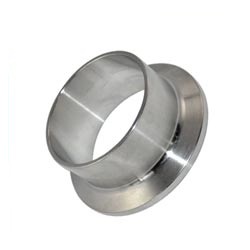
Dimensions per ASME B16.9. OD in both metric (mm) and imperial (inches).
|
NPS (in) |
OD (mm) |
OD (in) |
Cap Length (in) |
Tee C-E (in) |
Cross C-E (in) |
Stub End Lap Ø (in) |
Stub Long (in) |
Stub Short (in) |
|---|---|---|---|---|---|---|---|---|
|
1/2 |
21.3 |
0.840 |
1 |
1 |
– |
1 3/8 |
3 |
2 |
|
3/4 |
26.7 |
1.050 |
1 |
1 1/8 |
– |
1 11/16 |
3 |
2 |
|
1 |
33.4 |
1.315 |
1 1/2 |
1 1/2 |
1 1/2 |
2 |
4 |
2 |
|
1 1/4 |
42.2 |
1.660 |
1 1/2 |
1 7/8 |
1 7/8 |
2 1/2 |
4 |
2 |
|
1 1/2 |
48.3 |
1.900 |
1 1/2 |
2 1/4 |
2 1/4 |
2 7/8 |
4 |
2 |
|
2 |
60.3 |
2.375 |
1 1/2 |
2 1/2 |
2 1/2 |
3 5/8 |
6 |
2 1/2 |
|
2 1/2 |
73.0 |
2.875 |
1 1/2 |
3 |
3 |
4 1/8 |
6 |
2 1/2 |
|
3 |
88.9 |
3.500 |
2 |
3 3/8 |
3 3/8 |
5 |
6 |
2 1/2 |
|
4 |
114.3 |
4.500 |
2 1/2 |
4 1/8 |
4 1/8 |
6 3/16 |
6 |
3 |
|
6 |
168.3 |
6.625 |
3 1/2 |
5 5/8 |
5 5/8 |
8 1/2 |
8 |
3 1/2 |
|
8 |
219.1 |
8.625 |
4 |
7 |
7 |
10 5/8 |
8 |
4 |
|
10 |
273.1 |
10.750 |
5 |
8 1/2 |
8 1/2 |
12 3/4 |
10 |
5 |
|
12 |
323.9 |
12.750 |
6 |
10 |
10 |
15 |
10 |
6 |
Dimensions per ASME B16.9. OD in both metric (mm) and imperial (inches).
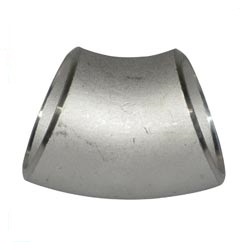
|
NPS (in) |
OD (mm) |
90° LR Elbow C-E (in) |
90° SR Elbow C-E (in) |
45° LR Elbow C-E (in) |
180° LR Return C-C (in) |
|---|---|---|---|---|---|
|
1/2 |
21.3 |
1 1/2 |
1 |
15/16 |
3 |
|
3/4 |
26.7 |
1 1/2 |
1 |
1 1/8 |
3 |
|
1 |
33.4 |
1 1/2 |
1 |
1 1/2 |
3 |
|
1 1/2 |
48.3 |
2 1/4 |
1 1/2 |
1 7/8 |
4 1/2 |
|
2 |
60.3 |
3 |
2 |
2 1/2 |
6 |
|
3 |
88.9 |
4 1/2 |
3 |
3 3/4 |
9 |
|
4 |
114.3 |
6 |
4 |
5 |
12 |
|
6 |
168.3 |
9 |
6 |
7 1/2 |
18 |
|
8 |
219.1 |
12 |
8 |
10 |
24 |
|
10 |
273.1 |
15 |
10 |
12 1/2 |
30 |
|
12 |
323.9 |
18 |
12 |
15 |
36 |
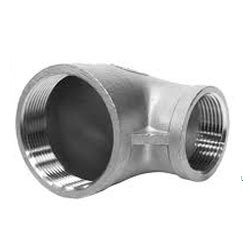
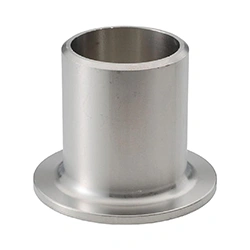
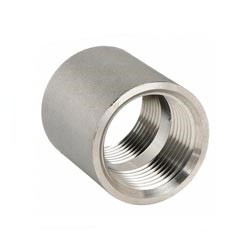
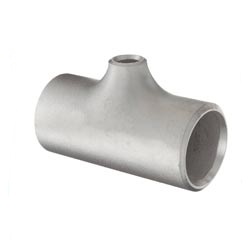
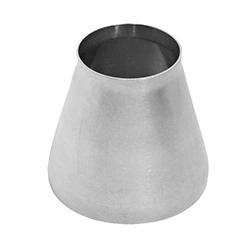
Our inventory covers a full spectrum of 316 stainless steel pipe fittings and 316 stainless steel tube fittings to accommodate any piping configuration.
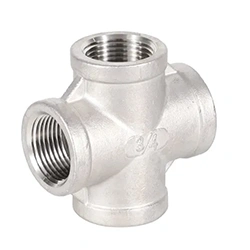
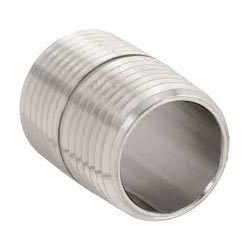
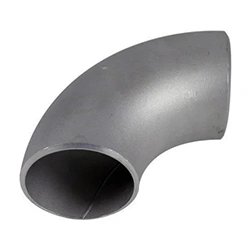
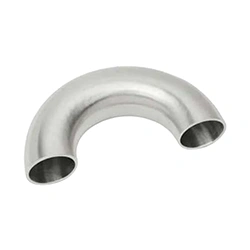
Grade 316 is weldable by all standard fusion methods, with or without filler metals. For welded service, specify WP316L (low-carbon) to eliminate sensitisation risk at the weld heat-affected zone — post-weld annealing is not required for 316L.
If standard 316 fittings have been welded, restore full corrosion resistance by solution annealing at 1,050–1,150°C (1,922–2,102°F) followed by rapid water quench. Avoid service in the sensitisation temperature range of 425–860°C (797–1,580°F) without subsequent annealing.
Machining note: 316 work-hardens rapidly. Use heavy positive feeds at low speeds with chip breakers, generous cutting fluid, and sharp tooling to avoid galling.
The same anneal parameters from the Fabrication Notes above, pulled into a scannable line for quick spec-checking:
|
Parameter |
Value |
|---|---|
|
Solution anneal temperature |
1,050–1,150°C (1,922–2,102°F) |
|
Quench method |
Rapid water quench |
|
Sensitisation range to avoid post-weld |
425–860°C (797–1,580°F) |
|
Post-weld anneal required for 316L? |
No |
The molybdenum content in grade 316 makes these fittings the standard specification wherever chlorides, acids, or aggressive chemicals are present. Below are the primary industries and the specific reason 316 is required over grade 304:
A short checklist that extends service life on already-installed 316 stainless fittings and 316 grade stainless fittings alike:
The primary difference is molybdenum present at 2–3% in grade 316 and absent in 304. Molybdenum dramatically improves resistance to pitting and crevice corrosion from chloride ions, making 316 stainless steel pipe fittings the correct specification for marine, chemical processing, offshore, and coastal environments where grade 304 would corrode prematurely.
Pressure ratings depend on fitting type and class. Socket-weld and threaded fittings per ASME B16.11 are rated Class 3000 (~3,000 PSI), Class 6000 (~6,000 PSI), or Class 9000. Butt-weld fittings per ASME B16.9 are rated by wall schedule (Schedule 40, 80, 160) — see the Pressure Ratings table above for specifics. All ratings decrease with increasing temperature; derate per ASME B31.3 for your service conditions.
With minimal maintenance, grade 316 stainless steel fittings are engineered for 20–50 years or more of service life, depending on environment and media. The molybdenum content provides extended service in chloride-bearing applications such as marine, chemical, and offshore environments where grade 304 would require replacement in a fraction of that time.
Stainless steel 316 pipe fittings are used to connect, control, change the direction of, and terminate piping systems in industries including oil & gas, chemical processing, pharmaceuticals, food & beverage, marine, power generation, and water treatment — wherever corrosion resistance, hygiene, and pressure-bearing reliability are required.
SS 316 fittings are available in five end connection types: Butt Weld (ASME B16.9), Socket Weld, Threaded/Screwed (ASME B16.11), Flanged (ASME B16.5), and Compression/Instrumentation. Selection depends on pressure class, pipe schedule, and whether the joint needs to be dismantleable for maintenance.
Grade 316 stainless steel fittings maintain structural integrity at continuous operating temperatures up to 870°C (1,598°F) in oxidising atmospheres, and up to 925°C (1,697°F) in intermittent service. For aqueous service with chlorides, the critical pitting temperature (CPT) is the more relevant limit — typically above 15°C for seawater with grade 316.
316 stainless steel weld fittings are typically manufactured using processes such as seamless pipe forming, hot or cold forging, fabrication from stainless steel plates, and precision welding techniques. After forming, the fittings undergo CNC machining, heat treatment (solution annealing), and surface finishing processes like pickling and passivation to ensure high strength, dimensional accuracy, and superior corrosion resistance for industrial applications.
Both share the same 2–3% molybdenum content and corrosion resistance; the difference is carbon content — 316L caps carbon at 0.03% against 0.08% for standard 316, which prevents sensitisation at weld heat-affected zones and removes the need for post-weld annealing.
Get the latest pricing for Stainless Steel 316 Fittings! Email vishal@solitaire-overseas.com now for an immediate quote and our updated 2025 price guide.
Contact Us India
India Iran
Iran Thailand
 South Korea
 Turkey
 Morocco
 Costa Rica
 Kazakhstan
 Philippines
 Canada
 Japan
Japan Russia
 United States
 Saudi Arabia
 Kuwait
 Singapore
 Malaysia
 UAE
UAE Germany
 Italy
Italy China
China UK
UK Egypt
Egypt Vietnam
 Oman
Oman Australia
 Qatar
Qatar Portugal
 Nigeria
 Iraq
Iraq Ukraine
 Bangladesh
 Poland
 Romania
 Cyprus
 Angola
 Colombia
 Norway
 Chile
Chile Mexico
 South Africa
 Netherlands
 Brazil
 France
 Jordan
 Spain
Spain Hong Kong
 Indonesia
 Taiwan
 Tobago
 Greece
 Czechia
 Belgium
 Sri Lanka
 Myanmar
 Venezuela