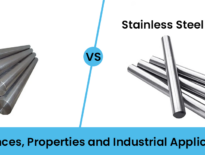
The selection of the appropriate material is important in different industries. The most commonly used materials by many industries are Inconel round bars and stainless steel round bars. They both are strong and reliable. Nevertheless, in spite of certain similarities, these materials are quite different in terms of composition, heat resistance, corrosion resistance, and performance in general. To enable engineers and manufacturers to make the necessary choice of material to be used in harsh conditions and demanding applications, the distinction between Inconel vs stainless steel round bar is a useful concept of understanding the most appropriate material to use.
What Makes Inconel a High-Performance Superalloy?
Inconel Round bar is a solid and cylindrically shaped metal rod, which consists of high-performance, nickel-chromium-based superalloy. These round bars are made in such a way that they can easily operate in the extreme environment, they provide high resistance to high temperature, oxidation, high pressure, and hard environment. They are used by different industries according to their requirements such as aerospace, nuclear, oil & gas, and marine industries, to make different components.
What Is a Stainless Steel Round Bar? Composition and Core Properties
A stainless steel round bar is a solid cylindrical metal rod that is made from an iron-based alloy that contains almost 10.5% chromium, which provides excellent strength and corrosion resistance. The main feature of stainless steel round bars is present in chromium that creates a protective layer on the surface of the components to prevent rust and surface damage. It’s commonly used to make different components because of its strength, durability, and smooth finish. Due to its affordability, easy fabrication, and reliable performance this material is used by different industries such as construction, automotive, marine, and manufacturing applications.
Inconel vs Stainless Steel: Six Properties Compared
The Inconel vs stainless steel properties are different and also made of different metals. The most widely specified Inconel bar grades are 625 (general corrosion/heat), 718 (high-strength, weldable), and 825 (acid and sulphide resistance). For stainless steel: 304 (general purpose), 316/316L (marine and pharmaceutical), and 321 (thermal cycling applications). So the below is given the difference between Inconel and stainless steel that covers major differences between them.
1.Chemical Composition:
- Inconel Round Bar: Inconel is a group of nickel-heavy super alloys. It is mostly composed of about 58% nickel, 23% chromium and 8-10% molybdenum. Inconel 718 replaces part of molybdenum with niobium and titanium to enhance weldability.It has the secondary constituents in the correct proportions to make it be mechanically stable even at the extreme temperatures and in corrosive conditions. The inconel round bars also come in different standards such as ASTM B446, AMS 5666. Inconel 718 bar: ASTM B637, AMS 5662. SS 316L bar: ASTM A276, EN 10088-3.
- Stainless steel Round Bar: A stainless steel round bar is an iron-based alloy that contains 16–18% chromium, 10–14% nickel, and 2–3% molybdenum, that help this material to stay stable and provide corrosion resistance in a harsh environment. The other metals present in it are nickel and molybdenum, whose main properties are to provide strength to the components. The tailored composition depends on the grade and application requirements.
2.Mechanical properties:
- Inconel Round Bar: Inconel is able to perform well in high-temperature conditions. Inconel 625 has a tensile strength of 827 MPa and yield strength of 414 Mpa at the annealed state and even at 650 °C which many other austenitic stainless steels have already lost strength, Inconel 625 still maintains the majority of its tensile strength. It is also tough in harsh environments with high creep and fatigue properties. The hard-to-reach industries such as aerospace and power generator equipment are often found in Inconel, because of these features. For the weldability of Stainless steel is readily weldable with standard TIG/MIG processes.
- Stainless steel Round Bar: Many structural and industrial applications of stainless steel use this material due to its good mechanical strength and durability of stainless steel. It also performs well at room temperature and moderately high temperatures, but tends to lose strength when subjected to extremely high temperatures or repeated thermal stress over time. It depends on the grade to determine its hardness. To weld Inconel 625 and 718 are weldable but require matched consumables (ERNiCrMo-3 for 625) and careful heat input control to prevent heat-affected zone cracking.
3.Temperature Resistance:
- Inconel Round Bar: Inconel was designed to endure high temperatures, functioning at temperatures above 1000 ° C, or 1832 °F. its strength, and durability are maintained even when it is subjected to continuous heat and stress which is why it is extensively used in the jet engines, gas turbines and heat exchangers where the performance of the materials must be dependable and not lost under these extreme temperature and pressure.
- Stainless steel Round Bar: The stainless steel can easily withstand in the high-temperature about 870°C (1600°F).Above 870°C, austenitic grades begin losing tensile strength and corrosion resistance, making sustained high-temperature service impractical without a superalloy substitution. There are many other stainless steels that can handle the high temperature environment, but still can’t stand for a long period of time compared to superalloys like Inconel or some others.
4.Machinability and Fabrication
- Inconel Round Bar: Inconel material is a bit hard to alter or make into another form because of its high strengths, hardness, and toughness. To control this process carbide or ceramic tooling, slow cutting speeds and high-pressure coolant are required to control work-hardening. These tooling and process costs typically add 30–50% to machining time compared to stainless steel.It gets hardened quickly that makes it difficult for the cutting tool to cut it down. The Inconel round bar required specialized cutting tools and advanced techniques to change into a different form without damaging the material.
- Stainless steel Round Bar: Stainless steel is slightly easier to cut and change into different forms according to requirements. It’s very ductile that makes it easy to shape, cut, and weld without using any special equipment and techniques. This makes it the most used material in the different industries.
5.Weight and Density
- Inconel Round Bar: The density of Inconel is slightly larger, approximately 8.4 g/cm 3, and this implies that it is heavier than that of stainless steel. This increased density is due to rich nickel present in it that helps to make it strong and durable, particularly in extreme environments, but it also increases the weight on components.
- Stainless steel Round Bar: Stainless steel, conversely, is typically not as dense as most superalloys with a density of between 7.9 grams per cubic centimeter (g/cm 3 ). Stainless steel is the more useful selection in weight-sensitive buildings where temperature requirements remain at or below 800 °C because of its lower density.
6. Cost Comparison
- Inconel Round Bar: Inconel is also much more costly because of the high level of nickel in it and its complicated alloying components. The manufacturing processes are more specialized, and even the raw materials are expensive. Depending on nickel spot prices and the specific grade, Inconel round bars typically cost 4–8 times more per kilogram than equivalent stainless steel grades.
- Stainless steel Round Bar: The stainless steel is widely used because it’s typically cheaper and easily available compared to Inconel. The production process is not as complicated and raw materials are more widespread. This is due to its cost-effectiveness; hence, stainless steel is a favorite material in most standard industry and consumer goods.
Inconel Round Bar Vs stainless steel Bar Comparison table
| Property | Inconel Round Bar | Stainless Steel Round Bar |
| Base Material | Nickel-based superalloy with 58%+ nickel as the primary element. | Iron-based alloy containing 10.5%+ chromium for corrosion resistance. |
| Common Grades | Inconel 625, Inconel 718, Inconel 825. | 304, 316/316L, 321. |
| Chemical Composition | Approx. 58% Ni, 23% Cr, 8–10% Mo, with Nb and Ti (in grade 718). | Typically 16–18% Cr, 10–14% Ni, and 2–3% Mo depending on grade. |
| Applicable Standards | ASTM B446, AMS 5666 (625); ASTM B637, AMS 5662 (718). | ASTM A276, EN 10088-3 (316L). |
| Mechanical Properties | High Strength: UTS} approx 827 MPa (625). Excellent creep and fatigue resistance even at 650C. | Moderate Strength: Good for structural use at room temp; strength decreases under prolonged high heat. |
| Temperature Resistance | Extreme Heat: Can operate above 1000 °C (1832 °F) while maintaining stability. | Moderate Heat: Can withstand up to approx 870 °C (1600 °F); loses strength above 600 °C. |
| Weldability | Requires matched filler metals (e.g., ERNiCrMo-3) and controlled heat to avoid cracking. | Readily weldable using standard TIG/MIG processes; easier site assembly. |
| Machinability | Difficult: High work-hardening tendency. Requires carbide/ceramic tooling and slow speeds. | Easier: Good ductility and formability; can be shaped with conventional equipment. |
| Density / Weight | Approx. 8.4 g/cm3 — slightly heavier due to high nickel content. | Approx. 7.9 g/cm3 — lighter than most nickel superalloys. |
| Typical Applications | Aerospace, jet engines, gas turbines, and extreme chemical environments. | Construction, food processing, marine, and general industrial components. |
| Cost Comparison | Significantly Expensive: Typically 4–8x the cost of stainless steel per kg. | More Economical: Widely available and suitable for consumer applications. |
When NOT to use Inconel Round Bar
Inconel is not always the answer. If service temperatures stay below 600°C, a 316L or 321 stainless steel bar will perform adequately at a fraction of the cost and with far easier fabrication. Inconel’s premium is only justified in genuinely extreme environments.
Need help selecting between Inconel and stainless steel for your project? Get Clarity Now!
Application Usage of Inconel Round Bars
The Inconel Round Bars are commonly used in different industries due to its strength and corrosion resistance properties. Some of the most common industries that use this material for their use are listed below.
- Aerospace Industry: Inconel round bars are widely used in the aerospace industry to manufacture turbine blades, exhaust systems, and jet engine parts. Due to their excellent properties to withstand extreme heat and stress conditions, making it ideal for high-temperature environments.
- Chemical Processing: Inconel round bars are commonly used in chemical plants to manufacture heat exchangers, reactors, and pressure vessels. These parts need a high level of resistance to corrosion and temperature.
- Power Generation: Comparisons made between nickel alloy and stainless steel tend to reveal that Inconel is more effective in power plants. This is why they have been making gas turbines and components of nuclear reactors since they can perform well with high heat and pressure.
- Marine Engineering: The Inconel round bars are easily applicable in the offshore platform and equipment of ships in the offshore industry since they can resist saltwater corrosion and rust unlike other materials.
Application Usage of Stainless steel Round Bars
The stainless steel round bars are affordable compared to Inconel Round Bar and they are also easily available. Due to all these features many companies use this material to make different components. The list below provides the information regarding the different industries that use this material.
- Construction and Architecture: Round Stainless steel bars are common in construction as structural supports, reinforcements and building designs. They are used on structures that last long, bridges, and buildings, because of their strength and resistance to corrosion.
- Food and Pharmaceutical Industry: The stainless steel round bars are applied in food processing and pharmaceutical industries to produce hygienic equipment, machinery, and piping. Their clean surface and the inability to be contaminated contribute to the strict sanitary standards.
- Automotive and Aerospace: Stainless steel round bars have been used in many automotive and aerospace components, including fasteners, shafts, exhaust components among others, due to their resistance to environment exposure and durability.
- Medical Equipment: The medical devices and surgical tools are also made with stainless steel round bars because the material can be re-sterilized without any loss of its quality and strength.
Conclusion:
Both Inconel round bar and stainless steel round bar are major materials that are employed in different industrial applications. The key distinction between the Inconel and the stainless steel is in their structure, heat stability and their overall performance.For most structural, food-grade, medical, and general industrial applications, a stainless steel round bar is the right call; it is weldable, widely available, and cost-effective. Inconel becomes the correct specification when continuous service temperatures exceed 800°C, when saltwater or aggressive chemical exposure is sustained, or when creep resistance under load is non-negotiable. The raw material premium (4–8%) is only justified when the environment would destroy stainless steel. Solitaire Overseas a well known manufacturer and supplier of high-quality inconel and stainless steel bars and many more materials.
Frequently Asked Questions
- What is the difference between Inconel and stainless steel?
The main difference between Inconel and stainless steel is their composition and performance. Inconel round bar is a nickel-based superalloy designed for extreme heat and corrosion, while a stainless steel round bar is an iron-based alloy with chromium that offers good corrosion resistance and lower cost for general applications.
- Which is stronger Inconel vs stainless steel?
In the Inconel vs stainless steel comparison, Inconel round bars are generally stronger, especially at high temperatures. Stainless steel has good strength for everyday industrial use, but Inconel vs stainless steel properties show that Inconel maintains its strength better in extreme heat and pressure.
- Is Inconel better than stainless steel?
Whether Inconel alloy vs stainless steel is better depends on the application. Inconel round bars are better for high-temperature and harsh environments, while stainless steel round bars are more suitable for cost-effective, general industrial uses.
- Why is Inconel more expensive than stainless steel?
Inconel round bars are more expensive because they contain a high amount of nickel and require complex manufacturing processes. In comparison, stainless steel round bars use more widely available materials, making them cheaper and easier to produce.
- How does nickel alloy vs stainless steel perform in high temperatures?
In a nickel alloy vs stainless steel comparison, nickel alloys like Inconel round bar perform much better in high temperatures. They maintain strength, resist oxidation, and handle extreme heat, while stainless steel round bars may lose strength at very high temperatures.