+91-9619103479
or
vishal@solitaire-overseas.com
Heat exchanger tubes are precision tubular components that transfer thermal energy between two fluids without mixing them, forming the core heat-transfer surface inside a shell-and-tube exchanger. Solitaire Overseas manufactures, supplies and exports heat exchanger tubes in seamless, welded, U-bend and finned types, in stainless steel, carbon steel, alloy steel, nickel alloys, titanium and copper nickel, to ASTM, ASME and TEMA standards, to clients worldwide.
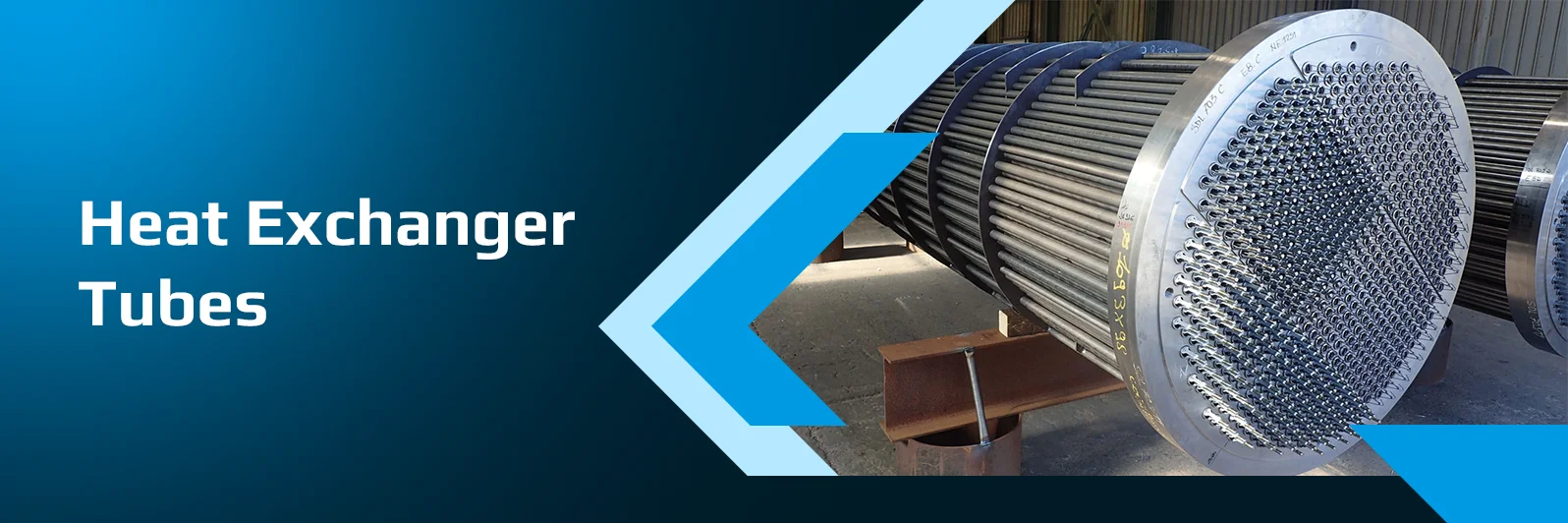
Solitaire Overseas is a trusted heat exchanger tubes manufacturer and exporter based in India, supplying a comprehensive range of seamless and welded heat exchanger tubes to clients across the globe. Our heat exchanger tubes are manufactured in strict compliance with international standards including ASTM, ASME, TEMA and DIN, ensuring consistent quality, dimensional accuracy and long service life in demanding industrial environments.
We stock and supply heat exchanger tubes in a wide selection of materials such as stainless steel, carbon steel, alloy steel, nickel alloys, titanium, copper nickel, duplex and super duplex stainless steel. Whether you need standard sizes or custom specifications, Solitaire Overseas delivers precision-engineered tubing that meets the exact requirements of your heat transfer application.
Request a Quote for Heat Exchanger TubesHeat exchanger tubes are precision tubular components used to transfer thermal energy between two or more fluids without mixing them. These tubes are installed inside the shell of a shell and tube heat exchanger, where one fluid flows through the tube side while the other flows across the shell side. The tube wall acts as the primary heat transfer surface, enabling efficient and controlled exchange of thermal energy. These tubes are used across all major heat exchanger types: shell-and-tube, air-cooled (finned), double-pipe, plate, and condenser/evaporator units with the shell-and-tube design remaining the most common industrial configuration.
Tubes are joined to the tubesheet by a rolling or welding process, forming the seal between the tube side and shell side of the exchanger. Tubes produced by hot working carry a thin oxide film known as mill scale, which is removed by turning, polishing, or pickling before the tubes are dispatched.
Heat exchanger tubes are critical components in refinery operations, power generation plants, chemical processing facilities, HVAC systems, pharmaceutical manufacturing, marine applications, and food and beverage processing. They must withstand high operating pressures, extreme temperatures, and corrosive media while maintaining optimal thermal conductivity and structural integrity throughout their service life.
Solitaire Overseas supplies heat exchanger tubes in a variety of configurations designed for different industrial applications and process conditions. Understanding the available heat exchanger tubes types helps engineers and procurement teams select the most appropriate solution for each project.
Seamless heat exchanger tubes are manufactured through a hot extrusion or cold drawing process without any welded seam. The absence of a longitudinal weld makes these tubes ideal for high pressure and high temperature service. They exhibit uniform mechanical properties throughout the cross section and are widely used in boilers, superheaters, power plant condensers, and chemical reactors.
Welded heat exchanger tubes are produced by rolling flat strip stock and fusing the edges using electric resistance welding (ERW) or TIG welding. These tubes are cost effective, dimensionally consistent, and suitable for moderate pressure applications. They are available with bead removed finish for smooth internal and external surfaces, which is essential for hygienic and sanitary processing industries.
U bend heat exchanger tubes are single tubes bent into a U shape, allowing the fluid to enter and exit from the same end of the heat exchanger. This configuration eliminates the need for welded connections at the bend, reduces the risk of leakage, and simplifies the tube bundle assembly. U bend tubes are commonly manufactured according to ASTM A688 and ASME SA688 standards and are heat treated after bending to relieve residual stresses.
U-bend tubes are the defining component of a U-tube bundle heat exchanger, a construction where the entire bundle only needs a single tubesheet, since both ends of each tube terminate at the same end of the shell.
Finned heat exchanger tubes feature extended surface fins on the outer or inner diameter that significantly increase the effective heat transfer area. These tubes are particularly effective when one fluid has a considerably lower heat transfer coefficient than the other, such as gas to liquid applications. Finned tubes are used in air cooled heat exchangers, air preheaters, economizers, and refrigeration coils.
See our dedicated Finned Tubes range for the full selection of fin types and configurations.
Corrugated heat exchanger tubes have a spiral groove pattern on the tube surface that creates turbulence in the fluid flow, thereby enhancing the heat transfer rate without increasing the tube length or shell diameter. They are available in stainless steel and other corrosion resistant alloys, typically in OD sizes ranging from 12.70 mm to 38.10 mm.
Bare or straight heat exchanger tubes are the most commonly used configuration in shell and tube heat exchangers. They are supplied in fixed lengths as per TEMA standards and are suitable for applications where regular access for cleaning and inspection is required. Straight tubes minimize flow resistance and are easy to replace during maintenance.
Rifled tubes have helical grooves machined into the bore that induce turbulence and improve the heat transfer coefficient, particularly in condensing refrigerant and process-fluid service. They deliver higher heat duty per unit length than smooth bore tubes, though the grooved bore needs closer attention during cleaning in fouling-prone streams.
In a floating head design, one end of the tube bundle is free to move, absorbing thermal expansion and allowing the entire bundle to be withdrawn for mechanical cleaning. This construction is common in large exchangers handling high temperature differentials and heavy fouling service.
A double pipe heat exchanger uses one tube nested inside another, with one fluid flowing through the inner tube and the second fluid through the annular space. This simple, low-cost configuration suits small-capacity duties, pilot plants, and skid-mounted heat recovery units.
Enhanced surface tubes use twisted-tape inserts, dimples, or corrugations on the internal or external surface to promote turbulence and boost thermal performance in compact exchangers. Micro-channel and mini-tube designs, typically in aluminium or copper, pack a very high surface-to-volume ratio into a small footprint and are used in electronics cooling and compact HVAC coils. Solitaire Overseas can advise on whether an enhanced-surface or micro-channel design is justified for a given duty — contact our technical team for a recommendation.
We manufacture heat exchanger tubes in an extensive range of materials to match the operating environment, fluid characteristics, temperature, and pressure requirements of each application.
| Material Category | Common Grades | Key Properties |
|---|---|---|
| Stainless Steel HX Tubes | 304, 304L, 316, 316L, 316Ti, 321, 347 | Excellent corrosion resistance, high temperature strength, low maintenance |
| Duplex Stainless Steel | 2205 (UNS S31803), 2507 (UNS S32750) | High strength, outstanding stress corrosion cracking resistance |
| Super Duplex SS | UNS S32760, Zeron 100 | Superior resistance in highly aggressive chloride environments |
| Carbon Steel HX Tubes | ASTM A179, A192, A214, A556 | Cost effective, high thermal conductivity, used in low corrosion service |
| Alloy Steel HX Tubes | T5, T9, T11, T22, T91 | High temperature creep resistance, ideal for power generation |
| Hastelloy HX Tubes | Inconel 600/625, Incoloy 800/825, Hastelloy C276 | Extreme heat and corrosion resistance, nuclear and chemical service |
| Titanium HX Tubes | Grade 1, Grade 2, Grade 12 | Excellent seawater resistance, lightweight, pharmaceutical and marine use |
| Copper Nickel HX Tubes | 90/10, 70/30 Cu-Ni | Superior seawater and biofouling resistance, marine heat exchangers |
| Admiralty Brass HX Tubes | UNS C44300 | Good corrosion resistance, used in condensers and evaporators |
| Zirconium HX Tubes | Grade 702, Grade 705 | Exceptional acid resistance, chemical processing applications |
All heat exchanger tubes supplied by Solitaire Overseas conform to recognized international manufacturing and testing standards. We supply tubes as per the following specifications, and we also accommodate equivalent DIN, EN, JIS, and BS standards upon request.
| Standard | Description |
|---|---|
| ASTM A213 / ASME SA213 | Seamless ferritic and austenitic alloy steel boiler, superheater, and heat exchanger tubes |
| ASTM A179 / ASME SA179 | Seamless cold drawn low carbon steel heat exchanger and condenser tubes |
| ASTM A249 / ASME SA249 | Welded austenitic stainless steel boiler, superheater, heat exchanger, and condenser tubes |
| ASTM A214 / ASME SA214 | Electric resistance welded carbon steel heat exchanger and condenser tubes |
| ASTM A269 / ASME SA269 | Seamless and welded austenitic stainless steel tubing for general service |
| ASTM A556 / ASME SA556 | Seamless cold drawn carbon steel feedwater heater tubes |
| ASTM A688 / ASME SA688 | Welded austenitic stainless steel feedwater heater tubes (U bend) |
| ASTM B163 | Seamless nickel and nickel alloy condenser and heat exchanger tubes |
| ASTM B338 | Seamless and welded titanium and titanium alloy tubes for condensers and heat exchangers |
| TEMA Standards | Tubular Exchanger Manufacturers Association standards for shell and tube heat exchangers |
| ASME Boiler Code | Design, fabrication, and inspection requirements for pressure vessels and heat exchangers |
Solitaire Overseas supplies heat exchanger tubes across a wide dimensional range to accommodate diverse process engineering requirements. Our standard size range is as follows, and we can source or manufacture custom sizes upon inquiry.
| Dimension | Range |
|---|---|
| Outer Diameter (OD) | 6.35 mm to 76.20 mm (1/4 inch to 3 inch) |
| Wall Thickness (BWG) | BWG 8 to BWG 22 (0.91 mm to 4.19 mm) |
| Length | Up to 30,000 mm (30 meters); custom lengths available |
| Inside Diameter (ID) | Available in various ID sizes as per TEMA requirements |
| U Bend Radius | As per customer specification and TEMA standards |
| Tolerance | As per ASTM / ASME / ISO standards; tight tolerances on request |
Standard outside diameter sizes commonly stocked include 15.88 mm, 19.05 mm, 25.40 mm, and 31.75 mm, with wall thicknesses defined per the Birmingham Wire Gauge (BWG) system. Lengths of 1.83 m (6 ft), 2.44 m (8 ft), 3.66 m (12 ft), 4.88 m (16 ft), and 6.10 m (20 ft) are widely available. We also supply tubes in random and fixed lengths as specified by the purchaser.
Heat exchanger tubes manufactured by Solitaire Overseas serve a wide spectrum of industries where thermal management is critical to process efficiency and safety.
Still unsure which tube suits your system? Contact our technical team for a custom recommendation.
The price of heat exchanger tubes varies based on several factors including material grade, tube type (seamless or welded), outer diameter, wall thickness, length, surface finish, testing requirements, and quantity ordered. At Solitaire Overseas, we offer competitive heat exchanger tubes prices with direct factory sourcing and bulk procurement advantages.
Indicative price ranges by material category are provided below. These are approximate figures intended to help buyers plan budgets. Actual pricing is subject to market conditions and project specifications.
| Material | Approximate Price Range (USD/kg) |
|---|---|
| Carbon Steel (ASTM A179 / A214) | $0.80 to $2.50 |
| Alloy Steel (T11, T22, T91) | $2.00 to $6.00 |
| Stainless Steel 304 / 304L | $3.50 to $7.00 |
| Stainless Steel 316 / 316L | $4.00 to $8.50 |
| Duplex SS 2205 | $6.00 to $12.00 |
| Super Duplex SS 2507 | $10.00 to $18.00 |
| Titanium Grade 2 | $20.00 to $40.00 |
| Nickel Alloy (Inconel / Hastelloy) | $35.00 to $90.00+ |
| Copper Nickel 90/10 | $8.00 to $16.00 |
To receive an accurate and current heat exchanger tubes price list tailored to your project requirements, please contact Solitaire Overseas directly. Our team can provide a detailed quotation within 24 hours, including material test certificate costs, packaging, and freight options.
Every batch of heat exchanger tubes supplied by Solitaire Overseas undergoes rigorous quality control and third party inspection to ensure compliance with the ordered specification. Our quality assurance processes include:
Material Test Certificates (MTC) conforming to EN 10204 3.1 or 3.2 are provided with every shipment. Third party inspection by agencies such as TUV, SGS, Bureau Veritas, Lloyds, and DNV is arranged upon request.
With decades of experience in the specialty tubes and pipes segment, Solitaire Overseas has built a reputation as a reliable source of high quality heat exchanger tubes for buyers across the Middle East, Europe, North America, Southeast Asia, and Africa.
A heat exchanger tube is a precision tubular component installed inside a shell-and-tube heat exchanger that transfers thermal energy between two fluids without letting them mix. One fluid flows inside the tube while the other flows across the shell side, with the tube wall acting as the heat-transfer surface. Solitaire Overseas manufactures these tubes in seamless and welded construction across nine material categories, built to ASTM, ASME and TEMA specifications.
The tube count in a shell-and-tube heat exchanger depends entirely on the shell diameter, tube outer diameter, tube pitch, and the required heat-transfer area; small units may hold a few dozen tubes, while large refinery or power-plant exchangers can hold several thousand. There is no fixed number; it is calculated during thermal design based on the duty, not a standard tube-count figure. Our technical team can help confirm tube count requirements against a given shell size and TEMA layout.
Seamless heat exchanger tubes are formed without any weld seam and are preferred for high pressure, high temperature, and critical service applications. Welded heat exchanger tubes are made by joining a flat strip along a longitudinal seam and are generally more cost effective for moderate pressure applications. Both types are available in various materials and sizes from Solitaire Overseas.
Titanium Grade 2 and Grade 12 are the preferred choices for seawater heat exchangers due to their outstanding resistance to chloride induced corrosion and biofouling. Copper nickel alloys in 90/10 and 70/30 compositions are also widely used because of their natural biofouling resistance and proven service record in marine environments.
The most commonly referenced standards for stainless steel heat exchanger tubes are ASTM A213 (seamless) and ASTM A249 (welded), both also covered under equivalent ASME SA prefixes. Additional standards include ASTM A269 for general service austenitic tubes and ASTM A688 for U bend feedwater heater tubes. Equivalent EN 10216 5 and DIN standards are also available.
Heat exchanger tubes are generally available in outer diameters from 6.35 mm (1/4 inch) to 76.20 mm (3 inches) and in wall thicknesses as per the Birmingham Wire Gauge (BWG) system from BWG 22 (0.71 mm) to BWG 8 (4.19 mm). Standard lengths per TEMA range from 1.83 m (6 ft) to 7.32 m (24 ft), though custom lengths up to 30 meters are also possible.
Yes. Solitaire Overseas provides fully traceable Material Test Certificates (MTC) conforming to EN 10204 3.1 (mill certified) or 3.2 (third party witnessed) with every supply. The MTC includes chemical composition, mechanical properties, heat treatment details, and dimensional inspection records.
Yes. We supply U bend heat exchanger tubes for feedwater heaters and boiler applications in carbon steel, stainless steel, and nickel alloys. U bend tubes are manufactured per ASTM A688, ASME SA688, and other applicable standards, with post bend heat treatment available as required to restore mechanical properties at the bend zone.
Solitaire Overseas invites engineers, procurement managers, and EPC contractors to reach out for a competitive quotation on heat exchanger tubes in any material, size, or specification. We serve clients in the oil and gas, power, chemical, pharmaceutical, marine, and HVAC industries worldwide.
Contact Us Now India
India Iran
Iran Thailand
 South Korea
 Turkey
 Morocco
 Costa Rica
 Kazakhstan
 Philippines
 Canada
 Japan
Japan Russia
 United States
 Saudi Arabia
 Kuwait
 Singapore
 Malaysia
 UAE
UAE Germany
 Italy
Italy China
China UK
UK Egypt
Egypt Vietnam
 Oman
Oman Australia
 Qatar
Qatar Portugal
 Nigeria
 Iraq
Iraq Ukraine
 Bangladesh
 Poland
 Romania
 Cyprus
 Angola
 Colombia
 Norway
 Chile
Chile Mexico
 South Africa
 Netherlands
 Brazil
 France
 Jordan
 Spain
Spain Hong Kong
 Indonesia
 Taiwan
 Tobago
 Greece
 Czechia
 Belgium
 Sri Lanka
 Myanmar
 Venezuela