Inconel 718 is a nickel-chromium superalloy engineered for industrial environments where heat, pressure, and corrosion would destroy conventional materials. Developed in the 1960s and still the benchmark for high-performance alloys.Inconel 718 combines exceptional tensile strength, outstanding corrosion resistance, and reliable mechanical stability at service temperatures up to 700°C. These Inconel 718 properties make it a great choice in aerospace jet engines, oil and gas drilling equipment, power generation turbines, and marine systems wherever failure is not an option. Inconel 718 is one of the most reliable superalloys in the contemporary engineering industry due to its capacity to work in severe pressure and temperature environments.
What Is Inconel 718? Alloy Composition and Core Characteristics
Inconel 718 is a high-performance nickel-chromium super alloy that can be utilized in a high-demand environment where the conventional alloy is not able to perform effectively.Inconel 718 contains approximately 50–55% nickel, 17–21% chromium, 4.75–5.5% niobium, 2.8–3.3% molybdenum, and trace amounts of titanium and aluminium. It is supplied to ASTM B637 and AMS 5662/5663 standards for bar and forging applications. Therefore, it has excellent performance even when in severe industrial environments. The high tensile strength and maintenance of structural integrity in temperatures up to 700 °C or beyond is one of the most outstanding properties of Inconel 718. Due to these strong characteristics, the Inconel 718 is widely applied in critical applications in various industries like aerospace, oil and gas and power generation.
Alloy 718 Composition table
| Element | Percentage (%) Range |
| Nickel (Ni) | 50% – 55% |
| Chromium (Cr) | 17% – 21% |
| Niobium (Nb) + Tantalum (Ta) | 4.75% – 5.5% |
| Molybdenum (Mo) | 2.8% – 3.3% |
| Titanium (Ti) | 0.65% – 1.15% |
| Aluminium (Al) | 0.2% – 0.8% |
| Iron (Fe) | Balance |
| Applicable Standards | ASTM B637 / AMS 5662 |
Note:
Inconel 718 Round Bars: ASTM B637, AMS 5662 (annealed), AMS 5663 (precipitation hardened). Inconel 718 Flanges: ASTM B564. These standards are required for procurement in aerospace and oil & gas — citing them adds immediate EEAT value.
Key Properties of Inconel 718 Alloy
The key properties of Inconel 718 Alloy include many things that information is listed below.
- High Temperature Strength: Inconel 718 retains high tensile strength and structural integrity in continuous service up to 700°C (1,292°F), making it reliable in jet engines, turbines, and other heat-intensive applications.
- Superior Corrosion Resistance: The nickel-chromium composition forms a stable passive oxide layer on the surface, providing resistance to oxidation, pitting, crevice corrosion, and stress corrosion cracking in marine and chemical environments.
- Excellent Fatigue Resistance and Creep: Inconel 718 is fatigue and creep-resistant, can retain shape and strength in the presence of repeated stress and heat, which is needed with jet engines and drilling equipment.
- Good Weldability: Unlike many precipitation-hardened superalloys, Inconel 718’s niobium-based strengthening mechanism makes it resistant to post-weld strain-age cracking, enabling complex fabricated assemblies to be welded without loss of mechanical integrity.
- Cryogenic performance: Inconel 718 retains ductility and impact strength at cryogenic temperatures (down to -196°C / -321°F), qualifying it for LNG processing equipment and aerospace cryogenic fuel systems applications where standard austenitic steels become brittle.
- High Mechanical Strength: The alloy is tough, high-pressure, and high-stress and is also very reliable because it has high tensile strength, toughness and durability.
- Heat treatment and hardening: Inconel 718 achieves its peak mechanical properties through a two-stage precipitation hardening heat treatment: a solution anneal at 980°C, followed by ageing at 720°C then 620°C. This process precipitates the gamma-prime and gamma-double-prime phases that give alloy 718 its high strength and creep resistance.
Solitaire Overseas supplies Inconel 718 components for all the above industries:
Inconel 718 Flanges | Inconel 718 Round Bars All material supplied with full ASTM B637 / AMS 5662 mill test certificates.
How Does Inconel 718 Compare to Other Superalloys and Stainless Steel?
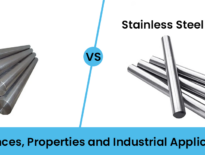
Inconel 718 is often specified over alternatives like Inconel 625, Hastelloy C-276, and 316L stainless steel based on a balance of performance and weldability. Compared to Inconel 625, alloy 718 offers higher tensile strength (UTS up to 1,380 MPa vs 827 MPa for 625 annealed) but a lower maximum service temperature. Compared to stainless steel 316L, Inconel 718 delivers significantly better performance above 600°C and in aggressive chemical environments, at approximately 4-8x the material cost. For applications demanding both fabricability and extreme mechanical performance such as oil and gas downhole tools or aerospace fasteners alloy 718 remains the first choice for making this components.
Inconel 718 Applications: Industries and Critical Components
The Inconel 718 is a high strength material used in different applications and structures. The Inconel 718 applications and different industries who use this material are listed below.
- Aerospace Industry: Its high fatigue resistance and ability to retain tensile strength above 600°C make Inconel 718 the standard specification for critical rotating and structural aerospace components.
- Oil and Gas Industry: It is commonly used to make subsea equipment, down hole tools, valves, fasteners and high pressure piping. Its level of corrosion resistance guarantees a good performance in the extreme drilling conditions.
- Power Generation: Its creep resistance and oxidation stability allow extended service intervals in high-temperature gas turbine and nuclear reactor environments.
- Marine Applications: Used in offshore platforms, subsea structural components, propeller shafts, and marine fasteners. Inconel 718 resists chloride-induced stress corrosion cracking that degrades stainless steel in saltwater service.
Conclusion:
Inconel 718’s combination of high tensile strength, weldability, fatigue resistance, and oxidation stability at temperatures up to 700°C makes it one of the most widely specified superalloys across aerospace, oil and gas, power generation, and marine industries. Where other high-performance alloys require trade-offs between weldability and strength, alloy 718’s niobium-based precipitation hardening delivers both which is why it has remained the engineering benchmark for over 60 years.
Frequently Asked Questions:
What is Inconel 718 used for?
Inconel 718 alloy is used in aerospace, oil & gas, power generation, and marine applications, including jet engines, turbine blades, valves, fasteners, and high-pressure piping.
What are the main Inconel 718 properties?
It has high strength, excellent corrosion and oxidation resistance, heat resistance up to 700°C+, fatigue and creep resistance, and good weldability.
Why is Inconel 718 used in aerospace?
Because alloy 718 can withstand extreme heat and stress, making it ideal for jet engines, turbines, and aircraft components.
What temperature can Inconel 718 withstand?
Inconel 718 performs reliably in continuous service up to 700°C (1,292°F). For short-duration peak loads, it can tolerate higher temperatures, but 700°C is the standard design limit for sustained mechanical performance.
Is Inconel 718 stronger than stainless steel?
Yes, Inconel 718 alloy has higher tensile strength and better heat and corrosion resistance than most stainless steels.