What Are Stainless Steel Flanges?
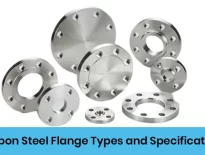
Stainless steel flanges are forged or machined disc-shaped fittings used to connect pipes, valves, pumps, and other equipment in piping systems. They create a bolted, gasketed joint that provides a leak-proof seal and allows the pipeline to be easily disassembled for maintenance, inspection, or modification.
Manufactured from austenitic stainless steel grades such as ASTM A182 F304 and F316, these flanges offer exceptional resistance to corrosion, high temperatures, and mechanical stress — making them the preferred choice across the oil & gas, chemical processing, pharmaceutical, and water treatment industries.
| Looking to source SS flanges? Visit our Stainless Steel Flanges product page for full specifications, grades, and a competitive quote from Solitaire Overseas. |
Types of Stainless Steel Flanges — Detailed Guide
1. Weld Neck Flange (WN Flange)
The weld neck flange is the most widely used flange type for high-pressure and high-temperature applications. It features a long tapered hub that is butt-welded to the pipe, allowing the load to be transferred to the pipe wall and minimizing stress concentration at the flange base.
- Best for: High-pressure pipelines, temperature cycling, critical service lines
- Grades: ASTM A182 F304, F316, F321, F347, F904L
- Standard: ASME B16.5, ASME B16.47 (large diameter)
2. Slip-On Flange (SO Flange)
A slip-on flange slides over the pipe and is fillet-welded both internally and externally. It is less expensive and requires less precision in pipe cutting than a weld neck flange. Suitable for low-to-medium pressure applications where initial cost is a consideration.
- Best for: Low-pressure utility lines, water systems, general service
- Advantage: Easy to install; forgiving on pipe cut dimensions
- Limitation: Lower fatigue life vs. weld neck under cycling loads
3. Blind Flange
A blind flange is a solid disc with no bore, used to seal the end of a pipe, nozzle, or valve. It is also used in pressure testing and provides access for future pipeline extensions.
- Best for: Pipeline terminations, pressure testing, vessel nozzle closures
- Note: Highest bending stress of all flange types — use heavier flanges for high-pressure blind service
4. Socket Weld Flange (SW Flange)
The pipe inserts into the socket bore and is fillet-welded externally. Socket weld flanges provide a smooth bore, reducing turbulence and improving flow — particularly beneficial for small-diameter, high-pressure, and high-velocity service.
- Best for: Small-bore pipelines (NPS ½” to 3″), high-pressure service, corrosive fluids
- Limitation: Not suitable for very high-purity or abrasive slurry service (crevice at socket)
5. Lap Joint Flange
A lap joint flange is used in combination with a stub end fitting. The flange slides freely over the pipe and rotates around the stub end, making bolt-hole alignment easy. The stub end is butt-welded to the pipe, while the backing flange (often carbon steel) bears the load.
- Best for: Frequent dismantling, limited access installations, alloy piping (cost-saving: alloy stub end + carbon steel flange)
- Common use: Food & beverage, pharmaceutical, chemical industries
6. Threaded Flange (Screwed Flange)
Threaded flanges have a female thread machined into the bore and connect to externally threaded pipes without welding. This makes them ideal for hazardous environments where welding could be dangerous, or for small-diameter, low-pressure applications.
- Best for: Air and water service, small-diameter piping, explosion-risk areas
- Limitation: Not suitable for cyclic temperature or pressure service; thread leaks under vibration
7. Orifice Flange
Orifice flanges are installed in pairs with an orifice plate between them for flow measurement. They feature tapped holes for pressure differential measurement. Available in all standard face types and compatible with ASME B16.36.
- Best for: Flow metering in oil & gas, chemical, and utility pipelines
8. Ring Type Joint (RTJ) Flange
RTJ flanges have a machined groove in the face that accepts a metallic ring gasket, creating a very high-integrity seal. They are widely used in high-pressure, high-temperature applications such as wellheads, compressor stations, and critical refinery lines.
- Best for: High-pressure (Class 600 and above), sour service, critical sealing applications
Stainless Steel Flange Grades — Which One Should You Choose?
| Grade | When to Use |
| SS 304 (ASTM A182 F304) | General-purpose corrosion resistance; food, pharma, water treatment; most cost-effective austenitic grade |
| SS 304L (F304L) | Low-carbon variant; use when post-weld heat treatment is not practical; reduces sensitization risk |
| SS 316 (F316) | Superior chloride resistance; marine, offshore, chemical plants; standard choice when 304 is insufficient |
| SS 316L (F316L) | Low-carbon 316; welded assemblies in chemical and marine service; reduces carbide precipitation |
| SS 321 (F321) | Titanium-stabilized; resists sensitization at 425–900°C; exhaust systems, jet engines, heat exchangers |
| SS 347 (F347) | Niobium-stabilized; better than 321 in very high-temp service; nuclear and petrochemical |
| SS 904L | Super-austenitic; handles concentrated sulfuric acid, phosphoric acid; seawater heat exchangers |
Stainless Steel Flange Standards — ASTM, ASME, DIN, JIS
Stainless steel flanges are manufactured to various international standards depending on the project requirement and geographical market:
| Standard | Scope |
| ASTM A182 | Material specification for forged SS pipe flanges; covers grades F304/L, F316/L, F321, F347, F904L |
| ASME B16.5 | Dimensions, ratings, tolerances for pipe flanges NPS ½” to 24″ |
| ASME B16.47 | Large-diameter flanges NPS 26″ to 60″ (Series A: MSS SP-44; Series B: API 605) |
| EN 1092-1 | European flange standard (PN rated); widely used in European projects |
| DIN 2631–2638 | German standard flanges; PN6 to PN160 |
| JIS B2220 | Japanese Industrial Standard; common in Japan and Southeast Asian projects |
| MSS SP-44 | Large-diameter steel pipeline flanges; used in oil & gas transmission |
How to Select the Right Stainless Steel Flange
Choosing the correct SS flange requires evaluating several factors:
- Operating pressure and temperature determines pressure class (150 to 2500) and face type (RF vs RTJ)
- Fluid medium corrosive media (chlorides, acids) require 316/316L or 904L; clean water/food service can use 304
- Pipe size and schedule determines NPS, bore dimensions, and mating pipe wall thickness
- Application standard ASME B16.5 for most industrial; EN 1092-1 for European projects; JIS for Asian projects
- Frequency of disassembly lap joint flanges preferred for frequent removal
- Weld vs. no-weld threaded flanges where welding is prohibited; socket weld for small-bore high-pressure
- Budget slip-on flanges are cheapest; weld neck flanges cost more but last longer under cycling conditions
Industries That Use Stainless Steel Flanges
Oil & Gas: upstream wellheads, midstream transmission, downstream refinery piping
Chemical Processing: aggressive acid/alkali media, high-purity chemical transfer
Petrochemical: ethylene crackers, distillation columns, compressor systems
Power Generation: high-pressure steam lines, boilers, turbine inlet/outlet
Pharmaceutical: hygienic-grade 316L flanges; FDA-compliant, CIP-compatible systems
Marine & Offshore: seawater-resistant 316 and duplex flanges for FPSO, rigs, and shipbuilding
Water Treatment: desalination, reverse osmosis, municipal water infrastructure
Food & Beverage: sanitary lap joint and weld neck flanges in brewing, dairy, and food-grade lines
Conclusion
Understanding the different types of stainless steel flanges from weld neck and slip-on to blind and lap joints and knowing which grade to specify (304, 316, 321, 904L) is essential for safe, long-lasting piping systems. The right flange choice depends on your operating conditions, fluid media, pressure class, and industry standard.
| Ready to source SS flanges?
Solitaire Overseas manufactures and exports stainless steel flanges in all types, grades, and sizes to 70+ countries. Visit our Stainless Steel Flanges product page for full specifications, price guidance, and a 24-hour quote. |