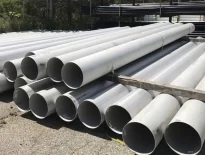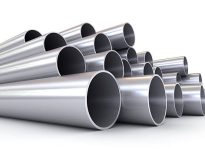
Heat exchanger-type Tubes are made up of a shell (a huge pressure vessel) that houses a bundle of tubes. To transfer heat between the two fluids, one fluid flows through the tubes and another fluid flows over the tubes (via the shell).
A heat exchanger is a device that uses a working fluid and a working surface with varying temperatures to transport thermal energy (enthalpy) between two or more environments. Heat exchangers can occur between solid surfaces and liquids, solid particles and liquids, and so on.
Benefits of Heat Exchangers Tubes
Low-cost maintenance.
Workplace stress is high.
Extremely hot working conditions.
Particulate or fiber products are processed.
Aseptic processes require a high level of security.
Inspection and disassembly are simple.
It’s simple to enlarge.
Different Types of Heat Exchangers Tubes
Direct Contact Heat Exchangers Tubes:
Co-current (Parallel) Flow Heat Exchangers Tubes:
Recuperators Heat Exchangers Tubes:
Regenerative Heat Exchangers Tubes:
Importance Heat Exchanger Tubes:
The heat exchanger Tubes are designed to deliver the necessary thermal energy for heating or cooling a fluid stream in a process. The velocity of heat transfer is crucial in deciding which type of heat exchanger Tubes to use.
Application of Heat Exchangers Tubes
In several industries, such as chemical, hydrocarbon processing, oil refining, and aerospace, heat exchanger tubes are used for various reasons such as heating or re-heating, cooling of gases, fluids, or air.
It’s also utilized in power generation, such as nuclear, solar, and thermal power plants, as well as oil and gas, refinery and petrochemical, process industries, chemical and fertilizer, atomic energy, defense and aerospace, and pulp and paper.
Heat exchangers control fluid temperatures in processing systems to meet pasteurization, filling, and food safety criteria. Heat exchangers are used in the food and beverage industry to reduce or remove microbial, making items safe to eat and preventing soiling.
FAQs
What are heat exchanger tubes and how do they work?
Heat exchanger tubes are specialized tubes used in heat exchangers to transfer heat between two fluids without mixing them. They allow efficient thermal exchange in systems such as condensers, boilers, and coolers, ensuring energy savings and improved performance.
What materials are commonly used for heat exchanger tubes?
Common materials include stainless steel, copper alloys, nickel alloys, titanium, and carbon steel. The choice depends on factors like corrosion resistance, thermal conductivity, pressure requirements, and the type of fluid medium being handled.
What temperature and pressure ranges can heat exchanger tubes withstand?
Heat exchanger tubes are designed to handle a wide range of conditions, typically from cryogenic temperatures up to 800°C (depending on material). Pressure ratings can vary from low-pressure systems to over 6000 psi, with exact limits determined by the tube grade and design.