+91-9619103479
or
vishal@solitaire-overseas.com
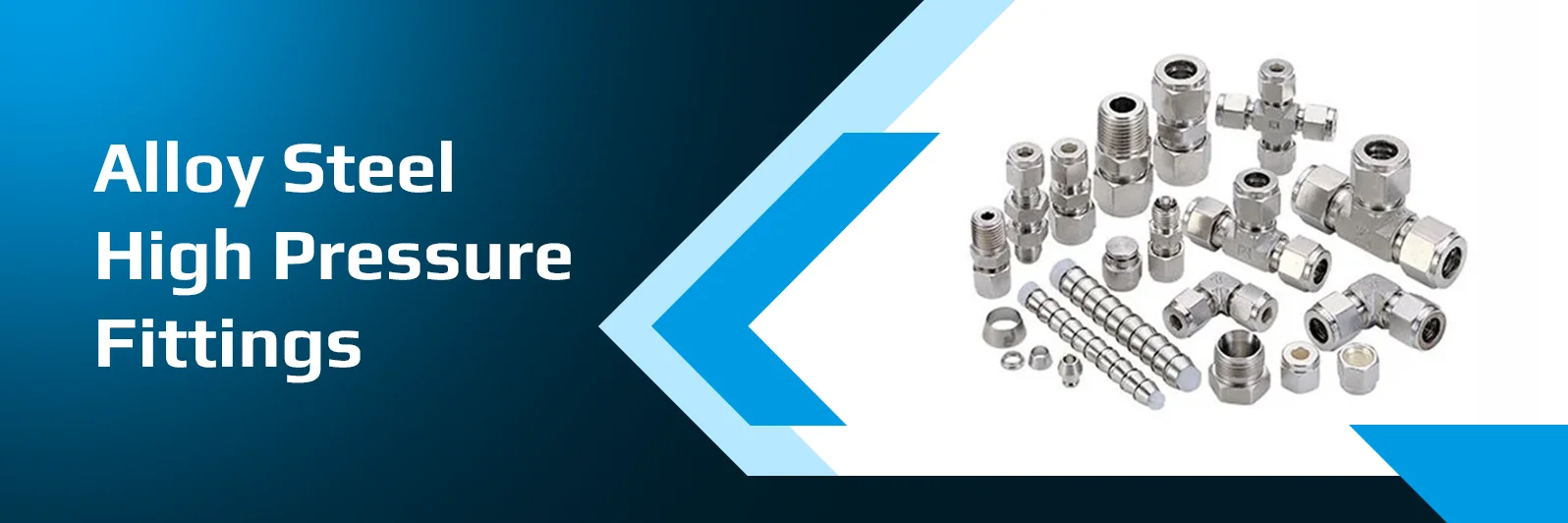
Pressure rating in fittings is really a conversation about wall thickness. A forged fitting carries a class number, 3000, 6000 or 9000, and each class is designed to match a particular pipe schedule. A buttweld fitting carries no class at all. It simply matches the schedule of the pipe it welds into, which is why the two families are rated in completely different language and why mixing up the two is how a fitting ends up as the thin point in a line that was designed to be uniform. Solitaire Overseas supplies alloy steel fittings for high pressure service from India, forged Class 2000 to 9000 and buttweld to XXS, in chrome-moly grades P1 through P91. Below: how the class system works and where forged beats buttweld.
High pressure fittings are rated two entirely different ways depending on the family, and the distinction confuses buyers more than any other point in fittings procurement:
| Forged Fittings | Buttweld Fittings | |
|---|---|---|
| Standard | ASME B16.11 | ASME B16.9 / B16.28 |
| How it is rated | By CLASS: 2000, 3000, 6000, 9000 | By SCHEDULE, matched to the connecting pipe |
| Typical bore | 1/8 inch to 4 inch | 2 inch upward |
| Joint | Socket weld or threaded | Buttweld, full penetration |
| Where it wins | Small bore at very high pressure | Large bore, full-bore flow, highest integrity |
Each forged class is designed to work with a particular pipe schedule. That correlation is the practical translation between the two rating systems:
| Class | Correlates To | End Type Availability |
|---|---|---|
| Class 2000 | Lighter schedules | Threaded only |
| Class 3000 | Schedule 80 / XS | Socket weld and threaded |
| Class 6000 | Schedule 160 | Socket weld and threaded |
| Class 9000 | XXS | Socket weld only. There is no Class 9000 threaded fitting |
Why threaded stops at 6000. Cutting a tapered thread removes wall, so a threaded fitting cannot reach the same pressure capability as a socket weld fitting of the same body size. Where the design pressure demands Class 9000, socket weld is the only route. That is also why Schedule 10 pipe cannot be threaded at all, there is not enough wall to cut into.
Product pages: elbows, tees, reducers, caps, couplings, outlet fittings, pipe bends.
| Item | Detail |
|---|---|
| Forged fittings | ASTM A182 F grades to ASME B16.11, Class 2000 to 9000 |
| Buttweld fittings | ASTM A234 WP grades to ASME B16.9 and B16.28, schedules to XXS |
| Grades | F1/WP1, F5/WP5, F9/WP9, F11/WP11, F12/WP12, F22/WP22, F91/WP91 |
| Size range | Forged 1/8 inch to 4 inch. Buttweld to 48 inch |
| Testing | PMI, hardness, mechanical testing, NDE on request |
| Certification | EN 10204 3.1 as standard, 3.2 with third-party inspection |
Pressure capability is a function of wall thickness and allowable stress, and allowable stress depends on the grade. P91 has roughly double the minimum yield strength of P11 and P22, which is why it carries the same pressure in a substantially thinner wall. On a high pressure line that is a material and weight saving before any temperature argument enters. The temperature side of grade selection is covered on our high temperature fittings page.
It is the pressure class of a forged fitting under ASME B16.11, and each class is designed to match a pipe schedule. Class 3000 correlates with Schedule 80/XS, Class 6000 with Schedule 160, and Class 9000 with XXS. Buttweld fittings carry no class at all, they are matched to the schedule of the pipe they weld into, which is a different rating language entirely.
Cutting a tapered NPT thread removes wall material, so a threaded fitting cannot reach the pressure capability of a socket weld fitting of the same body. Threaded fittings under ASME B16.11 run to Class 6000; socket weld fittings go to Class 9000. Where the design pressure requires Class 9000, socket weld is the only option.
Forged for small bore, generally 4 inch and below, where a Class 6000 or 9000 fitting carries very high pressure in a compact body. Buttweld for larger bore, for full-bore flow with no step in the bore, and wherever the weld must be radiographed to the highest standard. Many lines use both, forged at the small bore ends and buttweld through the main run.
No. ASME B16.11 does not assign class designations to bushings and plugs, unlike couplings, elbows and tees. They are commonly quoted as suitable in the Class 6000 range, but the rating should be confirmed against the current edition of the standard and the design conditions. See our bushings (https://www.solitaire-overseas.com/alloy-steel-bushings.html) and plugs (https://www.solitaire-overseas.com/alloy-steel-plugs.html) pages.
Send your design pressure and temperature, size, grade, and whether forged or buttweld, and we will confirm the class or schedule required, certification and lead time.