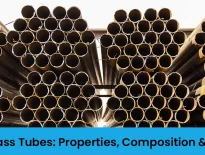
In advanced engineering, some components are simply non-negotiable. Precision and reliability aren’t just aspirational goals; they are the bedrock of safe and effective design. From the crushing pressures of the deep sea to the harsh vacuum of outer space, every part must perform flawlessly. Among the most critical of these are small diameter stainless steel tubes. While they may seem simple, these components are the arteries and veins of modern industry, tasked with carrying vital fluids, protecting sensitive electronics and enabling precise operations where every millimeter counts.
This in-depth blog from Solitaire Overseas is for the engineers, procurement managers and technicians on the front lines who depend on high-performance tubing solutions. We’ll walk through the fundamentals of small diameter stainless steel tubing, covering everything from its definition and the critical role of material grades to its vast applications and the tangible benefits it brings to a project. We will also explore manufacturing methods, finishing options and provide a practical framework to help you select the perfect tube. Whether you’re engineering a hydraulic system for an aircraft or an instrumentation line for a refinery, this guide will give you the clarity needed to make the right call.
What is Small Diameter Stainless Steel Tubing
Small diameter stainless steel tubing is a precisely made hollow steel tube. Its outer diameter or OD is typically below 1 inch or 25.4 mm. This simple definition hides their true complexity and importance. These tubes are engineered for demanding roles. They offer a great strength-to-weight ratio. They have exceptional corrosion resistance. They function perfectly in tight complex assemblies.
The diameter can be extremely small for certain uses. It can go as low as 0.1 mm. This category is called micro stainless steel tubing. It is reserved for the most advanced applications. Think of medical devices, high-tech instruments and aerospace systems.
These products are also commonly referred to as small diameter stainless tubing, micro stainless steel tubing, or small diameter steel tubes. They say small diameter stainless tubing or micro stainless steel tubing or small diameter steel tubes. These components are foundational. They are used in industries where performance material integrity and space are everything. They handle high pressures. They resist aggressive chemicals. They maintain their shape across wide temperature ranges. They are a pillar of modern technology.
Material Grades Used in Small Diameter Tubing A Closer Look
A stainless steel tube’s performance depends on its material grade. Choosing a grade is a vital engineering decision. It is based on corrosion needs mechanical properties, temperature exposure and fabrication plans. At Solitaire Overseas we offer a full spectrum of grades. We meet all industrial challenges with our austenitic and super-austenitic options.
Here is a detailed list of common grades.
| Grade | UNS Number | Key Features & Composition | Typical Use Cases |
| SS 304 / 304L | S30400 / S30403 | This is the industry workhorse. It contains 18% chromium and 8% nickel. It offers excellent formability, weldability and general corrosion resistance. 304L is a low-carbon version to stop weld decay. | General fluid lines. Food-grade systems. Architectural elements. Lab equipment. |
| SS 316 / 316L | S31600 / S31603 | This is the marine grade. It has molybdenum for superior resistance to chlorides and pitting. 316L is the low-carbon type perfect for welding. | Marine settings. Chemical processing. Medical implants. Pharmaceutical tubing. |
| SS 321 | S32100 | This grade is stabilized with titanium. It prevents chromium carbide formation at high temperatures. It maintains corrosion resistance between 425-850°C. | High-temperature systems. Aircraft exhaust manifolds. Chemical equipment. |
| SS 347 | S34700 | This grade is stabilized with niobium and tantalum. It provides excellent intergranular corrosion resistance after high temperature exposure. It is even better than SS 321. | Aerospace parts. High-pressure steam lines. Heavy-duty exhausts. |
| SS 904L | N08904 | This is a super-austenitic stainless steel. It has high nickel molybdenum and copper. It gives amazing resistance to many corrosive agents including sulfuric acid. | Harsh industrial plants. Pulp and paper processing. Pollution control systems. |
All these grades can be made into seamless or welded small diameter tubes. The choice rests on the system’s pressure, heat and corrosion needs. This ensures top performance and safety in every application.
Key Applications of Small Diameter Stainless Steel Tubing
Small diameter stainless steel tubes are of high importance in applications in which cleanliness, precision, and corrosion resistance are essential. As a rule of thumb, small diameter tubes have an outer diameter of less than 10 mm. Small diameter stainless steel tubes are made to perform well in mechanical-strength and dimensional-precison requirements. Small diameter stainless steel tubing and micro stainless steel tubing are narrowly defined and understood for specific usage within industries like medical diagnostics and devices, electronics, instrumentation, and energy systems, unlike larger diameter tubes which are typically used in structural applications.
Below are some of the key applications where this high-performance material is commonly used:
- Medical and Pharmaceutical Equipment: Small diameter and micro stainless steel tubing is used in catheters, cannulas, stents, endoscopes, and surgical instruments. These applications must utilize biocompatible materials that will resist corrosion, and be able to go through repeated sterilization processes. That is why the 316L stainless steel grade is so widely accepted.
- Instrumentation and Control Systems: Tubing made from small steel tubes is used in chemical plants, laboratories, and oil and gas facilities for pressure measurement, flow control, and sample transport. Because of their precise tolerances and smooth bore, they won’t leak and will perform at full reliability under high pressure and high temperature conditions.
- Aerospace and Defense: Stainless steel tubing with a small diameter is used for hydraulic lines, fuel delivery systems, and transfer heating loops for aircraft and spacecraft where the mass is sensitive. Small diameter tubing is robust enough to survive tough mechanical environments for many flight hours and able to handle vibration and fatigue.
- Automotive and Motorsport Applications: Precision tubing is used in high-performing brake lines, exhaust manifolds, and fuel injection systems. Small diameter steel tubing is critical in automotive engineering and motorsport design as it supports rapid pressure changes, corrosive fluids, and extreme vibrations.
- Semiconductor and Electronics Industry: Micro stainless steel tubing is employed for the conveyance of high-purity gases and for maintaining vacuum integrity in ultra-clean process environments, such as semiconductor fabrication facilities. It is extremely important for protecting sensitive manufacturing processes that it is resistant to contamination and has very smooth surfaces internally.
- Nuclear and Power Generation: These industries utilize small-diameter stainless steel tubing for steam tracing lines, mini heat exchangers, and protecting thermocouples in challenging environments. When stainless steel reaches its thermal or chemical limits high-performance alloys such as Inconel are used in its place for more reliable and safer options. Inconel is nickel-based and oxidized resistant.
Although the article is primarily about stainless steel tubing, it is good to know that Inconel tubing may be used in extreme situations, such as superheated steam conditions, harsh chemicals, or extended high temperature exposure. If engineers know what Inconel is and how its composition is different from stainless steel, they can choose better material(s) based on their performance factors.
In the end, small-diameter stainless steel tubing is not simply a mechanical component, it is vital to precision, safe use and longevity in the many industries we rely on today. Small-diameter stainless steel tubing plays an integral role in operational excellence; from supporting life-saving medical applications to controlling high-pressure delivery of fuel in aerospace systems.
Benefits of Using Small Diameter Stainless Tubing
When it comes to high-performance and precision industries, small diameter stainless steel tubing is an essential necessity material that is strong, corrosion resistant, and versatile. Its advantages are not just the performance increase; they are safer, more efficient, and more durable, whether it be medical devices, aerospace parts, fluid acts, etc.
Here are the key benefits of using small diameter stainless tubing:
- Excellent Corrosion Resistance: Small-diameter stainless steel tubes, primarily those made from grades like 304L and 316L, are incredibly resistant to many corrosive environments, including chemicals, saltwater, and industrial fluids. They lend themselves to cleanrooms, marine environments, and medical applications where corrosion resistance is critical for health and longevity.
- Dimensional Precision and Tight Tolerances: These tubes also have tight tolerances so systems such as surgical devices, fuel injection assemblies, and instrumentation lines can be controlled in a very exacting manner. When fluid or gas flow needs to be controlled precisely, the constant inner and outer diameters contribute to this control of flow.
- Superior Strength-to-Weight Ratio: Even if they are big, small diameter steel tubes are mechanically very strong. Mechanical strength is especially useful in industries such as aerospace, robotics, and automotive where grams matter and reliability is required.
- Temperature and Pressure Endurance: Small diameter stainless tubing is manufactured to perform well with high pressures and a large range of temperatures. It also remains consistent under extreme conditions. Inconel has a more advanced nickel-chromium material composition. Inconel is also often used instead of many other materials in severe environments because of its excellence in resisting oxidation, creep, and thermal fatigue.
- Smooth Internal Finish for Flow Efficiency: Both small and micro stainless steel tubing has a smooth, polished inside which helps to maintain a smooth flow with no pressure drops. This is very useful in food-grade equipment, pharmaceutical processing, and semiconductor gas delivery systems.
- Ease of Fabrication and Welding: It’s easy to bend, coil, flare, and weld stainless steel tubes, which makes them easy to fit into complicated assemblies without damaging the material. Because of this, they are perfect for custom systems that need to be very precise and flexible.
- Cleanliness and Hygiene Compliance: Micro stainless steel tubing is great for medical and laboratory settings because it can stay sterile and keep things from getting dirty. These tubes are biocompatible with the rest of the world and are often used in devices that don’t require a lot of surgery and systems that deliver fluids.
- Longevity and Low Maintenance: Small diameter stainless tubing doesn’t need much maintenance over its lifetime because it doesn’t corrode or break easily. This makes it a great investment compared to cheaper materials that break down quickly under industrial stress.
In ultra-high-performance settings like jet engines, chemical reactors, or nuclear plants, other materials like Inconel are looked at. But for most industrial, medical, and commercial systems, small diameter stainless steel tubing is still the best and most affordable option.
Picking the right tubing material isn’t just a technical choice; it’s a choice that will last a long time. That’s why engineers, designers, and procurement professionals all over the world still prefer stainless steel.
Manufacturing & Finishing Options for Small Diameter Stainless Steel Tubing
The quality of small diameter stainless steel tubing doesn’t just depend on the grade of the material; it also depends on how it is made and finished. In fields that require a lot of precision, like medicine, aerospace, instrumentation, and chemical processing, the way a tube is made and finished affects not only how well it works but also how well it meets strict requirements for purity, tolerance, and surface integrity.
Here are the most important options for making and finishing tubes that affect how well they work:
- Seamless vs. Welded Construction: There are two types of small diameter stainless steel tubes: seamless and welded. Seamless tubes are made from solid billets and are perfect for high-stress or corrosive environments because they are uniform and can handle a lot of pressure. Welded tubes, on the other hand, are made from stainless steel strips that are welded together lengthwise. They are a cost-effective choice for applications with moderate pressure or where precise dimensions are important.
- Cold Drawing for Precision Tolerances: Most high-performance tubing is cold drawn, which makes the dimensions more accurate, the surface finish better, and the mechanical strength stronger. Small diameter stainless steel tubing that has been cold drawn is very popular in industries that need very precise measurements, like fuel systems, hydraulic controls, and instrumentation lines.
- Annealing and Heat Treatment: To relieve internal stresses and enhance ductility, stainless tubes often undergo annealing post-manufacture. For specialized applications, additional heat treatments are applied to adjust microstructure and hardness. While stainless steel responds well to these treatments, more extreme environments may require Inconel—an alloy designed for high-temperature applications where thermal stability is crucial due to its nickel-rich composition.
- Electropolishing and Bright Annealing: Surface finishing processes such as electropolishing and bright annealing are essential for applications demanding ultra-clean or ultra-smooth surfaces—common in biopharmaceutical, semiconductor, and food-grade environments. These finishes reduce surface roughness, improve corrosion resistance, and remove impurities that could compromise system integrity.
- Custom Cutting, Coiling & Fabrication: Small diameter steel tubes are often coiled, cut-to-length, or formed into custom configurations. Manufacturers offer tight-radius bending, flaring, end forming, and swaging to meet system-specific design requirements. This flexibility is critical in sectors like medical device manufacturing and miniature heat exchanger systems.
- Surface Passivation and Cleaning: To further enhance corrosion resistance, especially after welding or fabrication, stainless tubes are often passivated using nitric or citric acid treatments. These processes restore the chromium oxide layer on the surface, making the tubing more resistant to corrosion initiation. In comparison, Inconel alloys—thanks to their high nickel and chromium content—naturally form a protective oxide film during high-temperature service.
In industries where the smallest defect can lead to operational failure, the manufacturing and finishing of small diameter stainless steel tubing must adhere to strict tolerances and performance standards. Each method plays a key role in ensuring the final product meets both functional and safety requirements—whether it’s delivering medication through a catheter or transporting fuel through an aerospace control line.
Understanding these options empowers engineers and buyers to choose the right small diameter stainless tubing not just based on material but on performance expectations, cost-efficiency, and environmental demands. And for even more extreme environments, Inconel remains a high-performance alternative when elevated temperature and oxidation resistance are mission-critical.
Comparison of Different Types of Stainless Steel Micro Tubes
In industries that require precision, cleanliness, and material reliability—such as medical devices, microfluidics, aerospace instruments, and semiconductor fabrication—micro stainless steel tubing is a critical component. Defined by an outer diameter typically less than 1 mm, these tubes are engineered to meet the highest standards for dimensional accuracy, corrosion resistance, and clean internal finishes. While small diameter stainless steel tubing is commonly used for control systems and industrial fluid transfer, micro tubes are reserved for applications where every micron matters.
Several grades of stainless steel are used to manufacture both micro and small diameter stainless tubing, each offering a specific balance of corrosion resistance, strength, formability, and temperature tolerance. Choosing the right grade involves comparing mechanical and chemical properties, fabrication compatibility, and the environmental conditions the tube will face.
Below is a comparative overview of the most widely used stainless steel grades for micro tubing:
| Grade | Composition Highlights | Strengths | Common Micro Tube Applications |
| 304 / 304L | 18% Cr, 8% Ni (Low Carbon in 304L) | Good corrosion resistance, affordable, easy to form and weld | Endoscopes, guide wires, electronic probes |
| 316 / 316L | 16–18% Cr, 10–14% Ni, 2–3% Mo | Superior corrosion resistance, biocompatible, marine-grade | Surgical needles, catheters, drug delivery systems |
| 321 | 17–19% Cr, Ti stabilized | Excellent high-temperature resistance, prevents carbide precipitation | Jet fuel micro lines, aerospace probes |
| 17-7 PH | 17% Cr, 7% Ni, precipitation-hardenable | High strength, fatigue resistance, minimal distortion after heat treatment | Miniature actuators, valve springs, robotics |
| 347 | Similar to 321 with Nb stabilization | Weld heat resistance, good creep strength | High-temp exhaust sensor protection, thermal cycling environments |
While these stainless steel grades are sufficient for the majority of precision applications, there are cases—especially in aerospace propulsion, nuclear control systems, and ultra-high-temperature environments—where stainless steel may not perform adequately. In such instances, engineers consider upgrading to Inconel. Unlike standard stainless steel, Inconel’s composition includes a high percentage of nickel and chromium, offering outstanding oxidation resistance and mechanical stability in temperatures exceeding 1000°C. Though more costly, Inconel micro tubes are favored in extreme applications where performance is non-negotiable.
Understanding the differences between these stainless steel grades allows engineers and procurement professionals to make informed decisions. Whether you’re specifying a small diameter steel tube for instrumentation or selecting a micro stainless steel tubing grade for a life-critical medical device, choosing the right material is essential to ensuring safety, compliance, and performance under pressure.
How to Choose the Right Small Diameter Stainless Steel Tube
Selecting the ideal small diameter stainless steel tube is a critical decision in industries where even a minor mismatch in material or dimensions can lead to performance issues, system failure, or costly downtime. Whether you’re working in medical device design, fluid instrumentation, aerospace, or precision manufacturing, your selection must be based on mechanical performance, corrosion resistance, fabrication compatibility, and cost-efficiency.
Here’s a professional guide to help you choose the right tube, backed by engineering best practices and material science principles:
- Identify the Operating Environment
Start by analyzing the environmental conditions where the tube will function—temperature extremes, exposure to corrosive fluids or gases, pressure variations, or vibration. For instance:- Use 316L stainless steel for marine and pharmaceutical applications due to its molybdenum-enhanced corrosion resistance.
- For ultra-high temperatures (above 600°C), Inconel may be a better fit than stainless steel. Understanding what is Inconel and how its nickel-chromium Inconel composition resists oxidation and thermal degradation helps in selecting it for aerospace or nuclear-grade tubing.
- Match the Material Grade to the Application
Each stainless steel grade offers different advantages:- 304/304L is cost-effective and widely used for general fluid lines and structural support.
- 316/316L is preferred for chemical exposure and medical tubing due to its biocompatibility and enhanced corrosion resistance.
- 321/347 are stabilized grades ideal for high-temperature microtube systems and aerospace instruments.
- Consider Tubing Size and Tolerances
Precision is critical in small diameter stainless tubing. Tubes used in instrumentation, medical, or fuel systems must meet tight OD, ID, and wall thickness tolerances. Always consult applicable standards (e.g., ASTM A269, A213, ISO 9626) and verify that your supplier can meet these with consistent quality. - Decide on Seamless vs. Welded Tubing
- Seamless tubing offers superior pressure resistance and uniformity, ideal for high-stress or high-purity applications.
- Welded tubing is cost-effective and sufficient for lower-pressure or less corrosive systems, provided the welds are tested and finished properly.
- Specify Surface Finish and Cleanliness
For sectors like pharmaceuticals, semiconductors, and food processing, the surface finish affects not only flow dynamics but also cleanability and contamination control. Choose electropolished or bright-annealed finishes for ultra-smooth internal surfaces, especially in micro stainless steel tubing. - Evaluate Formability and Fabrication Requirements
Some applications require tight-radius bending, coiling, or swaging. Grades like 304L and 316L offer excellent formability. If your design includes welding or post-fabrication heat treatment, select a grade that can handle these processes without degrading. - Factor in Long-Term Cost and Lifecycle
While small diameter stainless steel tubing is typically a more cost-effective option for most needs, certain high-stress, high-heat environments may justify the upgrade to Inconel tubing. The Inconel composition, rich in nickel and molybdenum, offers longevity under extreme conditions—often reducing lifecycle costs despite a higher upfront price.
Choosing the right small diameter stainless steel tubing isn’t just a specification exercise—it’s a critical design decision that impacts performance, safety, and cost-efficiency. By aligning the tubing’s grade, dimensions, finish, and strength with your application’s demands—and by understanding when alternatives like Inconel are warranted—you ensure your system performs reliably for years to come.
Small Diameter vs Micro Stainless Steel Tubing
In sectors like medical devices, aerospace, instrumentation, and semiconductor manufacturing, selecting the correct tubing type is vital to ensure performance and reliability. While both small diameter stainless steel tubing and micro stainless steel tubing provide excellent corrosion resistance and mechanical durability, they serve different purposes due to differences in size, tolerance precision, and end-use application. Small diameter tubing, typically ranging from 1 mm to 10 mm in outer diameter, is ideal for fluid transfer, fuel lines, and pressure control systems. It offers good strength, is relatively easy to fabricate, and is commonly used in industrial and aerospace assemblies.
Micro stainless steel tubing, with an outer diameter of less than 1 mm, is specifically designed for ultra-precision applications. It is widely used in fields like microfluidics, surgical instruments, implant delivery systems, and sensitive sensors where extremely tight dimensional control and ultra-clean internal surfaces are critical. However, when exposed to extreme temperatures, pressure, or aggressive chemicals, even high-grade stainless steel may fall short. In such conditions, engineers turn to Inconel—a high-performance nickel-based alloy. Understanding what Inconel is, and how its composition provides exceptional thermal and chemical resistance, helps determine when upgrading to Inconel tubing is essential for long-term reliability and safety.
| Criteria | Small Diameter Tubing | Micro Stainless Steel Tubing |
| Outer Diameter (OD) | 1 mm – 10 mm | Less than 1 mm |
| Applications | Fluid lines, fuel systems, pressure instrumentation | Medical catheters, microfluidics, precision sensors |
| Tolerance Precision | ±0.05 mm (typical) | ±0.005 mm or tighter |
| Manufacturing Methods | Seamless, welded, cold-drawn | Ultra-cold drawn, laser cut, precision drawn |
| Common Grades | 304, 304L, 316, 316L, 321, 347 | 304L, 316L, 17-7PH, specialty medical/pharma grades |
| Surface Finishes | Bright annealed, electropolished | Ultra-smooth, biocompatible, passivated |
| Used In | Industrial controls, aerospace systems, hydraulic tubing | Surgical tools, implant delivery systems, fiber optic enclosures |
| Cost | Moderate | High (due to precision and complexity) |
| Inconel Alternative | Used for higher temp or corrosive media environments | Inconel micro-tubing used in aerospace injectors, lab-scale reactors |
By comparing both options, designers and engineers can better align material performance with the specific demands of their systems. If your application involves extreme temperatures, high pressure, or reactive chemicals, understanding Inconel’s composition and capabilities becomes essential. In such scenarios, switching from stainless to Inconel tubing can provide long-term durability, reduced maintenance, and greater operational safety.
FAQs About Small Diameter Stainless Steel Tubing
Q1 What industries use small diameter stainless tubing most
Industries like oil & gas defense, aerospace and medical manufacturing are the biggest users. They need precision durability and corrosion resistance.
Q2 How small can a micro stainless steel tube be
Micro stainless steel tubes have outer diameters below 1/8 inch or 3.175 mm. Some specialized tubes have ODs as small as 0.1 mm.
Q3 How are seamless and welded small diameter tubes different
Seamless tubes are stronger. They are ideal for high pressure work. Welded tubes are more economical. They are sufficient for many standard uses.
Q4 Can these tubes be coiled or bent
Yes. Annealed versions of small diameter steel tubes are very ductile. They can be coiled and bent into complex shapes without damage.
Q5 Does the surface finish affect performance
Yes it does. An electropolished surface prevents bacterial growth and ensures smooth flow. This improves product purity and system efficiency.
Q6 Why are Mill Test Certificates MTCs important
An MTC is a quality document. It certifies a material’s chemical and mechanical properties. It provides full traceability to the original steel batch. It ensures you get exactly what you ordered.