+91-9619103479
or
vishal@solitaire-overseas.com
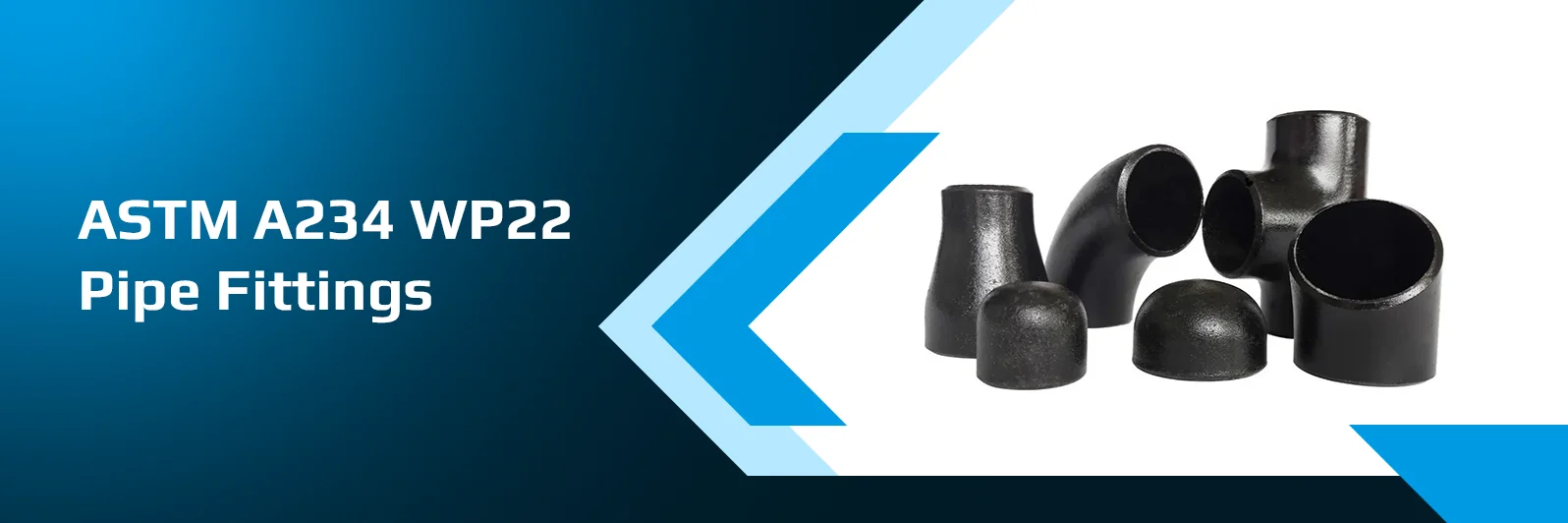
Hydrogen is the reason WP22 exists. At temperature and pressure, hydrogen diffuses into steel and attacks the carbides that give it strength, and the defence is molybdenum. WP22 carries roughly twice the molybdenum of WP11 and more than twice the chromium, which is why it is the standard grade for hydrogen reformer piping in refineries and ammonia plants, and why it takes over from WP11 on main steam and hot reheat lines above about 510 degrees C. Solitaire Overseas manufactures and exports A234 WP22 buttweld fittings from India in Class 1 and Class 3. Below: hydrogen attack, the temperature handover from WP11, and what the standard demands in heat treatment.
High temperature hydrogen attack is a slow, internal failure. Hydrogen diffuses into the steel, reacts with carbides at the grain boundaries and forms methane, which cannot escape and builds pressure inside the metal. The result is internal fissuring and a loss of strength that develops over years and is not visible from outside.
Molybdenum is what resists it. It stabilises the carbides so hydrogen has less to attack. WP22 carries 0.87 to 1.13 percent molybdenum against WP11's 0.44 to 0.65, roughly double, alongside 1.90 to 2.60 percent chromium. That combination is why 2.25Cr-1Mo has been the workhorse of hydrogen reformer piping and hydroprocessing units for decades, and why substituting a lower grade in that service is not a cost saving but a design change.
Same 2.25Cr-1Mo alloy in two product forms. WP22 under ASTM A234 is the buttweld fitting to ASME B16.9, welded into the run, used from about 2 inch upward. F22 under ASTM A182 is the forged fitting to ASME B16.11, socket weld or threaded, used at 4 inch and below. Reformer and steam systems normally use both.
| Service | Grade | Reason |
|---|---|---|
| Up to about 510 C | WP11 | Adequate creep strength, lower cost |
| Above about 510 C | WP22 | Higher chromium and molybdenum hold strength where WP11 begins to creep |
| Hydrogen reformer piping | WP22 | Molybdenum content resists high temperature hydrogen attack |
| Above about 525 C, thick wall | Consider WP91 | Roughly half the wall thickness for the same duty, better cycling life |
The WP22 to WP91 decision has an economic break point of its own, covered on our high temperature fittings page.
WP22 comes in two classes rather than WP11's three:
| Class | Tensile min | Yield min | Notes |
|---|---|---|---|
| Class 1 | 415 MPa (60 ksi) | 205 MPa (30 ksi) | The lower strength condition |
| Class 3 | 520 MPa (75 ksi) | 310 MPa (45 ksi) | Substantially higher yield. State the class on the order |
| Element | Range |
|---|---|
| Carbon | 0.05 - 0.15% |
| Manganese | 0.30 - 0.60% |
| Phosphorus | 0.040% max |
| Sulfur | 0.040% max |
| Silicon | 0.50% max |
| Chromium | 1.90 - 2.60% |
| Molybdenum | 0.87 - 1.13% |
Available as elbows, tees, reducers, caps, stub ends and pipe bends.
| Item | Detail |
|---|---|
| Standard | ASTM A234 / ASME SA234 WP22 |
| Dimensional | ASME B16.9, ASME B16.28 |
| Classes | Class 1, Class 3 |
| Size range | NPS 1/2 inch to 48 inch |
| Wall thickness | SCH 10 through XXS |
| Matching pipe | ASTM A335 P22 |
| Certification | EN 10204 3.1, PWHT records. PMI and NDE on request |
Matching pipe: ASTM A335 P22 pipes.
Because of its molybdenum content. High temperature hydrogen attack works by hydrogen diffusing into the steel and reacting with carbides to form methane, which builds pressure internally and causes fissuring. Molybdenum stabilises those carbides, and WP22 carries roughly twice as much as WP11 alongside more than twice the chromium. That is why 2.25Cr-1Mo is the long-standing grade for hydrogen reformer and hydroprocessing piping.
Around 510 degrees C in power plant service. Below that, WP11 has adequate creep strength at lower cost. Above it, WP22's higher chromium and molybdenum hold strength where WP11 would begin to creep, which is why main steam and hot reheat lines move to WP22.
Yes. PWHT is mandatory on WP22 regardless of wall thickness, which is a step up from WP11 where it is governed by a thickness threshold. The minimum tempering temperature for WP22 under ASTM A234 is 675 degrees C, and PWHT records should form part of the documentation package.
Heat treatment, and therefore strength. Class 3 carries substantially higher minimum tensile and yield than Class 1 under the same grade name and chemistry band. State the class on the purchase order, since a Class 1 fitting in a line designed around Class 3 properties is a weaker component in the pressure boundary.
Send your fitting type, size, schedule and class, plus the service, hydrogen or steam, and we will confirm availability, PWHT requirements, certification and lead time.