+91-9619103479
or
vishal@solitaire-overseas.com
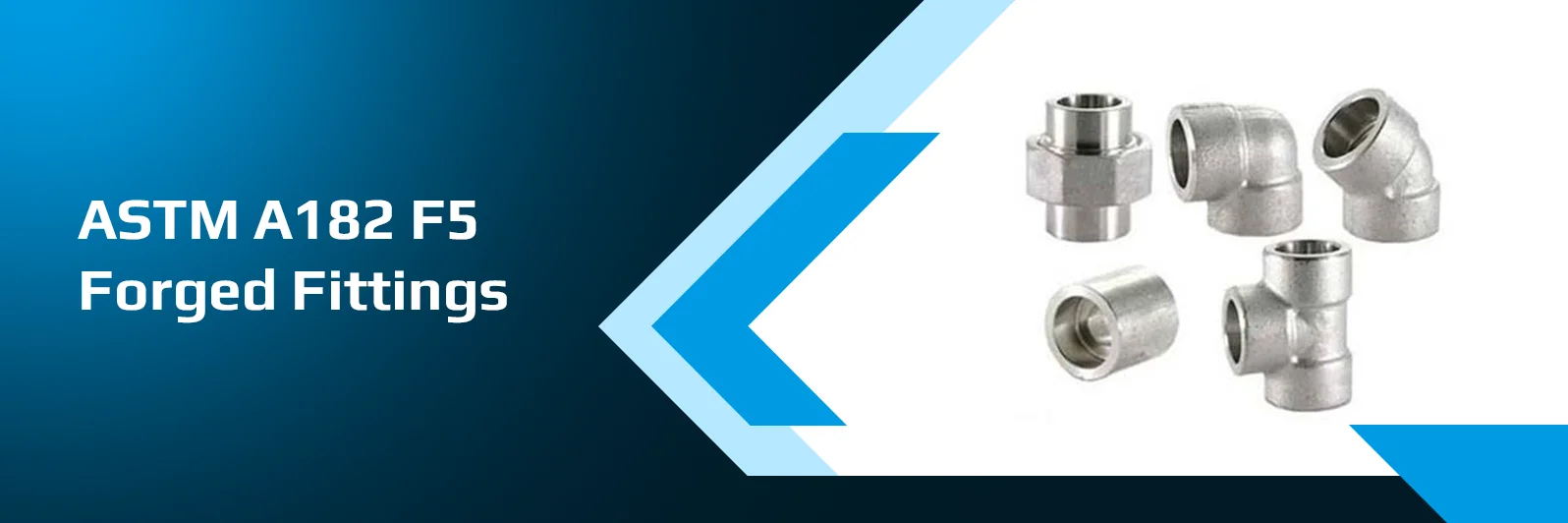
A socket weld leaves hard zones. On a refinery line that matters, because ASTM A182 caps the hardness of F5 at 217 HBW precisely to guard against environmental cracking, and the weld is the one part of the assembly the mill certificate does not cover. Solitaire Overseas manufactures and exports A182 F5 forged fittings from India, socket weld and threaded, for small bore connections in sulfidation service. Below: the hardness question at the weld, where F5 forged is used, and grade data.
ASTM A182 limits F5 hardness to 217 HBW. That is a ceiling rather than a floor, and it is unusual, most grade requirements set a minimum strength. The reason is service: harder material is more susceptible to environmental cracking where wet sulphide or hydrogen is present, which is exactly the refinery environment F5 is chosen for.
The fitting arrives compliant. The joint may not. Welding creates a heat affected zone that can be significantly harder than the parent material, and the mill test certificate covers the fitting as supplied, not the weld the fabricator makes. On sour or hydrogen service, hardness control across the completed joint is a welding procedure requirement, typically managed through preheat, controlled interpass temperature and post-weld heat treatment. Buying hardness-compliant fittings is necessary but not sufficient.
F5's five percent chromium is there for sulfidation resistance, not creep strength. The alloy reasoning is set out on our WP5 buttweld fittingspage. In the forged form the grade appears wherever a small bore connection must match the corrosion resistance of the main run:
| Element | Range |
|---|---|
| Carbon | 0.15% max |
| Manganese | 0.30 - 0.60% |
| Phosphorus | 0.030% max |
| Sulfur | 0.030% max |
| Silicon | 0.50% max |
| Chromium | 4.0 - 6.0% |
| Molybdenum | 0.44 - 0.65% |
| Property | Value |
|---|---|
| Tensile strength min | 485 MPa (70 ksi) |
| Yield strength min | 275 MPa (40 ksi) |
| Maximum hardness | 217 HBW |
| End Type | Available Classes | Correlates To |
|---|---|---|
| Socket Weld | Class 3000, 6000, 9000 | Sch 80/XS, Sch 160, XXS |
| Threaded (NPT) | Class 2000, 3000, 6000 | No Class 9000 threaded fitting exists |
Size range: 1/8 inch to 4 inch NPS. Above 4 inch the line moves to buttweld under ASME B16.9.
Supplied as couplings, unions, plugs, bushings and street elbows, plus forged elbows and tees.
Matching pipe: ASTM A335 P5 pipes. Higher chromium: F9 forged fittings.
At 217 HBW, and it is a ceiling rather than a minimum. Harder material is more susceptible to environmental cracking where wet sulphide or hydrogen is present, which is the refinery environment F5 is used in. Note that the cap applies to the fitting as supplied; hardness across the completed weld is a welding procedure matter, managed through preheat, interpass control and post-weld heat treatment.
Product form. F5 under ASTM A182 is the forged fitting to ASME B16.11, socket weld or threaded, 1/8 inch to 4 inch, used for small bore connections. WP5 under ASTM A234 is the buttweld fitting to ASME B16.9, used in the main run. Both are 5Cr-0.5Mo with the same sulfidation resistance. See our WP5 fittings page.
Where the sulphur environment is aggressive enough that F5 would not reach the design life. Sulfidation resistance rises with chromium, and F9 carries 8.0 to 10.0 percent against F5's 4.0 to 6.0. See our F9 forged fittings page.