+91-9619103479
or
vishal@solitaire-overseas.com
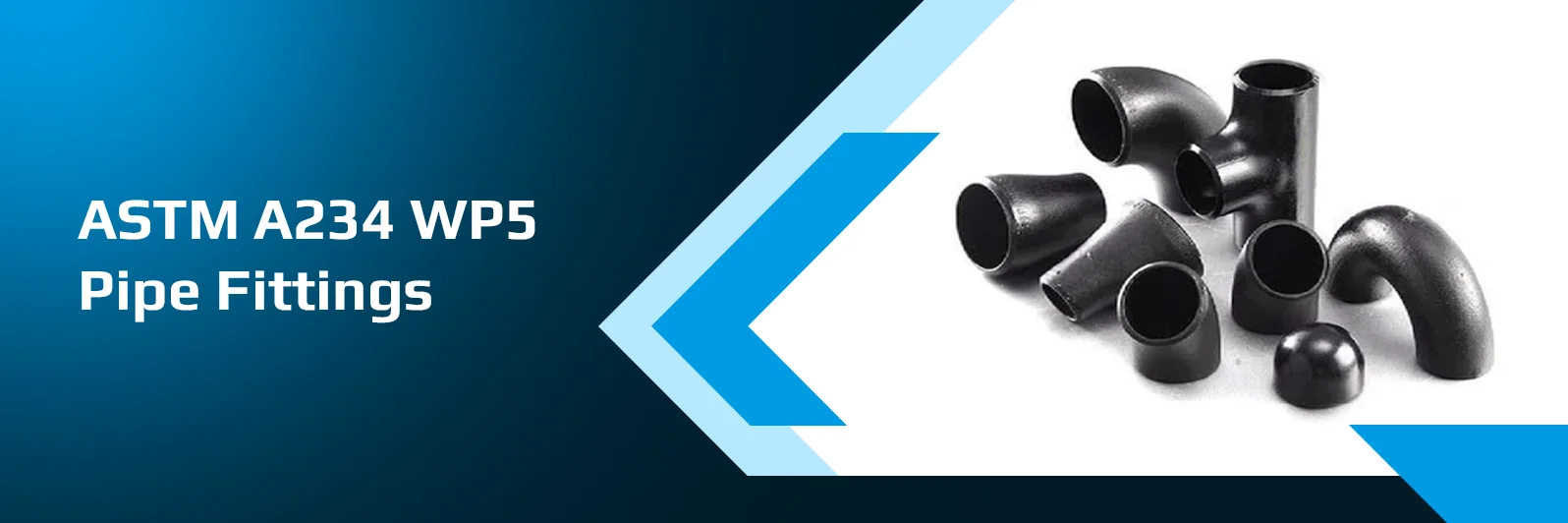
WP5 is not a hotter version of WP22. It is a corrosion grade. The five percent chromium is there to resist sulfidation, the attack that sulphur compounds in crude inflict on steel at refinery temperatures, and sulfidation resistance climbs with chromium content in a way creep strength does not. That is why WP5 lives in refineries rather than power stations, and why comparing it to WP22 on temperature alone gives the wrong answer. Solitaire Overseas manufactures and exports A234 WP5 buttweld fittings from India in Class 1 and Class 3. Below: sulfidation, the hardness cap the standard imposes, and where WP5 belongs.
Read the A234 alloy grades as a single ladder of rising temperature and WP5 looks anomalous: more chromium than WP22, yet not used on the hottest steam lines. The reason is that the grades answer two different questions.
| Grade Family | Chromium Is There For | Typical Home |
|---|---|---|
| WP1, WP11, WP12, WP22 | Creep strength and oxidation resistance at temperature | Power generation, steam systems |
| WP5, WP9 | Sulfidation and high temperature corrosion resistance | Oil refining, hydroprocessing |
| WP91 | Creep strength, with a microstructure engineered for it | Supercritical power plant |
Sulfidation is the governing mechanism in refining. Sulphur compounds in crude attack steel at elevated temperature, forming a sulphide scale that thins the wall over time. Resistance rises with chromium content, which is why the refinery grades sit at 5 and 9 percent chromium while the power grades sit between 1 and 2.6 percent. Specifying WP22 where WP5 is called for substitutes creep strength for corrosion resistance, which is the wrong trade.
| Element | Range |
|---|---|
| Carbon | 0.15% max |
| Manganese | 0.30 - 0.60% |
| Phosphorus | 0.040% max |
| Sulfur | 0.030% max |
| Silicon | 0.50% max |
| Chromium | 4.0 - 6.0% |
| Molybdenum | 0.44 - 0.65% |
| Class | Tensile min | Yield min |
|---|---|---|
| Class 1 | 415 MPa (60 ksi) | 205 MPa (30 ksi) |
| Class 3 | 520 MPa (75 ksi) | 310 MPa (45 ksi) |
Supplied as elbows, tees, reducers, caps and pipe bends.
| Item | Detail |
|---|---|
| Standard | ASTM A234 / ASME SA234 WP5 |
| Dimensional | ASME B16.9, ASME B16.28 |
| Classes | Class 1, Class 3 |
| Chromium | 4.0 - 6.0% |
| Max hardness | 217 HBW |
| Size range | NPS 1/2 inch to 48 inch |
| Matching pipe | ASTM A335 P5 |
| Certification | EN 10204 3.1. PMI, hardness and NDE on request |
Matching pipe: ASTM A335 P5 pipes. Higher chromium alternative: WP9 fittings.
ASTM A234 applies a maximum hardness of 217 HBW to fittings in Grades WP5, WP9 and WPR. That is a ceiling, not a minimum, and it is unusual, most grade requirements set a floor on strength rather than a cap on hardness.
The reason is service related. Excessively hard material in refinery environments is more susceptible to cracking, particularly where wet sulphide or hydrogen is present, so limiting hardness is a safeguard against environmental cracking rather than a strength requirement. It also means heat treatment on these grades has to hit a window from both directions: hard enough to meet the mechanical minima, soft enough to stay under the cap.
Not in the way the chromium content suggests. WP5's five percent chromium is there for sulfidation resistance in refinery service, not for creep strength, so it is not simply a step above WP22 on a temperature ladder. WP22 remains the grade for high temperature steam and hydrogen reformer duty. The two answer different questions: WP5 resists corrosion, WP22 resists creep and hydrogen attack.
A234 caps hardness at 217 HBW for WP5, WP9 and WPR. Excessively hard material is more susceptible to environmental cracking in refinery service, particularly where wet sulphide or hydrogen is present, so the cap is a safeguard rather than a strength requirement. It means heat treatment must satisfy the mechanical minima while staying under the hardness ceiling.
Chromium content. WP5 carries 4.0 to 6.0 percent and WP9 carries 8.0 to 10.0 percent, and sulfidation resistance rises with chromium, so WP9 is specified where the sulphur environment is more aggressive. Almost everything else is shared: the same molybdenum role, the same 675 degree minimum tempering temperature and the same 217 HBW hardness cap. See our WP9 fittings (https://www.solitaire-overseas.com/wp9-alloy-steel-pipe-fittings-exporter.html) page.
Send your fitting type, size, schedule and class, plus the service medium, and we will confirm availability, hardness requirements, certification and lead time.