+91-9619103479
or
vishal@solitaire-overseas.com
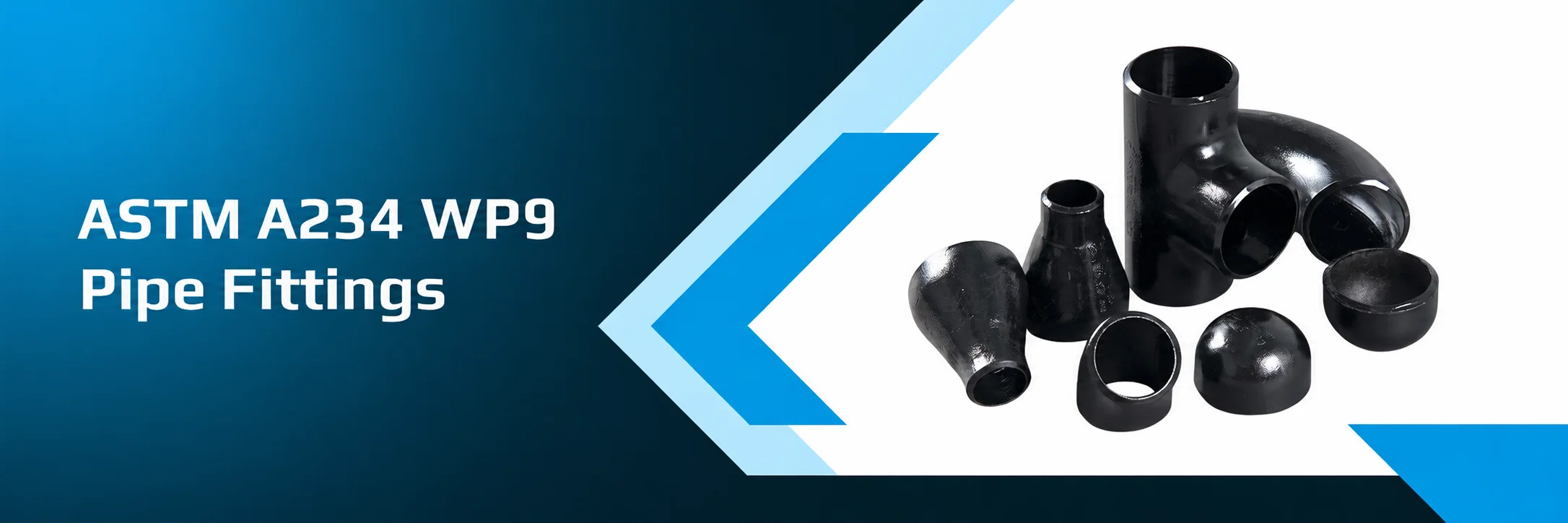
If five percent chromium resists sulfidation, nine percent resists it better. That is the whole argument for WP9 over WP5, and on a refinery unit running high sulphur crude it is argument enough. Everything else about the two grades runs close together: the same role for molybdenum, the same 675 degree minimum tempering temperature, the same 217 HBW hardness ceiling, and the same position outside the power plant creep ladder that WP11 and WP22 occupy. Chromium is the variable. Solitaire Overseas manufactures and exports A234 WP9 buttweld fittings from India in Class 1 and Class 3. Below: how WP9 differs from WP5 and where it is specified.
| WP5 | WP9 | |
|---|---|---|
| Chromium | 4.0 - 6.0% | 8.0 - 10.0% |
| Molybdenum | 0.44 - 0.65% | 0.90 - 1.10% |
| Sulfidation resistance | Good | Better, resistance rises with chromium |
| Max hardness | 217 HBW | 217 HBW |
| Min tempering temperature | 675 C | 675 C |
| Cost | Lower | Higher |
| Specify it when | Moderate sulphur environment | High sulphur crude, or where WP5 service life has proved inadequate |
Note that WP9 also carries roughly double the molybdenum of WP5. So the step from WP5 to WP9 is not purely a chromium increase, it raises high temperature strength as well. Where a unit is being upgraded because fittings are thinning faster than the design allowed, WP9 addresses both the corrosion rate and the mechanical margin.
| Element | Range |
|---|---|
| Carbon | 0.15% max |
| Manganese | 0.30 - 0.60% |
| Phosphorus | 0.030% max |
| Sulfur | 0.030% max |
| Silicon | 1.00% max |
| Chromium | 8.0 - 10.0% |
| Molybdenum | 0.90 - 1.10% |
| Class | Tensile min | Yield min |
|---|---|---|
| Class 1 | 415 MPa (60 ksi) | 205 MPa (30 ksi) |
| Class 3 | 520 MPa (75 ksi) | 310 MPa (45 ksi) |
Supplied as elbows, tees, reducers, caps and pipe bends.
| Item | Detail |
|---|---|
| Standard | ASTM A234 / ASME SA234 WP9 |
| Dimensional | ASME B16.9, ASME B16.28 |
| Classes | Class 1, Class 3 |
| Chromium | 8.0 - 10.0% |
| Max hardness | 217 HBW |
| Size range | NPS 1/2 inch to 48 inch |
| Matching pipe | ASTM A335 P9 |
| Certification | EN 10204 3.1. PMI, hardness and NDE on request |
Matching pipe: ASTM A335 P9 pipes. Lower chromium alternative: WP5 fittings.
Where the sulphur environment is aggressive enough that WP5 would not achieve the design life. Sulfidation resistance rises with chromium, and WP9 carries 8.0 to 10.0 percent against WP5's 4.0 to 6.0. WP9 also carries roughly double the molybdenum, so it gains high temperature strength as well as corrosion resistance. See our WP5 fittings page for the comparison.
No, and the similar names cause real confusion. WP9 is 9Cr-1Mo used mainly for sulfidation resistance in refining. WP91 is modified 9Cr-1Mo with vanadium, niobium and nitrogen additions, engineered for creep strength in supercritical power plant. They share a chromium level but not a purpose, a microstructure or a set of fabrication requirements.
ASTM A234 caps hardness at 217 HBW for WP9, WP5 and WPR. Harder material is more susceptible to environmental cracking in refinery service where sulphide or hydrogen is present, so the cap is a service safeguard. Heat treatment therefore has to meet the mechanical minima while staying below the hardness ceiling.
Send your fitting type, size, schedule and class, plus the sulphur content and operating temperature, and we will confirm grade suitability, certification and lead time.