+91-9619103479
or
vishal@solitaire-overseas.com
 Table of Content
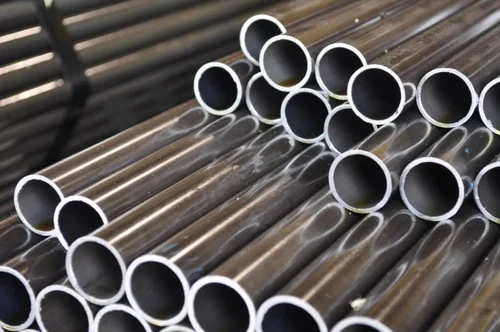
At Solitaire Overseas, we manufacture and export high-quality Stainless Steel 316 Tubes and Stainless Steel 316L Tubes trusted by industries across the globe. Known for their excellent corrosion resistance and durability, these tubes are engineered to meet the demanding requirements of marine, petrochemical, chemical, food processing, and pharmaceutical applications.
|
Property |
Stainless Steel 316 Tubes |
Stainless Steel 316L Tubes |
|---|---|---|
|
UNS Designation |
S31600 |
S31603 |
|
Carbon Content (Max) |
0.08% |
0.03% (Low Carbon) |
|
Tensile Strength (min) |
515 MPa |
485 MPa |
|
Yield Strength (min) |
205 MPa |
170 MPa |
|
Elongation |
40% |
40% |
|
Corrosion Resistance |
Excellent in marine & chemical environments |
Superior in welded & chloride-rich environments |
|
Weldability |
Good, but risk of sensitization in some applications |
Excellent due to low carbon; minimal carbide precipitation |
|
Heat Resistance |
Up to ~870°C (intermittent); ~925°C (continuous) |
Slightly lower than 316 due to low carbon |
|
Applications |
Marine piping, chemical tanks, heat exchangers |
Pharma, food & dairy processing, pressure vessels |
|
Standards Met |
ASTM A213, A249, A269, A312, EN 10216, DIN 17458 |
ASTM A213, A269, A312, EN 10216, ISO 1127 |
|
Forms Available |
Seamless, Welded, ERW, Heat Exchanger, U-tubes |
Seamless, Welded, Sanitary, Polished, Coiled Tubes |
|
Property |
316 Stainless Steel |
316L Stainless Steel |
|---|---|---|
|
Carbon Content |
Up to 0.08% |
Max 0.03% (Low Carbon Alloy Tube) |
|
Corrosion Resistance |
Excellent in marine & industrial chemical conditions |
Superior in welded or high-chloride environments |
|
Weldability |
Good, may require post-weld annealing |
Excellent – no risk of carbide precipitation |
|
Tensile Strength |
515 MPa minimum |
485 MPa minimum |
|
Use Cases |
Marine piping, chemical tanks, heat exchangers |
Pharma pipelines, dairy & food equipment, reactors |
|
Common Terms |
Marine-grade stainless, seawater-resistant tubing |
Pharma-safe SS tubing, sanitary stainless steel tube |
|
Applicable Standards |
ASTM A213, A312, EN 10216 |
ASTM A249, A269, ISO 1127 |
|
Property |
SS 316 |
SS 316L |
|---|---|---|
|
UNS Number |
S31600 |
S31603 |
|
Carbon Content |
0.08% max |
0.03% max (Low-Carbon Variant) |
|
Tensile Strength |
Minimum 515 MPa |
Minimum 485 MPa |
|
ASTM/ASME Standards |
A213, A269, A249, SA213, SA269 |
Same |
|
Typical Applications |
Marine, Chemical Processing, Heat Exchangers |
Pharmaceutical, Food & Beverage, Sanitary Lines |
|
Tube Type |
Description & Key Applications |
Available Grades |
|---|---|---|
|
Seamless Stainless Steel 316 Tubes |
Manufactured using extrusion or rotary piercing, seamless tubes offer superior strength and pressure resistance. Ideal for marine piping, chemical plants, and boiler systems. |
SS 316 |
|
Seamless Stainless Steel 316L Tubes |
Low-carbon seamless tubes with enhanced weldability and resistance to sensitization. Commonly used in pharmaceutical, dairy, and food-grade piping systems. |
SS 316L |
|
Welded Stainless Steel Tubes (316/316L) |
Formed by rolling and welding stainless strips, these tubes offer cost-efficiency and are suitable for structural, decorative, and low-pressure fluid transport. |
SS 316, SS 316L |
|
Heat Exchanger Tubes |
Precisely dimensioned tubes designed for optimal thermal conductivity and corrosion resistance in heat transfer systems across oil & gas, HVAC, and marine sectors. |
SS 316, SS 316L |
|
Instrumentation & U-Bend Tubes |
Engineered for process control, boiler bending, and tubing panels; U-bend tubes are ideal for high-precision installations in refineries, power plants, and pharma lines. |
SS 316, SS 316L |
|
Feature |
316 Stainless Steel |
316L Stainless Steel |
|---|---|---|
|
Corrosion Resistance |
Excellent in aggressive environments including marine and chemical exposure. |
Performs better in chloride-rich and welded environments due to reduced carbon content. |
|
Weldability |
May require post-weld annealing to prevent carbide precipitation in welded joints. |
Superior weldability; no post-weld heat treatment needed. Ideal for sanitary systems. |
|
Cost |
Slightly less expensive initially. |
Slightly higher cost due to enhanced purity, but lower maintenance over time. |
|
Suitability by Industry |
Ideal for marine, oil & gas, heat exchangers, structural components. |
Best suited for pharmaceutical, food processing, dairy, biotech, and clean piping systems. |
|
Industry |
Typical Application |
Recommended Grade |
Justification |
|---|---|---|---|
|
Marine |
Saltwater piping, shipbuilding |
SS 316 |
High chloride resistance |
|
Chemical Processing |
Acid lines, tanks, heat exchangers |
SS 316 / SS 316L |
Both grades resist harsh chemicals; 316L for welded zones |
|
Pharmaceutical |
Clean piping, sterile fluid transport |
SS 316L |
Weld-friendly, FDA & cGMP compliant |
|
Infrastructure |
Railings, facades, structural frames |
SS 316 |
High strength & corrosion resistance |
|
Food & Dairy |
Sanitary tubing, transfer lines |
SS 316L |
Hygienic surface, corrosion-resistant, supports CIP systems |
|
Certification / Standard |
Purpose |
|---|---|
|
ISO 9001:2015 |
Quality Management System certification (TÜV, SGS, Lloyd’s) |
|
PED 2014/68/EU |
Pressure Equipment Directive for EU compliance |
|
IBR Certification |
Indian Boiler Regulation – essential for pressure applications in India |
|
NORSOK M-650 |
Required for offshore and marine oil & gas equipment |
|
NACE MR0175 / ISO 15156 |
Sulfide Stress Cracking Resistance – for sour service applications |
|
Mill Test Certificates (MTC) |
Issued with every batch (EN 10204 3.1 / 3.2), approved mills: Jindal, Tubacex |
Need reliable and certified Stainless Steel 316 Tube for your next project? At Solitaire Overseas, we offer custom sizes, quick delivery, and global shipping. Request a quote tailored to your specifications and industry standards.
The main difference is carbon content. 316 contains up to 0.08% carbon, while 316L has a maximum of 0.03%. This makes 316L better suited for welding and applications where corrosion resistance in high-chloride or high-purity environments is essential.
Yes, SS316L tubes are ideal for welding. Their low carbon content minimizes carbide precipitation during welding, eliminating the need for post-weld annealing. This makes them suitable for pharmaceutical, food-grade, and sanitary piping systems.
Yes, both SS316 and 316L tubes offer excellent resistance to saltwater corrosion. SS316 is commonly used in marine environments due to its higher strength, while SS316L performs better in welded marine systems thanks to its low carbon composition.
Common ASTM standards for 316/316L tubes include ASTM A213, A249, A269, and A312. These cover seamless and welded tubes used in boilers, heat exchangers, general service, and high-pressure applications across various industries.
Tube weight (kg/m) can be calculated using the formula:
Weight = (OD - WT) × WT × 0.02491,
where OD = outer diameter and WT = wall thickness (in mm). You can also use our online tube weight calculator for quick, accurate results.
 India
India Iran
Iran Thailand
 South Korea
 Turkey
 Morocco
 Costa Rica
 Kazakhstan
 Philippines
 Canada
 Japan
Japan Russia
 United States
 Saudi Arabia
 Kuwait
 Singapore
 Malaysia
 UAE
UAE Germany
 Italy
Italy China
China UK
UK Egypt
Egypt Vietnam
 Oman
Oman Australia
 Qatar
Qatar Portugal
 Nigeria
 Iraq
Iraq Ukraine
 Bangladesh
 Poland
 Romania
 Cyprus
 Angola
 Colombia
 Norway
 Chile
Chile Mexico
 South Africa
 Netherlands
 Brazil
 France
 Jordan
 Spain
Spain Hong Kong
 Indonesia
 Taiwan
 Tobago
 Greece
 Czechia
 Belgium
 Sri Lanka
 Myanmar
 Venezuela