+91-9619103479
or
vishal@solitaire-overseas.com
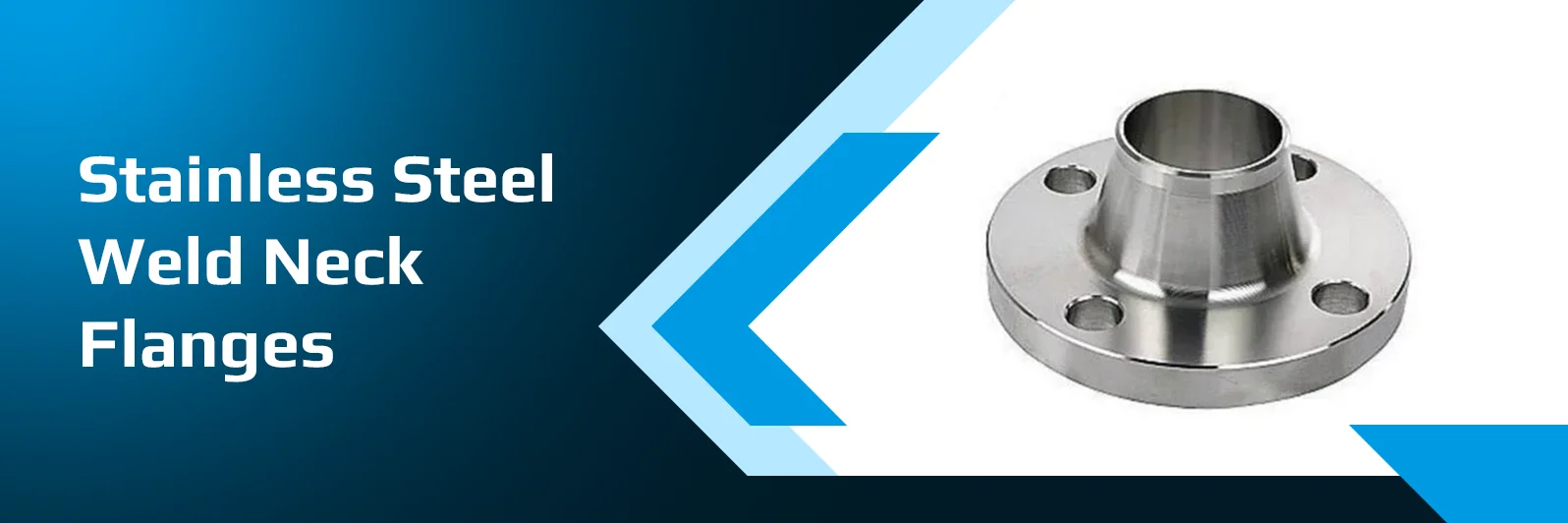
The long tapered hub is the entire product. Everything a weld neck flange is good for follows from that gradual thickening between the flange face and the pipe: it moves the butt weld away from the highly stressed flange base, it spreads bending load over a length of metal instead of concentrating it at a fillet, and it lets the bore run through with no step for turbulence to catch on. That is why weld neck is the default on high pressure, high temperature and cyclic service. Solitaire Overseas supplies stainless steel weld neck flanges from India, Class 150 through 2500.
Part of our stainless steel flanges range. Compare with slip-on flanges.
Because the bore is machined to match the pipe, a weld neck flange must be ordered to the SCHEDULE of the connecting pipe, not just to a nominal size. A Class 300 6 inch weld neck for Sch 40 pipe is a different part from the same flange for Sch 80. This is a routine ordering error and stating it prevents wrong deliveries.
| Condition | Weld Neck? | Why |
|---|---|---|
| High pressure, Class 600 and above | Yes | Load path and weld position both matter more as pressure rises |
| High temperature | Yes | Thermal cycling works the joint. The hub distributes it |
| Cyclic or vibrating service | Yes | Best fatigue life of the standard types |
| Corrosive or erosive medium | Yes | Continuous bore, no crevice at the joint |
| Low pressure utility, cost sensitive | Consider slip-on | The hub is not earning anything at low static pressure |
The economical alternative for low pressure work is covered on our slip-on flanges page.
| Standard | Coverage |
|---|---|
| ASME B16.5 | NPS 1/2 inch to 24 inch, Class 150 to 2500 |
| ASME B16.47 Series A and B | NPS 26 inch to 60 inch. Series A and B are NOT interchangeable |
| ASTM A182 | Forged stainless material specification |
| ASME B16.20 / B16.21 | Gasket standards for RTJ and flat gaskets |
| Grade | Typical Selection Reason |
|---|---|
| 304 / 304L | General service. The volume grade |
| 316 / 316L | Chloride exposure, marine atmosphere, chemical duty |
| 321 / 347 and H variants | Elevated temperature, stabilized against sensitization |
| 904L, duplex, super duplex | Aggressive chloride or high strength requirement |
Raised face is the general default. Ring type joint takes over at Class 900 and above and in hot high pressure service, where a metal-to-metal seal copes better than a compressed gasket. That progression is covered on our high pressure flanges (https://www.solitaire-overseas.com/stainless-steel-high-pressure-flanges.html) page.
Because of the tapered hub. It moves the butt weld away from the flange base where bending stress concentrates, spreads load gradually along a length of metal rather than at an abrupt change of section, and keeps the bore continuous with no step. Those three things together give the best fatigue life and load path of the standard flange types, which is what high pressure and cyclic service demand.
Yes. The hub bore is machined to match the connecting pipe bore, so the flange is made for a specific schedule. A 6 inch Class 300 weld neck for Schedule 40 pipe is a different part from the same flange for Schedule 80. Always state size, class and schedule together.
The hub and the weld. A weld neck has a long tapered hub and joins by a single butt weld at the end of it. A slip-on has no hub, the pipe slides inside and is fixed by two fillet welds at the flange. The slip-on is cheaper to buy and fit but has lower fatigue life, so weld neck is specified where pressure, temperature or cycling matter.
Generally at Class 900 and above, and in hot high pressure service. A raised face relies on a compressed gasket held by bolt load, and as pressure and temperature rise a ring type joint, which seals metal to metal in a machined groove, holds better.
Send your size, class, PIPE SCHEDULE, facing and grade. The schedule matters on this type because the hub bore is machined to match the pipe, so a quote without it is incomplete.