+91-9619103479
or
vishal@solitaire-overseas.com
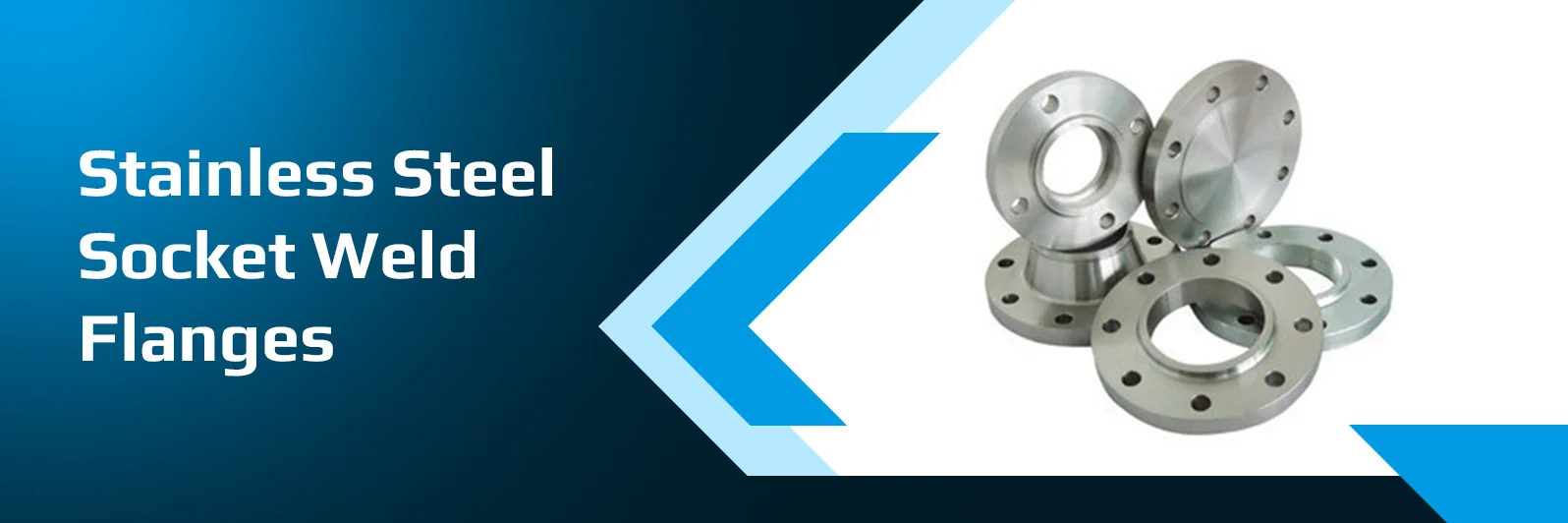
There is a gap at the bottom of a socket weld joint and it is supposed to be there. The pipe goes in, then comes back out slightly before welding, leaving roughly a sixteenth of an inch of clearance so the pipe can expand into the socket without forcing the fillet weld. Bottom it out and that expansion has nowhere to go. The weld cracks. It is the most common installation error on this joint type, and it is entirely avoidable. Solitaire Overseas supplies stainless steel socket weld flanges from India for small bore high pressure service.
Part of our stainless steel flanges range. For larger bore, see weld neck flanges.
The socket is machined deeper than the pipe needs to sit. Standard practice is to insert the pipe fully, withdraw it by roughly 1.5 mm, and weld it there. That small clearance is a working allowance, not slack.
| Condition | Socket Weld? | Comment |
|---|---|---|
| Small bore, up to about 2 inch | Yes | The type's natural range. Easier fit-up than butt welding at small sizes |
| High pressure small bore | Yes | Higher class capability than threaded, no thread to leak |
| Larger bore, above about 2 to 4 inch | No | Weld neck takes over. Socket weld is not made or used at large sizes |
| Full bore flow required | No | There is a step and a recess at the socket. Weld neck keeps the bore continuous |
| Cyclic or vibrating service | Check the spec | The fillet weld carries a stress concentration. Some specifications restrict socket welds in high cycle duty |
| Corrosive medium where crevices matter | Prefer weld neck | The annular gap is a crevice by design |
| Item | Detail |
|---|---|
| Material standard | ASTM A182 forged stainless |
| Dimensional standard | ASME B16.5 |
| Typical classes | 150, 300, 600, 900, 1500 |
| Size range | Small bore, typically NPS 1/2 inch to 2 inch, sometimes to 4 inch |
| Facings | Flat face and raised face |
| Bore | Machined to the connecting pipe schedule, so state the schedule when ordering |
| Certification | EN 10204 3.1. PMI on request |
| Grade | Typical Selection Reason |
|---|---|
| 304 / 304L | General service. The volume grade |
| 316 / 316L | Chloride exposure, marine atmosphere, chemical duty |
| 321 / 347 and H variants | Elevated temperature, stabilized against sensitization |
| 904L, duplex, super duplex | Aggressive chloride or high strength requirement |
To allow for thermal expansion. Standard practice is to insert the pipe fully, withdraw it by roughly 1.5 mm, and weld it in that position. When the line heats, the pipe end expands into that clearance. If the pipe is bottomed out, the expansion pushes against the socket bottom and transfers load into the fillet weld, which is the usual cause of cracking at this joint.
Both take the pipe inside the flange, but a socket weld has a machined counterbore with a shoulder and is welded on the outside only, while a slip-on has a through bore and is welded both inside and outside. Socket weld is a small bore, higher pressure fitting; slip-on is used at larger bore and lower pressure.
Small bore, typically NPS 1/2 inch to 2 inch, sometimes up to 4 inch. Above that the joint is butt welded and the flange type is weld neck. Availability of socket weld above 2 inch is limited because the type is not normally specified there.
With caution. The clearance at the socket bottom is a crevice by design, and in stagnant or chloride-bearing service a crevice is a corrosion initiation site. Where the medium makes crevices unacceptable, a butt welded joint and a weld neck flange are the better choice even at small bore.
Send your size, class, facing, grade and the connecting pipe schedule, since the socket bore is machined to suit it.