+91-9619103479
or
vishal@solitaire-overseas.com
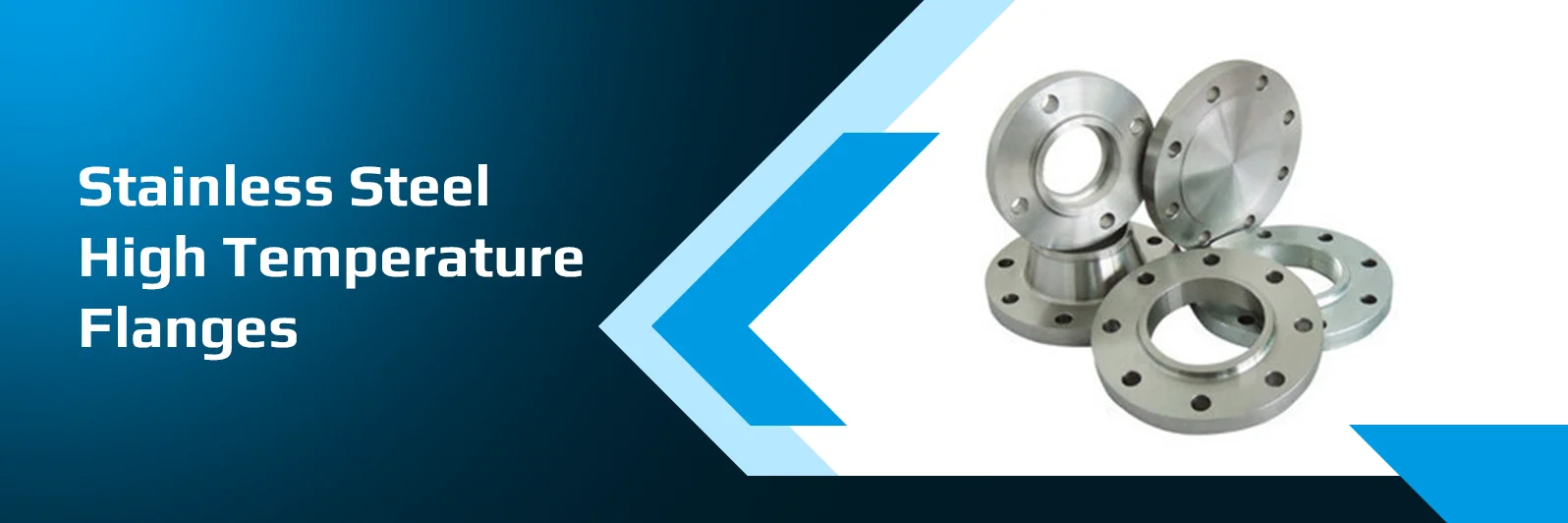
Stainless steel flanges lose pressure capability as they heat up, and the loss is larger than most buyers expect. That is the single most useful thing to understand before selecting one for hot service. The second is that not all austenitic grades behave the same way above about 500 degrees C: the stabilized grades, 321 and 347 and their H variants, hold up where plain 304 and 316 begin to sensitize. Solitaire Overseas supplies stainless steel high temperature flanges from India in the grades that suit the duty. Below: derating, grade selection, and what changes above 537 degrees C.
Part of our stainless steel flanges range. For the class system itself, see high pressure flanges.
The pressure-temperature rating tables in ASME B16.5 give an allowable pressure for each class at each temperature, and the allowable falls steadily as temperature rises. A flange selected on its class alone, or on a rating read at ambient, can be significantly under-rated for the duty it actually sees.
Austenitic stainless steels can sensitize at elevated temperature. Chromium and carbon combine at the grain boundaries to form chromium carbides, which locally strips the corrosion resistance, and welded or long-service components are most exposed. The stabilized grades prevent it by giving the carbon something else to bond with.
| Grade | Stabilizer or Feature | Where It Fits |
|---|---|---|
| 304 / 316 | None | General service. Suitable up to moderate temperature only |
| 321 / 321H | Titanium | Stabilized against sensitization. H variant has higher carbon for creep strength above 537 C |
| 347 / 347H | Niobium | As 321, with niobium rather than titanium. Often preferred where welding is heavy |
| 310 / 310S | High chromium and nickel | Oxidation resistance at very high temperature, furnace and heat treatment service |
The H grades and the 537 degree line. The H variants carry a higher carbon content, which improves creep strength and is why they are specified for service above roughly 537 degrees C. Grade detail is on our SS 321H flanges page, and the wider grade range is linked from the flanges hub.
| Item | Detail |
|---|---|
| Material standard | ASTM A182 forged flanges |
| Dimensional standards | ASME B16.5 (1/2 to 24 inch), ASME B16.47 (26 to 60 inch) |
| High temperature grades | 321, 321H, 347, 347H, 310, 310S. Others to order |
| Classes | 150 through 2500, selected against the derated rating |
| Facings | RF and RTJ. RTJ common in hot high pressure service |
| Certification | EN 10204 3.1 or 3.2. PMI on request |
Flange types are covered separately: weld neck, slip-on, blind, socket weld, threaded and lap joint pages, all linked from the stainless steel flanges hub.
Yes, and the reduction is substantial. The pressure-temperature rating tables in ASME B16.5 give an allowable pressure for each class at each temperature, and it falls steadily as temperature rises. Select the class from the table at the design temperature for your specific material group, not from the design pressure alone.
It depends on the temperature and the service. 321 and 347 are stabilized against sensitization with titanium and niobium respectively, which makes them the usual choice for sustained elevated temperature. Their H variants carry higher carbon for creep strength above roughly 537 degrees C. For very high temperature oxidation resistance, such as furnace service, 310 and 310S are used.
Carbon content. The H variant has a higher specified carbon range, which improves creep strength and coarsens the grain structure, making it suitable for service above roughly 537 degrees C. Below that temperature the standard grade is normally adequate.
Because a ring type joint seals metal to metal, with the ring deforming into a machined groove, rather than relying on a compressed gasket held by bolt load. That copes better with thermal cycling, which works a joint repeatedly and is a common cause of leaks on hot flanged connections.
No, and this is a common oversight. The gasket has its own temperature ceiling, often lower than the flange, and the bolting must suit the temperature too, since bolt relaxation over time is a real failure mode on hot joints. The joint is only as capable as its weakest element.
Send your size, class, facing, grade and the design temperature and pressure. If the class you have specified derates below your design pressure at that temperature, we will flag it before quoting.