+91-9619103479
or
vishal@solitaire-overseas.com
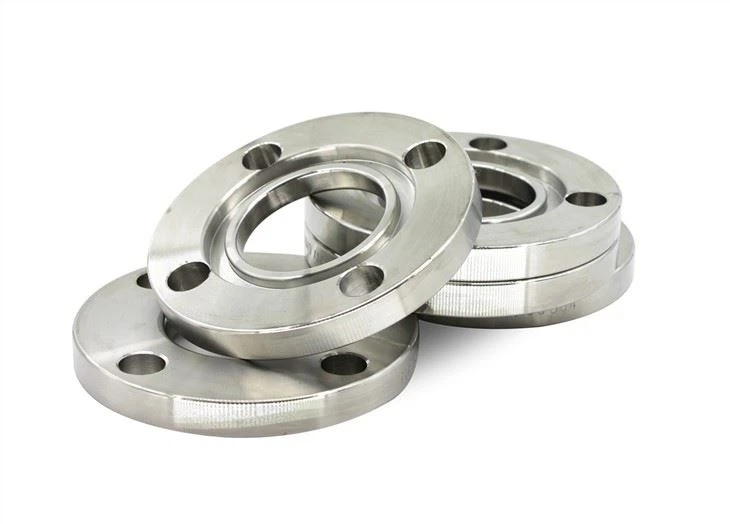
Solitaire Overseas is a reputable manufacturer, supplier and exporter of superior quality Duplex Steel Flanges in India. Our duplex flanges are designed to provide excellent performance in high-pressure and highly corrosive applications, and therefore they are popular in oil and gas, petrochemical, marine, pharmaceutical, and power generation industries.
Our Duplex Steel Flanges are made of high grade duplex stainless steel, a ferritin and austenitic microstructure to achieve high levels of strength, high pitting resistance and high resistance to stress corrosion cracking. Duplex steel flanges have almost twice the yield strength compared to conventional austenitic grades, which allows lighter and more cost-effective piping system designs.
Solitaire Overseas, as a manufacturer of duplex flanges in India, has adhered to the international quality standards such as ASME, ASTM, ANSI, DIN, EN and JIS. All our flanges are subjected to stringent quality tests before delivery and this means that our customers will get products that can match or even surpass those of the world.
Request a Quote!Duplex Steel Flanges are mechanical components used to connect pipes, valves, pumps and other equipment in a piping system. They form a flanged joint when two flanges are bolted together, with a gasket placed between them to create a leak-proof seal. The term "duplex" refers to the dual-phase microstructure of the material, which consists of roughly equal proportions of austenite and ferrite.
This unique metallurgical composition gives duplex flanges a combination of properties not found in either purely austenitic or purely ferritic stainless steel, including high tensile strength, excellent resistance to chloride stress corrosion cracking, good weldability and reduced susceptibility to intergranular corrosion.
Duplex Steel Flanges are widely used when piping joints require periodic disassembly for maintenance or inspection. They are particularly suitable for applications involving seawater, acidic media, chloride environments and high-pressure process fluids.
Specification | Details |
|---|---|
Material Standard | ASTM A182 / ASME SA182 |
Manufacturing Standards | ANSI/ASME B16.5, B16.47 Series A and B, B16.48, BS4504, BS10, EN-1092, DIN |
HS Code | 7307 |
Size Range | 1/2 inch (15 NB) to 48 inch (1200 NB), DN10 to DN5000 |
ANSI Pressure Classes | Class 150 LBS, 300 LBS, 600 LBS, 900 LBS, 1500 LBS, 2500 LBS |
DIN/EN Pressure Ratings | PN6, PN10, PN16, PN25, PN40, PN64 |
JIS Pressure Ratings | 5K, 10K, 16K, 20K, 30K, 40K, 63K |
Production Technique | Forged, Heat-treated and Machined |
Test Certificates | EN 10204/3.1B, Raw Materials Certificate, 100% Radiography Test Report, Third-Party Inspection Report |
Supporting Materials | Gasket, Ring Joint, Flange Bolts |
Face Types | Raised Face (RF), Flat Face (FF), Ring Type Joint (RTJ), Lap Joint Face (LJF), Large Male-Female (LMF), Small Male-Female (SMF), Tongue and Groove |
Origin | India, West Europe, Japan, USA, Korea (Strictly No China) |
Special Design | As per client drawing and specifications |
Cr |
Ni |
Mo |
C |
N |
Mn |
Si |
P |
S |
Fe |
|---|---|---|---|---|---|---|---|---|---|
22.0-23.0 |
4.50-6.50 |
3.00-3.50 |
0.030 Max |
0.14-0.20 |
2.00 Max |
1.00 Max |
0.030 Max |
0.020 Max |
Balance |
ASTM Grade | EN Number |
|---|---|
F51 / F60 | 1.4462 |
F53 | 1.4410 |
F55 | 1.4501 |
We manufacture and supply all standard and custom types of Duplex Steel Flanges. Below is a comprehensive list of the duplex flange types available from Solitaire Overseas:
Weld neck flanges feature a long tapered hub that is butt-welded to the pipe. The tapered hub provides an excellent stress distribution transition between the flange and the pipe, making this the preferred type for high-pressure, high-temperature and cyclic loading applications. Duplex Weld Neck Flanges are widely used in refineries, subsea pipelines and critical process systems.
Slip-on flanges slide over the pipe and are welded on both the inside and outside. They are easier to align during installation and are more economical than weld neck flanges. Duplex Slip-On Flanges are suitable for low-pressure and low-temperature applications where cost and ease of installation are priorities.
Blind flanges are solid discs used to close the ends of pipes, valves or pressure vessel openings. They allow access to the piping system for inspection or cleaning while maintaining the integrity of the pressure boundary. Duplex Blind Flanges are frequently used in chemical processing and offshore oil platforms.
Socket weld flanges have a socket into which the pipe is inserted and then fillet welded. They are used primarily for smaller pipe sizes in high-pressure service. The socket weld design eliminates the need for precise pipe-end preparation and provides a stronger joint than threaded connections.
Threaded flanges feature internal threads that match the pipe's external threads, allowing the flange to be screwed onto the pipe without welding. This makes them ideal for applications where welding is not possible or practical, such as explosive or flammable environments. Duplex Threaded Flanges are suitable for low-pressure, non-critical applications.
Lap joint flanges are used in conjunction with a stub end. The flange slides freely over the pipe, and the stub end is butt-welded to the pipe. The lap joint flange face rests against the stub end flange face. This design is particularly advantageous when frequent dismantling is required or where pipe alignment is difficult to maintain.
RTJ flanges feature a grooved face that accepts a metallic ring gasket, which is compressed between the mating flanges to form a high-integrity seal. They are used in high-pressure, high-temperature applications such as oil and gas wellheads, subsea applications and refineries where a reliable seal is critical.
Orifice flanges are used with orifice plates to measure the flow rate of liquids and gases in pipelines. They are manufactured to ASME B16.36 and come with tapped holes for differential pressure measuring instruments. Duplex Steel Orifice Flanges are used extensively in gas metering and fiscal measurement applications.
Long weld neck flanges have an extended hub that acts as a nozzle on pressure vessels and heat exchangers. The extended length provides additional reinforcement and reduces stress concentrations at the vessel wall. They are ideal for connecting equipment nozzles to process piping.
Spectacle blind flanges consist of two circular discs joined by a small section of metal, resembling a pair of spectacles. One disc is solid (blind) and the other is open (spacer ring). By rotating the spectacle blind, the operator can isolate or open a section of pipeline without disturbing adjacent components.
Reducing flanges are used to connect pipes of different diameters. They are a cost-effective alternative to using a standard flange with a reducer fitting. Duplex Steel Reducing Flanges are available in various reducing configurations.
Plate flanges, also known as flat flanges, are cut from plate material rather than forged. They are generally used for lower-pressure applications. Duplex Plate Flanges are available per DIN, ANSI, BS and other international standards.
Standard | Flange Types Covered |
|---|---|
ASME/ANSI B16.5 | Weld Neck, Slip-On, Blind, Socket Weld, Lap Joint, Threaded, Ring Type Joint Flanges |
ASME/ANSI B16.47 | Weld Neck Flange and Blind Flange in Series A and B |
ASME/ANSI B16.36 | Orifice Flanges in Weld Neck, Slip-On and Threaded types |
BS 4504 Sec 3.1 | Weld Neck, Hubbed Slip-On, Hubbed Threaded, Lapped Pipe End, Plate, Loose Plate and Blank Flanges |
BS 10 | Weld Neck, Plate Slip-On, Screwed Boss, Slip-On Boss and Blind Flanges |
DIN Flanges | DIN 2527, 2566, 2573, 2576, 2627 to 2638, 2641, 2642, 2655, 2656, 2673 |
EN 1092-1 | All standard flange types per European Norm |
JIS/KS | 5K to 63K pressure classes |
API 6A | Wellhead and Christmas tree equipment flanges |
Duplex Steel Flanges from Solitaire Overseas are used across a wide spectrum of demanding industries where corrosion resistance, strength and reliability are paramount:
Duplex flanges are extensively used in offshore and onshore oil and gas platforms, subsea pipelines, wellheads, Christmas trees and gas processing plants. Their resistance to hydrogen sulfide (H2S) in sour service conditions and to chloride-induced stress corrosion cracking makes them an excellent choice for upstream and downstream applications.
In chemical plants and refineries, process fluids frequently contain aggressive acids, chlorides and other corrosive media. Duplex Steel Flanges provide reliable sealing and connection integrity in reactors, heat exchangers, distillation columns and chemical transfer piping.
The high pitting resistance equivalent number (PREN) of duplex steel makes it one of the best materials for seawater service. Duplex flanges are used in desalination plants, shipbuilding, offshore structures, cooling water systems and aquaculture equipment.
Nuclear, thermal and renewable energy plants use duplex steel flanges in cooling water systems, flue gas desulfurization (FGD) units, steam generation and feedwater piping. Their strength and corrosion resistance help extend service life and reduce maintenance intervals.
The hygienic properties and corrosion resistance of duplex stainless steel make it suitable for pharmaceutical processing, food and beverage production and medical gas pipeline systems, where product purity and cleanability are critical requirements.
Pulp and paper production involves exposure to bleaching agents and acidic effluents that aggressively attack standard stainless steel. Duplex flanges provide the necessary corrosion protection in digesters, bleach plants and chemical recovery systems. Similarly, in fertilizer plants, duplex steel resists the corrosive effects of ammonia, urea solutions and process acids.
Duplex Steel Flanges are used in municipal and industrial water treatment plants, sewage treatment facilities, and water transmission pipelines. Their long service life and resistance to biological corrosion make them a cost-effective solution for infrastructure projects.
At Solitaire Overseas, every batch of Duplex Steel Flanges is subjected to a comprehensive set of tests and inspections to verify that the product meets the specified material, dimensional and performance requirements. Our quality assurance process includes:
Port of Dispatch: Mumbai or Kalamboli ports, Maharashtra, India
Packaging: Flanges are packaged with proper protection to prevent damage during transit. Packaging charges extra.
Certifications Available: EN 10204 3.1 and EN 10204 3.2 Material Test Certificates, NACE MR0103, NACE MR0175
Lead Time: Ex-stock for standard sizes; custom sizes as per production schedule
Minimum Order: As per inquiry and specifications
Duplex steel flanges (e.g. UNS S31803/S32205) contain approximately 22% chromium and 3% molybdenum, offering good corrosion resistance for most industrial applications. Super duplex flanges (e.g. UNS S32750, S32760) contain higher alloy content (25% chromium, 4% molybdenum) and offer superior resistance to pitting, crevice corrosion and SCC, making them suitable for more aggressive environments such as deep-sea applications and high-chloride process streams.
ASTM A182 Grade F51 (UNS S31803/S32205) is the most commonly specified duplex stainless steel grade for flanges. It offers an excellent balance of strength, corrosion resistance and weldability at a competitive cost. Grade F53 (UNS S32750) and F55 (UNS S32760) are used for more demanding applications.
Duplex Steel Flanges can be connected to carbon steel piping using appropriate transition fittings or isolation gaskets to prevent galvanic corrosion. The flange bolt holes, facing dimensions and pressure-temperature ratings must be matched according to the applicable standard (e.g. ANSI B16.5 Class 150 or 300).
Solitaire Overseas provides Material Test Certificates (MTC) per EN 10204 3.1 as standard with all shipments. EN 10204 3.2 certificates, NACE compliance certificates, third-party inspection reports, heat treatment certificates, hydrostatic test certificates and dimensional inspection reports are available upon request.
Yes. Solitaire Overseas manufactures Duplex Steel Flanges to custom specifications including non-standard sizes, special face configurations, custom bore dimensions and project-specific material certifications. Please share your drawings or technical datasheet with our team for a prompt quotation.
Contact Solitaire Overseas today for competitive pricing, fast delivery and expert technical support on all your Duplex Steel Flange requirements.
 India
India Iran
Iran Thailand
 South Korea
 Turkey
 Morocco
 Costa Rica
 Kazakhstan
 Philippines
 Canada
 Japan
Japan Russia
 United States
 Saudi Arabia
 Kuwait
 Singapore
 Malaysia
 UAE
UAE Germany
 Italy
Italy China
China UK
UK Egypt
Egypt Vietnam
 Oman
Oman Australia
 Qatar
Qatar Portugal
 Nigeria
 Iraq
Iraq Ukraine
 Bangladesh
 Poland
 Romania
 Cyprus
 Angola
 Colombia
 Norway
 Chile
Chile Mexico
 South Africa
 Netherlands
 Brazil
 France
 Jordan
 Spain
Spain Hong Kong
 Indonesia
 Taiwan
 Tobago
 Greece
 Czechia
 Belgium
 Sri Lanka
 Myanmar
 Venezuela