+91-9619103479
or
vishal@solitaire-overseas.com
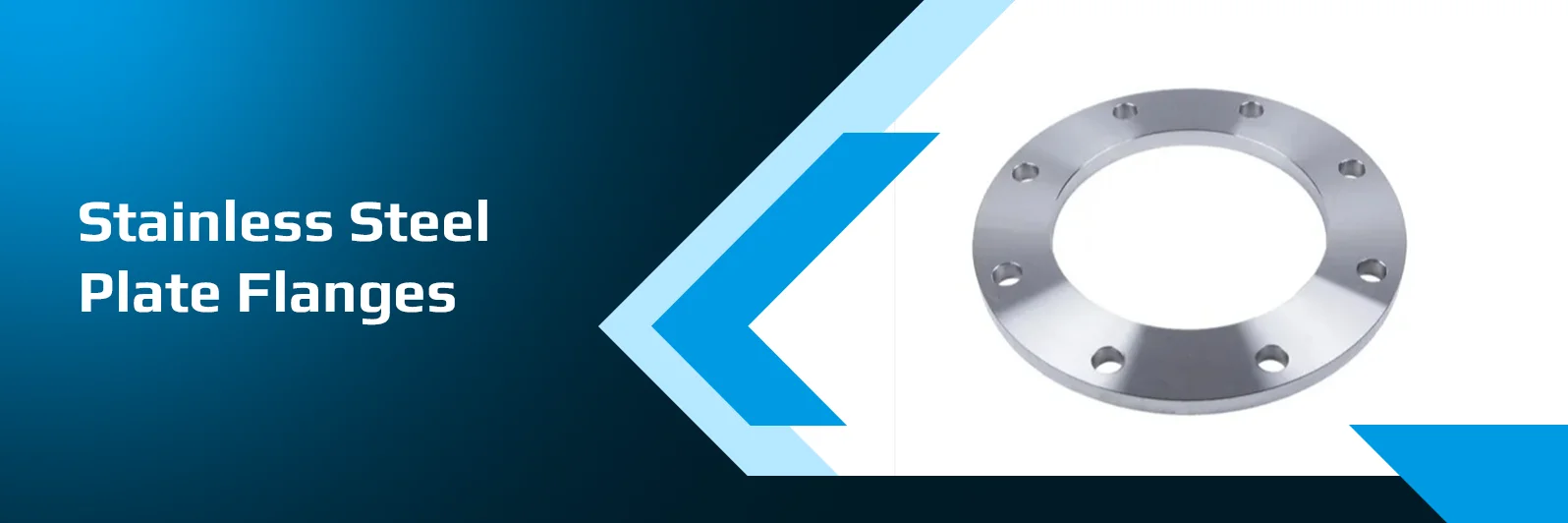
A plate flange is cut from plate. A forged flange is worked from a billet, and that difference in how the metal got its shape is the whole reason the two are not interchangeable: forging aligns the grain flow with the contour of the part, while a plate flange inherits whatever grain direction the plate had. Many project specifications will not accept plate flanges on pressure-retaining service for that reason. Solitaire Overseas supplies stainless steel plate flanges from India for the applications where they are appropriate. Below: what plate flanges are genuinely good for, and where a forged flange is required instead.
Part of our stainless steel flanges range.
Both are stainless steel, both bolt up the same way, and they are made by fundamentally different routes:
| Plate Flange | Forged Flange | |
|---|---|---|
| How it is made | Cut, machined and drilled from plate stock | Worked from a billet, then machined |
| Grain flow | Follows the plate, not the part | Follows the contour of the flange |
| Typical material spec | Plate specifications such as ASTM A240 | Forging specifications such as ASTM A182 |
| Hub | Usually none | Weld neck and other types have a hub |
| Pressure capability | Lower. Suited to low pressure duty | Higher. Full ASME B16.5 class range |
| Cost | Lower | Higher |
| Acceptance on pressure service | Often restricted or prohibited by project specification | Standard |
Why grain flow matters. Forging works the metal so its internal structure follows the shape of the finished part, which puts the strongest direction where the load is. A plate flange takes its grain direction from the rolled plate, so through-thickness properties are whatever the plate happened to offer. On a low pressure tank nozzle that is of no consequence. On a pressure-retaining joint carrying bolt load and thermal cycling, it is exactly why specifications call for forgings.
Plate flanges are supplied in the standard austenitic grades and, where the service requires, in higher alloys:
| Grade | Typical Use |
|---|---|
| 304 / 304L | General service, water, utility, food and dairy |
| 316 / 316L | Chloride exposure, marine atmosphere, chemical service |
| 321 / 347 | Where the line sees moderate elevated temperature |
| 904L, duplex and 6-moly | Aggressive chloride or chemical duty, where the grade rather than the pressure drives the choice |
| Item | Detail |
|---|---|
| Material standard | Plate specifications, typically ASTM A240 |
| Drilling | To ASME B16.5 pattern, or to customer drawing |
| Pressure classes | Low classes only. Confirm the specific rating for the size and grade |
| Facing | Flat face typical. Raised face on request |
| Size range | Wide, including non-standard sizes cut to drawing |
| Certification | EN 10204 3.1. PMI on request |
AND WHERE THEY DO NOT BELONG: High pressure service, high temperature service, cyclic or vibrating duty, and anywhere the project specification calls for forged flanges to ASTM A182. If any of those apply, the requirement is a forged flange. Check the piping class before ordering plate, because substituting plate for forged is a change that will be caught at inspection if the specification is enforced, and may not be caught at all if it is not, which is worse.
How the metal was shaped. A plate flange is cut and machined from plate stock, so its grain direction is whatever the plate had. A forged flange is worked from a billet, which aligns the grain flow with the contour of the part and puts the strongest direction where the load is. Forged flanges carry higher pressure and are what most project specifications require for pressure-retaining service.
Only at low pressure, and only where the project specification permits them. Many specifications restrict or prohibit plate flanges on pressure-retaining service and call for forged flanges to ASTM A182 instead. Check the piping class before ordering, because substituting plate for forged is a specification change, not a cost saving.
Tank and vessel nozzles at low pressure, water and utility lines, food, dairy and pharmaceutical plant where stainless is specified for cleanliness rather than pressure, ducting, and non-standard sizes where cutting from plate is the practical route to a one-off flange.
Yes, which is their main attraction. The saving is real but it comes with lower pressure capability and, on many projects, a specification that will not accept them. The comparison is only meaningful where plate flanges are genuinely permitted for the duty.
Send your size, grade, drilling pattern, facing and design pressure. If the design pressure or the specification points to a forged flange rather than plate, we will say so before quoting.