+91-9619103479
or
vishal@solitaire-overseas.com
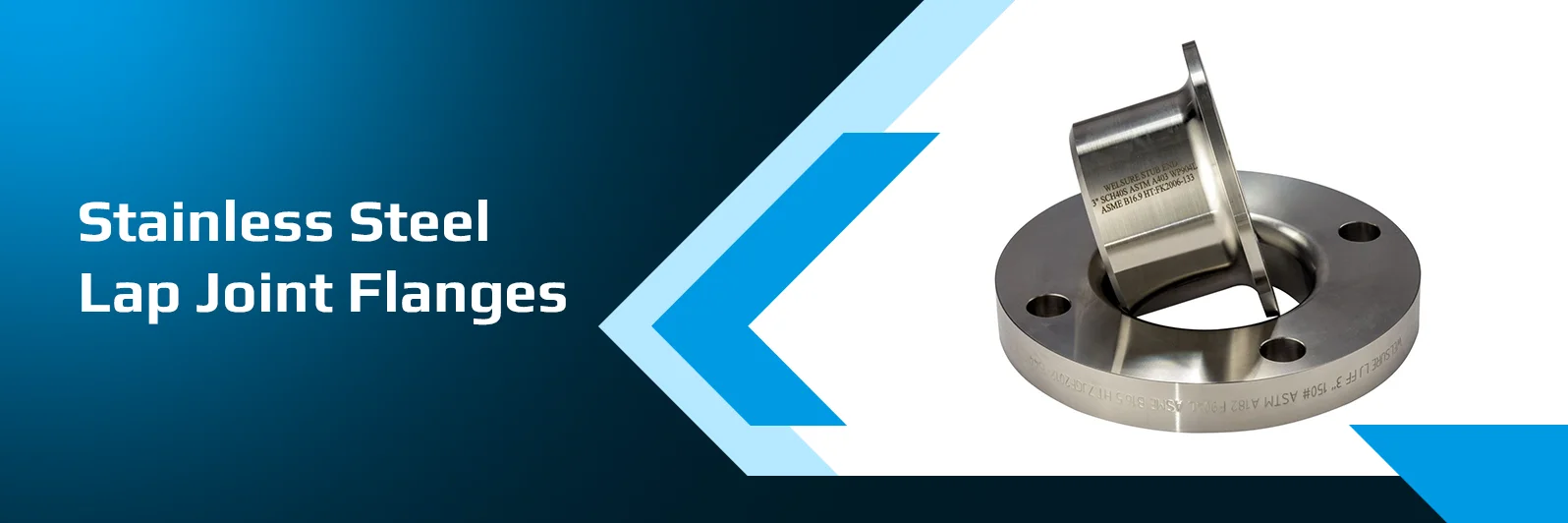
The backing flange never touches the process fluid. That single fact is the whole argument for a lap joint, and on an expensive alloy line it is a substantial one: the stub end is the grade the medium requires, while the loose flange behind it can be a cheaper material entirely. Add a flange that rotates freely for bolt hole alignment and the case gets stronger. Solitaire Overseas supplies stainless steel lap joint flanges from India, with matching stub ends.
Part of our stainless steel flanges range. The stub end is the other half of this joint and must be ordered with it.
A lap joint is not a flange on its own. It is a pair:
| Component | What It Does | Material |
|---|---|---|
| Stub end | Butt welded into the line. Its flared lap forms the gasket face and contacts the medium | Must match the line grade |
| Lap joint flange | Slips over the pipe behind the lap and provides the bolt load. Never contacts the medium | Can be a cheaper grade, subject to design temperature and bolt load |
Which produces two advantages. First, cost: on a 904L or duplex line, only the stub end has to be that alloy. Second, alignment: the loose flange spins freely on the pipe, so bolt holes line up without rotating the whole spool, which on large bore saves real fitting time and on awkward tie-ins can save a rework.
The gasket seats on a comparatively thin flared lap rather than on the substantial face of a weld neck flange. That makes the joint less tolerant of high pressure, severe thermal cycling and heavy bending load, which is why lap joints are traditionally specified for lower pressure and less critical duty.
| Condition | Lap Joint? | Comment |
|---|---|---|
| Expensive alloy line, moderate pressure | Yes | The cost saving on the backing flange is the point |
| Frequent dismantling for cleaning or inspection | Yes | The joint breaks and remakes easily |
| Awkward bolt hole alignment | Yes | The rotating flange solves it |
| High pressure, safety critical | No | A weld neck flange is the stronger detail |
| Severe thermal cycling | No | The thin lap is the weak element |
A FIT-UP WARNING WORTH PUBLISHING: With larger backing flanges in the higher classes, a short pattern stub end can leave the flange sitting over the weld. Check the stub end pattern, long or short, against the flange class before ordering. This is a genuine assembly problem that appears on site rather than on the drawing.
| Item | Detail |
|---|---|
| Material standard | ASTM A182 forged stainless for the flange |
| Stub end standards | ASME B16.9 and MSS SP-43, Type A, B and C |
| Dimensional standard | ASME B16.5 for the flange |
| Typical classes | 150, 300, 600. Higher classes uncommon in this type |
| Facings | Flat face and raised face. The gasket seats on the stub end lap |
| Backing flange material | Can differ from the stub end, subject to design temperature and bolting |
| Certification | EN 10204 3.1. PMI on request |
| Grade | Typical Selection Reason |
|---|---|
| 304 / 304L | General service. The volume grade |
| 316 / 316L | Chloride exposure, marine atmosphere, chemical duty |
| 321 / 347 and H variants | Elevated temperature, stabilized against sensitization |
| 904L, duplex, super duplex | Aggressive chloride or high strength requirement |
Two reasons. Cost: the backing flange never contacts the process fluid, so on an expensive alloy line only the stub end needs to be that grade while the flange behind it can be cheaper. Convenience: the loose flange rotates freely, so bolt holes align without turning the whole spool, and the joint breaks and remakes easily for maintenance. For high pressure and safety critical service, a weld neck is still the stronger detail.
No, and that is the main commercial reason to use a lap joint. The flange sits behind the lap and never touches the medium, so it can be a cheaper material, provided it suits the design temperature and the bolting loads. On a stainless or high alloy line, a carbon steel backing flange is common.
Yes, always. The lap joint flange provides bolt load only; the stub end is butt welded into the line and its flared lap forms the gasket face. They are bought and installed as a pair, and the stub end type and pattern must suit the flange class.
Generally not. The gasket seats on a relatively thin flared lap rather than the substantial face of a weld neck flange, which makes the joint less tolerant of high pressure, severe thermal cycling and heavy bending load. Lap joints are traditionally used in lower pressure and less critical service.
Send your size, class, facing and grade, and tell us whether you need matching stub ends and which type and pattern. If the backing flange can be a cheaper grade than the stub end, say so and we will price both.